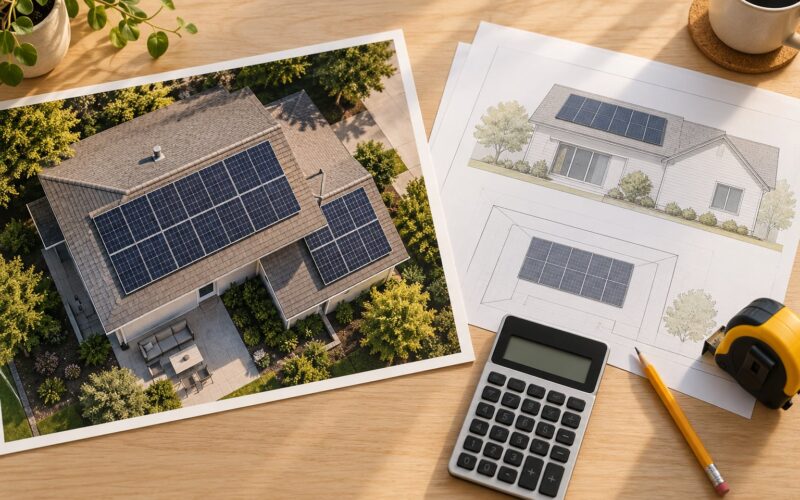
Most homeowners go into a solar sales meeting with two or three questions and leave with a signed agreement they barely read. A better approach: the questions to ask a solar installer are the same fifteen every time, in the same order, because the answers tell you more than the sales pitch ever will.
The fifteen questions below are grouped the way the conversation actually runs, from credentials through design, cost, incentives, financing, warranties and paperwork. Ask the early ones before you invest another minute in the proposal, and ask for the answers in writing.
Update note: the licensing, incentive and interconnection details in this guide reflect general US practice as of 2026. Rules change at the state and utility level, so confirm the specifics that apply to your address.
Table of Contents
- Questions to Ask a Solar Installer at a Glance
- 1. Are You Licensed, Insured and Certified to Install Solar in My Area?
- 2. How Many Solar Installations Have Your Team Completed?
- 3. Can You Provide References and Recent Customer Reviews?
- 4. Will You Perform a Thorough Site Assessment?
- 5. What Solar Panel Brand, Model and Equipment Will You Use?
- 6. How Will Shade and My Roof Layout Affect Production?
- 7. How Much Electricity Will My System Generate?
- 8. What Will the Complete System Cost?
- 9. What Incentives, Rebates and Tax Benefits Can I Qualify For?
- 10. How Will My Electricity Bill and Net Metering Change?
- 11. What Are the Payment Terms and Financing Options?
- 12. What Warranties Cover the Panels, Inverter and Installation?
- 13. Who Handles Permits, Interconnection and Inspections?
- 14. What Happens If My Roof Needs Repair or Replacement?
- 15. What Maintenance, Monitoring and After-Sales Support Do You Provide?
- Frequently Asked Questions
- How do I know if a solar installer is reputable?
- Should I get multiple quotes for a home solar system?
- What should not be included in a solar installation quote?
- Should I buy or lease a residential solar system?
- Do I need to replace my roof before installing solar panels?
- Who is responsible for solar permits and utility interconnection?
- What Should I Do First Before Choosing a Solar Installer?
Questions to Ask a Solar Installer at a Glance
The table below compresses all fifteen questions, with the kind of answer that signals a solid contractor and the answer that should make you pause.
| Question | What a good answer covers | Red flag answer |
|---|---|---|
| Licensed and insured? | Verifiable license number, electrical and solar certifications, insurance limits, permitting history | We handle all the paperwork |
| How many installs? | Count of comparable rooftop systems, named crew, subcontractor disclosure | We have done this thousands of times, ask anyone |
| References? | Recent local customers you can call, plus completed project examples | Our reviews speak for themselves |
| Site assessment? | On-site roof, shading, electrical service and structural check before a price | I can send a rep with a tablet |
| Equipment named? | Exact manufacturer and model for panels, inverter, racking and monitoring | Top tier, best on the market |
| Shade and layout? | Site-specific production model with shading, setbacks and orientation included | You will get all your power |
| Production estimate? | Annual kWh, offset percentage and the assumptions behind them | About this many panels will cover you |
| Total cost? | Written itemized total naming everything excluded | Everything is included |
| Incentives? | Programs you may qualify for, with the eligibility limits stated | You will definitely qualify for everything |
| Bill and net metering? | Savings modelled on your real tariff, with no fixed promise | Your bill will be zero |
| Payment terms? | Deposit, schedule, cancellation rights, and every financing structure spelled out | Sign today and we lock this deal in |
| Warranties? | Equipment, performance, workmanship and roof-penetration terms, with claim responsibility named | Fully warranted |
| Permits and interconnection? | Named responsibility for permits, utility application, inspection and activation | We take care of it |
| Roof repairs? | Flashing, waterproofing, removal cost and future re-installation terms | No problem at all |
| Support after install? | Monitoring access, alert response, maintenance and warranty claims help | The app shows you everything |
One request makes the whole table work: ask for each answer in the proposal or contract rather than in conversation. Sales conversations drift, and a written answer is the only one you can compare against the next installer.
1. Are You Licensed, Insured and Certified to Install Solar in My Area?
Ask for the license number, not a general promise of being licensed. Then check that number yourself with your state licensing board or, where solar falls under electrical contracting rules, the electrical licensing authority.
Ask separately about insurance. You want to know the carrier and the coverage limits for general liability and workers compensation, and you want to see proof rather than hear about it. A contractor without liability coverage is one you pay for if a panel ends up on a neighbor’s driveway.
Certifications vary by state, so ask which specific credentials their electricians hold. It is also fair to ask how many permits they have pulled in your county this year, because that is a public record and a fast way to confirm they actually install in your area.
2. How Many Solar Installations Have Your Team Completed?
Ask for the number of completed systems on the specific crew that would do your job, not the company total. Companies that do hundreds of installations a year may still be routing your roof to a subcontracted crew you have never heard of.
Get specific about comparable work: tiled roofs versus asphalt shingle, similar array sizes, panels on a steep pitch. If your house has any of those complications, ask directly whether they have solved them before.
The follow-up question matters more than the first one. Will any part of my project be handled by a subcontractor, and who carries the warranty for that work? A clean answer names the partner or confirms everything is in-house. A vague answer here is a strong signal.
3. Can You Provide References and Recent Customer Reviews?
Ask for two or three customers installed within the last year, ideally within driving distance and ideally on a similar home. Local matters, because crews working in your utility territory and climate face the same problems you will.
Actually call them, and ask the questions a review will not answer. Did the crew show up on the promised days, was the site left clean, what happened when something needed fixing, and how long did the utility take to switch the system on?
Homeowners comparing installers often find several quoting nearly the same cost per watt with the same inverter model, which means price alone will not separate the bids. The differences that do separate them are communication, follow-through and how they behave when something breaks. References are the only way to see that in advance.
4. Will You Perform a Thorough Site Assessment?
Ask whether anyone will physically visit your property before you receive a design. A quote built from satellite imagery and a phone call is a guess, and guesses are how systems end up undersized or badly placed.
On that visit, they should be checking roof age, material and condition, roof planes and pitch, shading across the year, structural capacity where panels will land, and your electrical service capacity. A panel array adds real dead load, and an older roof with a few remaining years of life changes the sequence of work.
Ask what the assessment covers and how the findings are documented. If you get a design with no written roof notes, no shading assumptions and no mention of your main service panel rating, the assessment probably did not happen.
5. What Solar Panel Brand, Model and Equipment Will You Use?
Ask for exact manufacturer and model numbers, then write them into the contract. A proposal that says premium tier or best available equipment gives you no way to hold anyone to a specification, and it leaves the door open to substituting cheaper components at install day.
Same for the inverter, and ask why they chose it. String inverters cost less and suit unshaded roofs with a clean layout. Microinverters and similar module-level equipment handle partial shading and awkward roofs better, at a higher upfront cost. A good installer can explain the choice for your house in a couple of sentences.
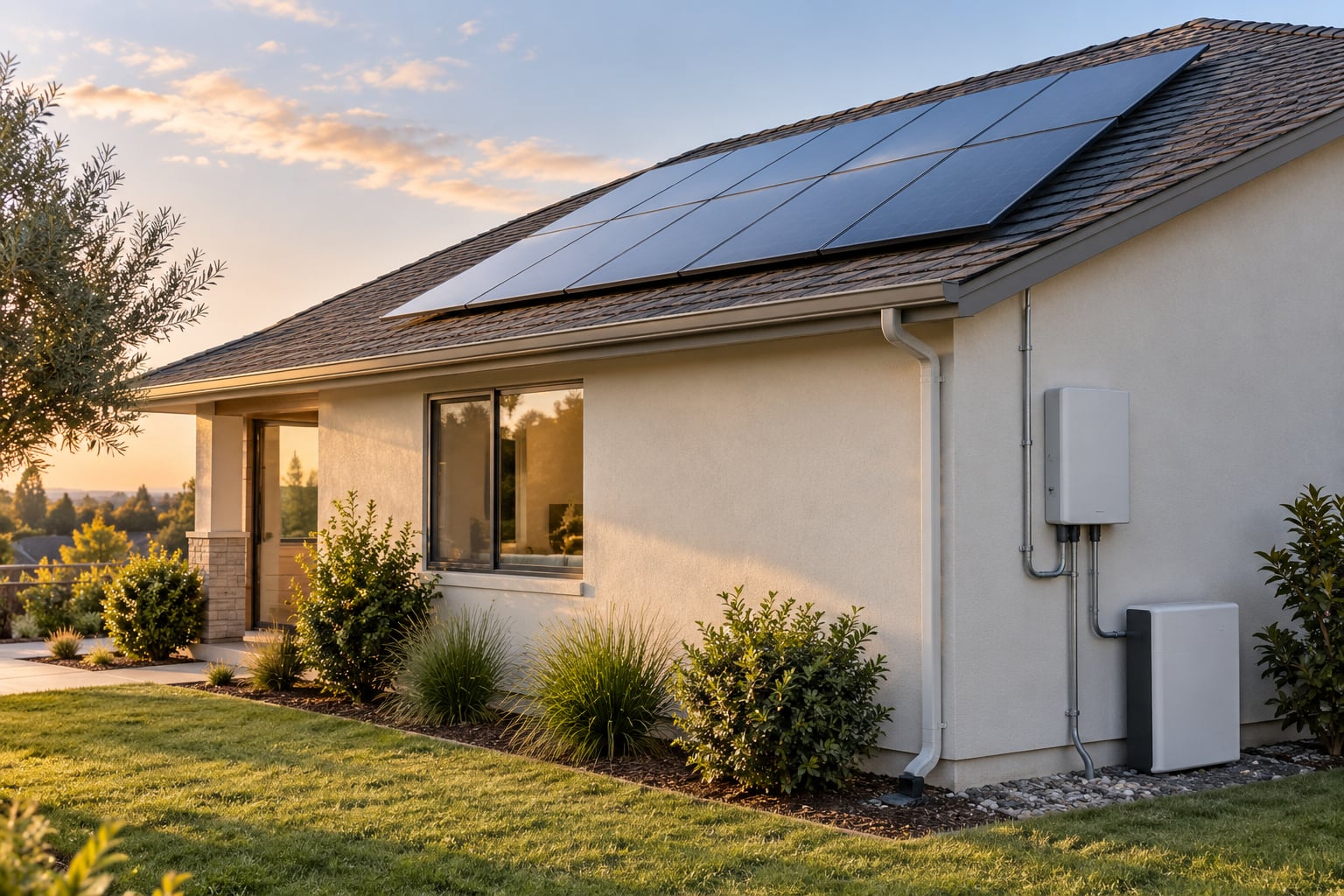
Also name the racking, the monitoring hardware and any battery. Then ask what happens if a component turns out to be discontinued before the install date. The answer you want is that a like-for-like replacement gets your written approval first.
6. How Will Shade and My Roof Layout Affect Production?
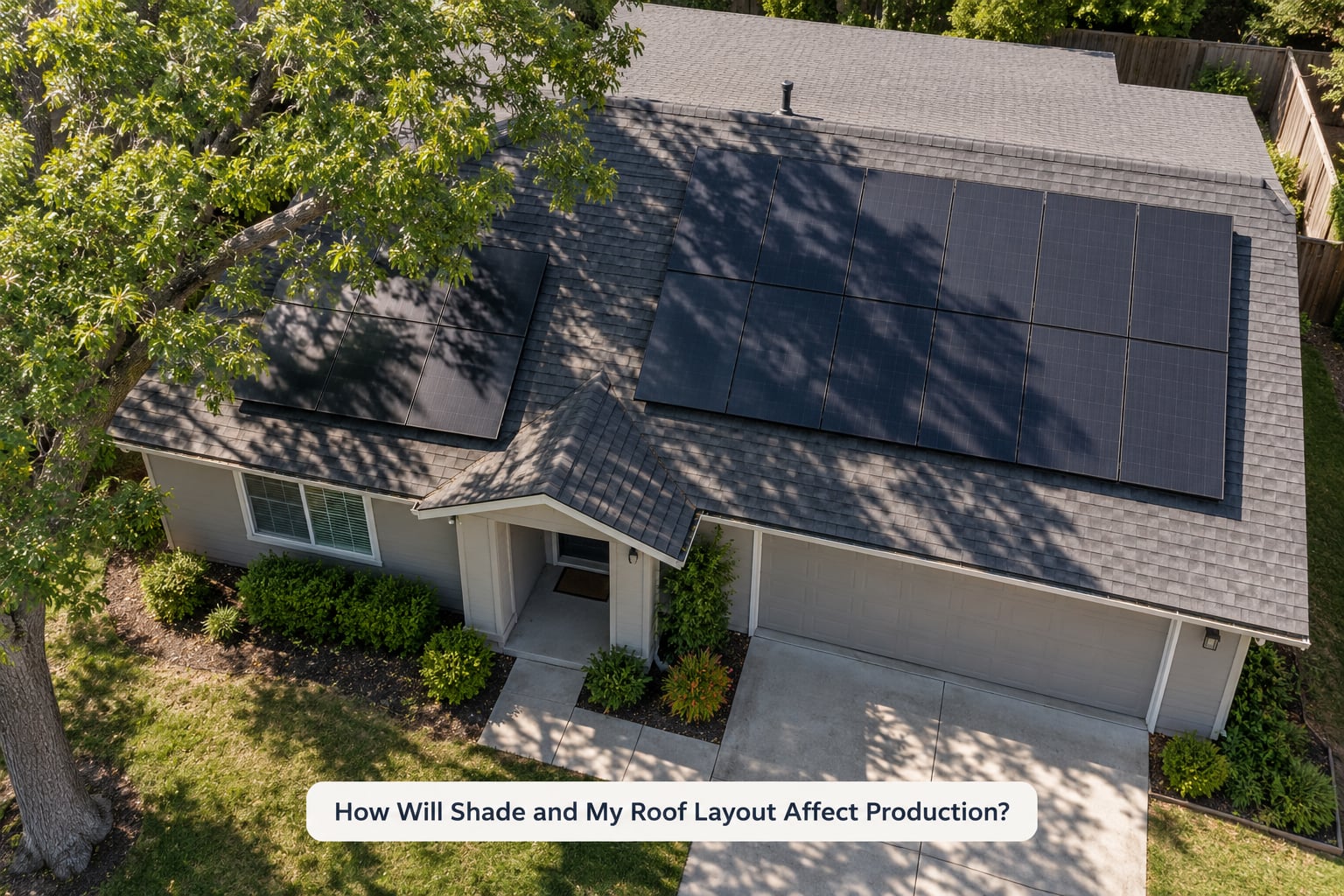
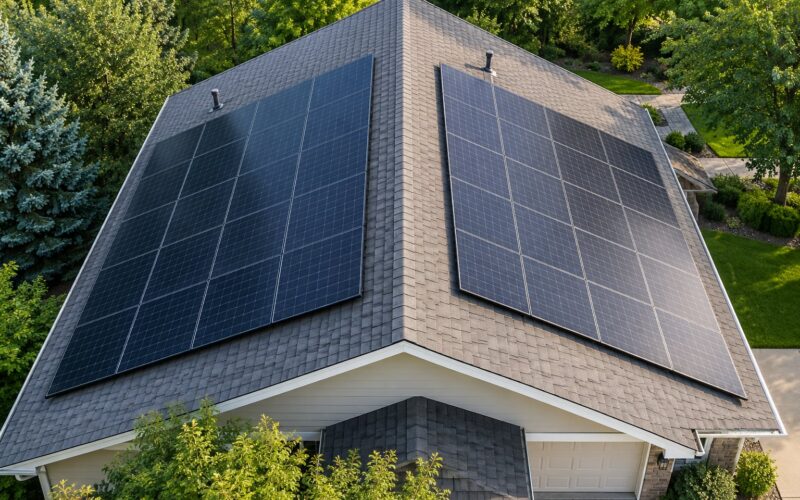
Ask for a production estimate built from your actual site, not a national average. Any tree, neighbouring building, chimney or dormer that casts a shadow at a particular hour should show up in a solar access or shading analysis, including trees that will grow in over the next few years.
Roof layout matters just as much. Panels need clear setbacks from roof edges and ridges, and usable area is always smaller than roof area once obstacles, vents and access paths are removed. Ask how many panels fit after those rules, not how many would fit on a clean rectangle.
Push back on any guarantee. A serious installer will describe your production as a modelled range with stated assumptions, because output depends on real weather and real shading. A promise that you will generate a specific number every month is not something any system can deliver.
7. How Much Electricity Will My System Generate?
Ask for annual production in kilowatt hours, not just a panel count or a system size. A ten kilowatt system on your roof does not produce the same output as the same system on a better-oriented roof, and the difference shows up in the savings estimate.
Also ask what share of your consumption the design offsets, and how the size was chosen. Installers generally work from a target offset of roughly 90 to 100 percent of your annual usage, then check the roof can actually hold that array. If your roof is tight, you will hear about a smaller system and a battery instead.
Ask which assumptions feed the model: solar resource for your latitude, soiling and system losses, your historical usage from utility bills, and the expected panel output decline each year. If they cannot name the assumptions, the number is decoration rather than a design tool.
8. What Will the Complete System Cost?
Ask for a written, itemized total in the proposal and again in the contract. The list should separate equipment, labour, permits and inspection fees, utility interconnection, monitoring, and any sales tax or financing cost. Vague line items like equipment package are where disagreements start.
Then ask what is not included. Some quotes quietly omit the permit fee, the meter change, extra conduit, a service panel upgrade, or the cost of removing the array later. Homeowners report final invoices higher than the signed figure often enough that you should assume something will surface.
You will hear cost per watt quoted constantly, and it is useful only as a rough comparison between similar quotes. Divide the total system price by the system wattage, then do the same for the other bids, and check that each quote has the same scope behind it. Comparing a quote with batteries against one without will tell you nothing.
9. What Incentives, Rebates and Tax Benefits Can I Qualify For?
Ask which programs your installer believes you qualify for, and where each one comes from. Federal, state and local programs differ, and the same system can look very different depending on where you live. The federal Residential Clean Energy Credit is the big one most homeowners hear about first.
The credit is generally 30 percent of the eligible cost, and the fine print that decides who can claim it is ownership: if you lease the system or sign a power purchase agreement, the installer or the financing partner claims the credit instead of you. That difference changes the economics of the deal more than any rebate, so ask it directly.
Ask what eligibility depends on, such as your tax situation and whether you itemize, and ask them to show the calculation. Then treat every figure as provisional. Tax credit rules, caps and expiration dates shift, so verify current terms with a tax professional before you rely on a number that appears in a proposal.
10. How Will My Electricity Bill and Net Metering Change?
Ask for a modelled bill, not a promise. You want to see your current annual usage, the offset the design provides, and what the remaining bill looks like month to month, including the months your system produces less than you use.
Net metering is the part homeowners get burned on. Compensation for energy your system sends back to the grid varies widely by state and utility, and some states credit exported power at a reduced rate rather than the retail rate. Ask for your utility’s current rate and its expiration date, and confirm it against the utility itself rather than taking the sales answer.
Ask what happens to your bill if you add an electric vehicle, heat pump or other large load later, and whether the installer will rerun the model. Also ask what your export credit is worth in the final months of a calendar year, since annual true-up rules differ between utilities.
11. What Are the Payment Terms and Financing Options?
Ask about all four structures, because the answer determines who owns the system, who claims the incentives, and what happens when you sell the house. Cash purchase gives you ownership and the incentives. A solar loan keeps ownership with you but adds a lien and monthly payments. A lease and a power purchase agreement transfer ownership, so the incentives go to the other party.
For any financed structure, ask for the down payment, the interest rate and whether it is fixed, the loan term, and whether payments escalate each year. Leases and power purchase agreements typically buy energy at a rate per kilowatt hour that steps up annually, so ask for the first-year rate and the exact annual escalation.
Read the transfer and exit terms. What happens to payments if you sell the house, move out or want out early? Who owns the monitoring account, and what happens to the equipment at the end of the term? On a lease, ask what buyout price applies after five years, and get the cancellation window in writing along with the deposit schedule.
12. What Warranties Cover the Panels, Inverter and Installation?
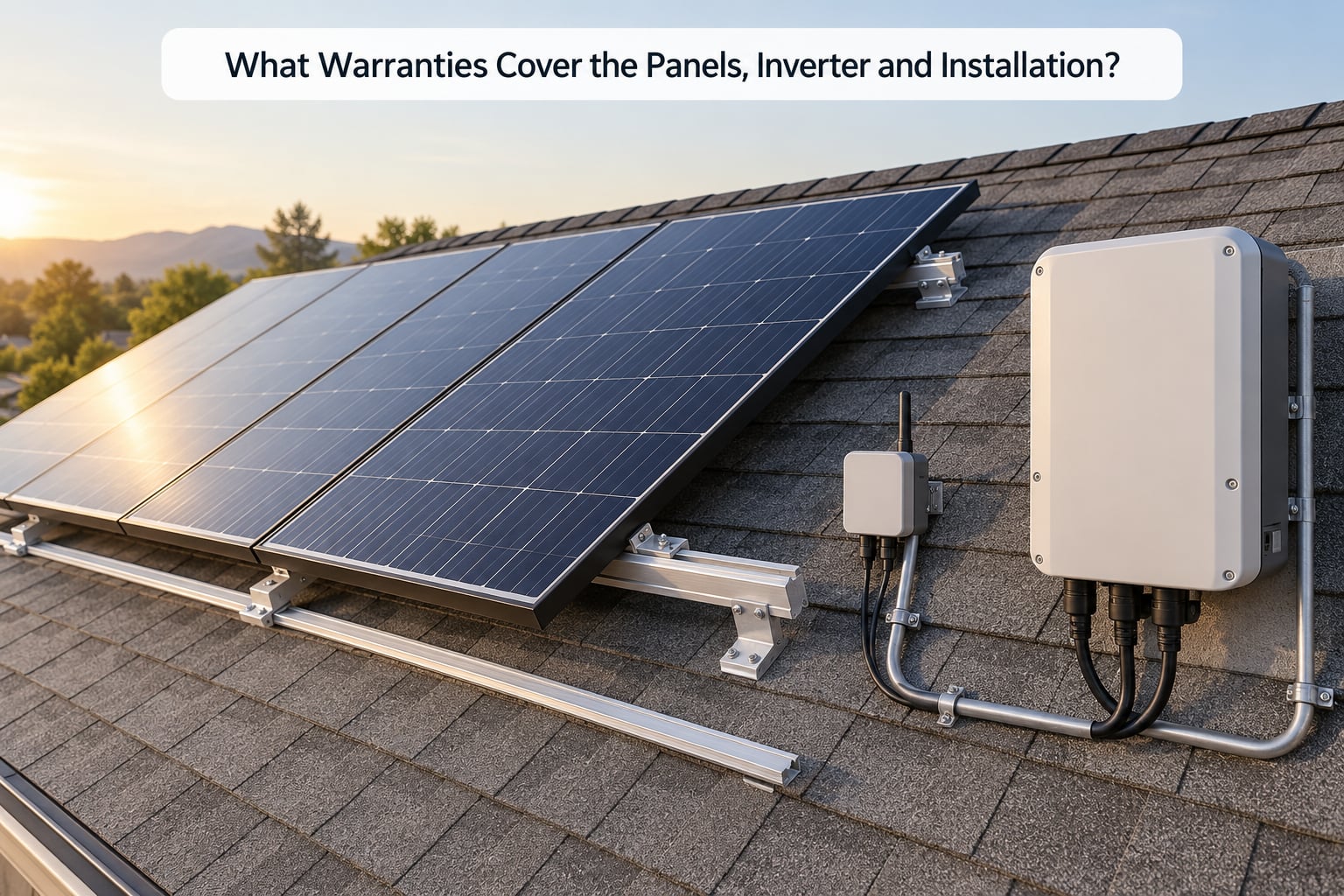
Ask them to separate four different warranties, because they cover different things and different parties. Equipment warranties come from the manufacturers, and panels and inverters commonly carry terms around 25 years. Performance warranties promise a minimum output level after years of use, not zero defects.
Then ask about the two that only your installer can provide: the workmanship warranty on the installation itself, and the roof-penetration warranty covering the penetrations they made in your shingles. These are the ones homeowners most often discover were never offered.
Ask the practical questions. How long does workmanship coverage run, and does someone coming to your home count against it? If a part fails, who files the claim, and does the manufacturer send labour reimbursement or do you pay a technician yourself? Who responds first when a whole system stops producing, and what is the claim procedure and expected timeline?
13. Who Handles Permits, Interconnection and Inspections?
Ask which party files the building and electrical permits, and confirm the permits are pulled under the correct scope of work. Then ask who completes the utility interconnection application, schedules the inspection, and resolves the utility’s questions during approval.
This is where timelines slip. Homeowners on forum boards describe installs dragging for weeks because the utility, not the installer, was the bottleneck for approval. If your installer says they will handle it, ask who picks up the phone when the utility goes quiet, and put a completion date for activation in the contract.
Ask about HOA approval as well, even if your community is not certain it has one. Covenants that restrict roof-mounted equipment, visible street-facing installations or specific colors can force a design change late in the process. A contractor who checks this before you sign is doing you a favour.
14. What Happens If My Roof Needs Repair or Replacement?
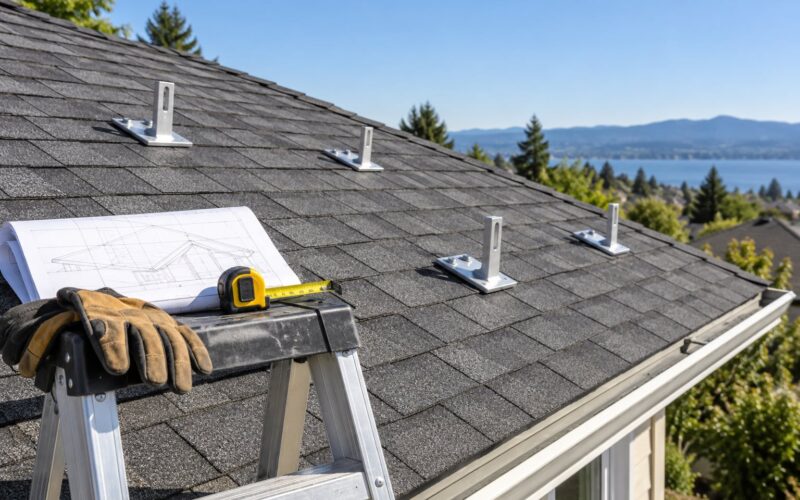
Ask how they handle the penetrations. Panels are held by mounts that go through the roof, and the detail around each one is what determines whether you get leaks years later. A competent installer uses flashed mounts and sealant applied correctly, and should describe that in plain terms rather than changing the subject.
Ask what their guidance is on roof age before installing. If your shingles are near the end of their life, doing a full roof replacement first avoids paying twice to remove and reinstall an array. Some installers will price both sequences so you can see the difference.
Then ask the question most contracts skip. If you replace the roof in five years, who removes the panels, who reinstalls them, and what does each visit cost? Some companies include removal and reinstallation in the workmanship warranty and some charge a fee. Also ask whether the roof-penetration warranty survives a roof replacement at all.
15. What Maintenance, Monitoring and After-Sales Support Do You Provide?
Ask who responds when production drops. Most residential systems need very little physical upkeep, but they do need someone watching, and a silent system that has been underperforming for three months is the most common complaint you will find in homeowner discussions.
Ask who owns the monitoring account and the production data. This is a small detail with real consequences: if the account sits in the installer’s name and they fold, you may lose visibility into your own system. Getting your own login, with your name on it, before activation is a reasonable ask.
Finish with the support question. What is the warranty claim process, who do I call first, what response time can I expect, and what do you check when I report that my output has dropped? A company with a real service department will describe the process without hesitating.
Frequently Asked Questions
How do I know if a solar installer is reputable?
Look for four things you can verify yourself: a license number you can confirm with your state licensing board, proof of general liability and workers compensation coverage, in-house crews rather than unaccountable subcontractors, and recent local customers you are able to call. Reviews help, but read the ones that describe problems and how they were resolved, since that is the part a complaint-free summary leaves out.
Should I get multiple quotes for a home solar system?
Yes, get at least three written proposals from different companies, ideally including a local independent installer alongside any national brand you are considering. Comparing quotes is the only practical way to spot an inflated price, because quotes often cluster at a similar cost per watt. Compare the scope behind each number, not the headline price, and check that every proposal is built from an on-site assessment.
What should not be included in a solar installation quote?
Ask instead which items are deliberately excluded, since that is what a vague quote hides. Frequent omissions are permit and inspection fees, utility interconnection costs, meter changes, service panel upgrades, extra conduit, and the future cost of removing the array. Require a written line that names everything not in the total, so any surprise on the final invoice can be traced back to a conversation you had.
Should I buy or lease a residential solar system?
Buying with cash or a solar loan keeps ownership with you, which is what lets you claim the federal Residential Clean Energy Credit and keeps the incentives and any resale value. Leases and power purchase agreements avoid that upfront cost and shift maintenance responsibility, but the provider owns the system and claims the incentives. Compare the total cost over the same term, not the monthly payment.
Do I need to replace my roof before installing solar panels?
Not always, but it depends on how much life your roof has left. If the shingles are near the end, replacing the roof first avoids paying twice to remove and reinstall an array later. Ask the installer for their opinion on remaining roof life, and ask what removal and reinstallation would cost if you replace the roof after installation.
Who is responsible for solar permits and utility interconnection?
The installer normally files the building and electrical permits and submits the utility interconnection application, and that responsibility should be written into the contract. Utility approval is often the slowest step and is outside the installer’s control, so ask who follows up when it stalls and put a target date for system activation in the agreement.
What Should I Do First Before Choosing a Solar Installer?
Start by getting at least three written proposals, each built from an on-site visit, and treat any quote without one as incomplete rather than cheap. Verify the license number and insurance yourself with the state licensing board rather than relying on the sales conversation.
Then line the proposals up side by side: system size and layout, named equipment, annual production, the itemized total, and what is excluded from it. Read the financing, warranty and cancellation terms last, but read them properly, with the credit ownership and roof-penetration questions answered in writing before you sign anything.