IP65 and IP67 both mean a fixture is dust-tight, and the only real difference is water. IP65 survives water jets from any direction, the kind driven rain sends sideways into a wall light. IP67 goes further and is tested for temporary immersion up to 1 metre for 30 minutes, which makes it the safer pick for low, wet or hard-to-reach spots.
Here is the short version most people need: IP65 is generally enough for lights mounted above head height or under cover. IP67 earns its extra protection at ground level, near puddles, along pond edges and anywhere you would rather not climb a ladder twice. Your own manufacturer’s instructions still win if they say something specific.
Below is the detail, including one technical point that trips up almost everyone reading these numbers.
Table of Contents
- IP65 vs IP67 Outdoor Light Rating at a Glance
- What Does the IP Rating Mean?
- IP65 or IP67: What Is the Difference?
- Ratings are not cumulative past IPX6
- Which Rating Is Better for Outdoor Lights?
- Where Can You Install IP65 Outdoor Lights?
- When Does IP67 Make Sense for Outdoor Lighting?
- IP65 vs IP67 for Solar Garden Lights
- What Other Ratings Should You Check Before Buying?
- Which Should You Choose?
- Frequently Asked Questions
- Is IP65 good enough for heavy rain?
- Does an IP67 rating mean the light is waterproof?
- Does IP67 survive pressure washing?
- What does the IP67 rating on a solar light actually mean?
- What should I do if an outdoor light has been out in heavy rain?
- Conclusion
IP65 vs IP67 Outdoor Light Rating at a Glance
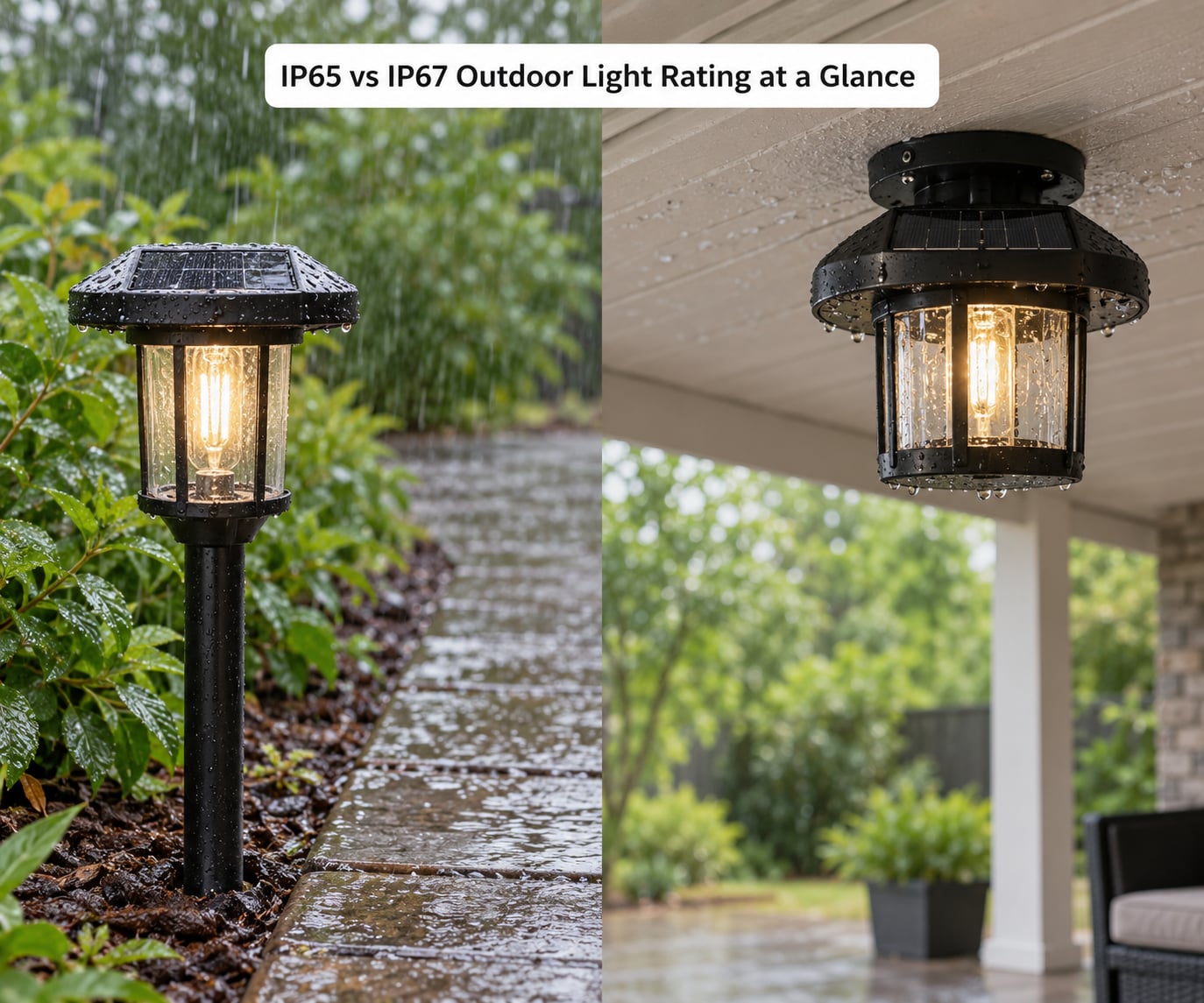
| What to compare | IP65 | IP67 |
|---|---|---|
| Dust protection (first digit) | 6, dust-tight | 6, dust-tight |
| Water protection (second digit) | 5, water jets from any direction | 7, temporary immersion up to 1 metre for 30 minutes |
| How it is tested | 6.3 mm nozzle spraying about 12.5 litres per minute at 30 kPa for 3 minutes | Enclosure submerged to 1 metre for 30 minutes |
| Typical exposure | Rain, spray, splashes, dust | All of the IP65 risks plus short-term standing water |
| Where it fits well | Wall packs, porch lights, solar path lights, patio and string lights mounted above the ground | Ground-level fixtures, pond surrounds, driveways, flood-prone gardens, low borders |
| Does it mean submersible | No | No, immersion is temporary only |
| Does it cover pressure washing | No | No |
| Practical choice | The default for most ordinary outdoor installations | The sensible default for low, wet and difficult-to-service positions |
One column of that table is the one people skip. IP67 is not a permanent submersion rating, and neither rating covers a pressure washer. Both facts change what you should buy for certain jobs.
What Does the IP Rating Mean?
An IP rating, short for ingress protection, is a two-digit code defined in the international standard IEC 60529. It tells you how well an enclosure keeps out solids and water. The first digit rates solid objects, the second digit rates water, and each digit stands for a defined laboratory test rather than an opinion.
A first digit of 6 means dust-tight, so no dust enters the sealed enclosure at all. That is why almost every serious outdoor light carries a 6 in the first position, whether the second digit is a 4, a 5 or a 7.
The second digit is the part that matters outdoors. It runs from 0, no protection, up through water jets, temporary immersion and continuous immersion. Each number is its own test with its own water pressure, nozzle size and duration, which is exactly where the confusion starts.
IP ratings also say nothing about ultraviolet exposure, impact damage, corrosion, temperature extremes or how well a cable gland was fitted. A perfectly rated fixture with a cracked seal is still a fixture that fails, so the code is a useful baseline rather than a complete weather-resistance specification.
IP65 or IP67: What Is the Difference?
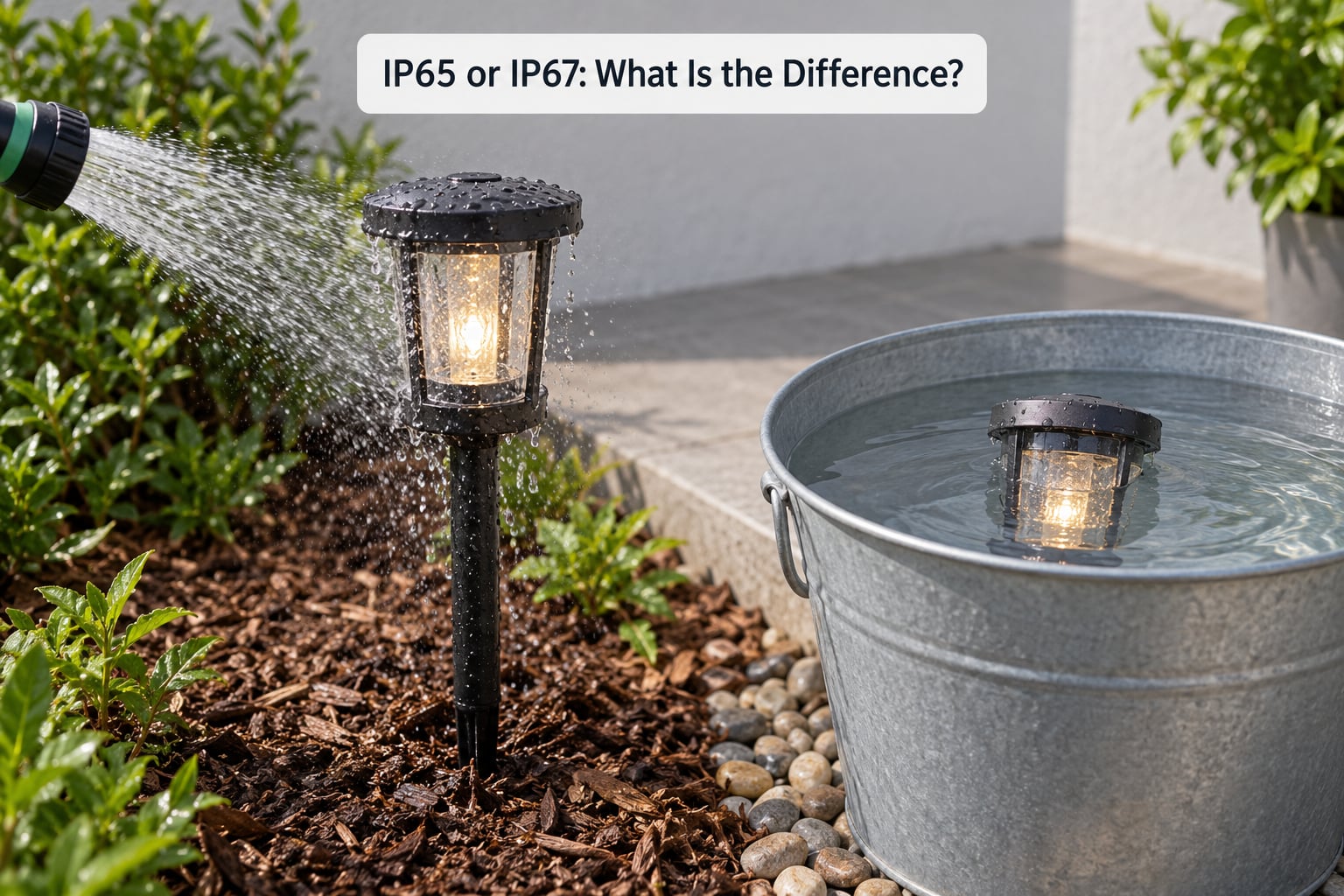
IP65 is tested with a 6.3 mm nozzle delivering roughly 12.5 litres per minute at 30 kPa from any direction for three minutes. It is designed for rain, garden hose spray and the sideways driving showers that hit an exposed wall fixture.
IP67 is tested by submerging the enclosure in water up to 1 metre deep for 30 minutes. That is a far harsher scenario, and it is the right rating for a fixture that could sit in a puddle after a downpour or get knocked over into a low, wet bed.
Ratings are not cumulative past IPX6
Here is the technical point worth knowing. The water digits are separate tests, not steps on a single ladder. A fixture certified IP67 has not necessarily been sprayed with a hose jet at IPX5 or IPX6 pressure, so an IP67 label does not automatically mean the fixture can handle pressure washing.
If you plan to wash a facade or a driveway with a pressure washer, look for a fixture rated for high-pressure jets or a manufacturer’s written statement that it is safe for that use. Position matters too, since a jet held at close range from one angle hits far harder than the same jet from three metres away.
Which Rating Is Better for Outdoor Lights?
Neither one is better in the abstract. The right answer depends entirely on how exposed the mounting position is, how high the fixture sits and how difficult it would be to reach if water got in.
You will read two conflicting claims online. Retailers tend to say IP65 is fine for most outdoor lighting, while lighting professionals often describe IP65 as a temporary or sheltered-outdoor rating and point to IP66 and above. Both come from the same test standard, and the difference is exposure rather than quality.
The honest resolution is simple. An IP65 fixture on a wall two and a half metres up, away from a downpipe, will typically see nothing harsher than IP65 was tested for. Move that same fixture to the foot of a wall where water runs along the ground, and you are now in IP67 territory. A five-year retrospective on r/SHONELIGHTING makes the same point about driveway entrance lights, recommending IP65 as the floor for regular path and post lights and IP67 where water stands after heavy rain.
Whenever a product comes with instructions, follow them. They tell you about mounting angle, exposed parts and low-temperature limits that no IP code covers.
Where Can You Install IP65 Outdoor Lights?
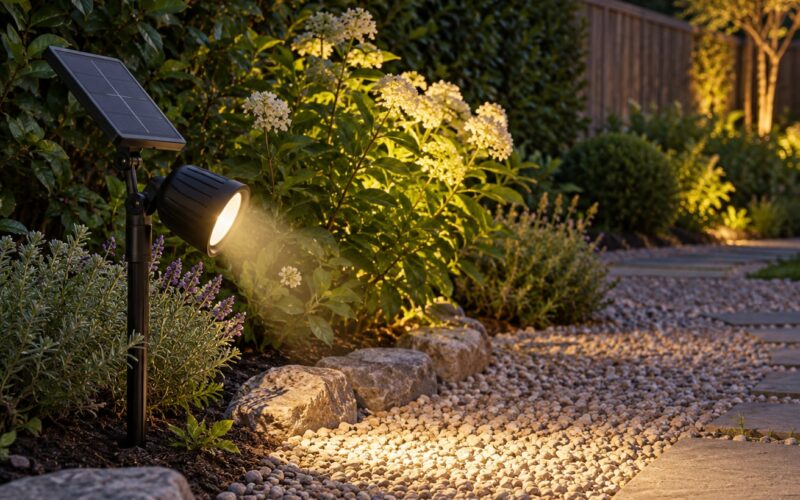
IP65 suits ordinary exposed outdoor use where rain reaches the fixture but water does not sit against it. Wall lights beside a door, porch and soffit fittings, solar path lights pushed into a bed, patio string lights hung from a pergola and standard outdoor wall packs over a garage all sit comfortably in that category.
It also suits most solar garden lighting, provided the panel itself gets sun. Low-voltage solar lights that sit in grass and get rained on hard still hold up for years when the housing is properly sealed and the fixture is not standing in a hollow that fills with water.
What can undermine an IP65 installation is rarely the rating itself. It is a mounting screw drilled and left unsealed, a cable entry that was never gasketed, corrosion on steel fixings in a damp climate, or a solar panel mounted facing north under a tree where no charge reaches the battery.
When Does IP67 Make Sense for Outdoor Lighting?
IP67 makes sense when the fixture is low, wet or awkward. Ground-level spike lights, lights along a garden border where mulch holds moisture, driveway and gate post lights, pond and water feature surrounds, and anything in a low-lying garden that floods after heavy rain are all reasonable reasons to move up a rating.
Hard-to-reach installations deserve the same treatment on practical grounds. A wall light twenty feet up is awkward to reach. One mounted at the bottom of a wall or the base of a set of steps will eventually be standing in water, and replacing it twice costs far more than choosing the stronger rating the first time.
Be clear about the boundary. IP67 covers temporary immersion, not permanent submersion, and it is not a pool or fountain light. Anything that stays underwater on purpose needs a rating defined for continuous immersion, with a stated depth and duration from the manufacturer.
IP65 vs IP67 for Solar Garden Lights
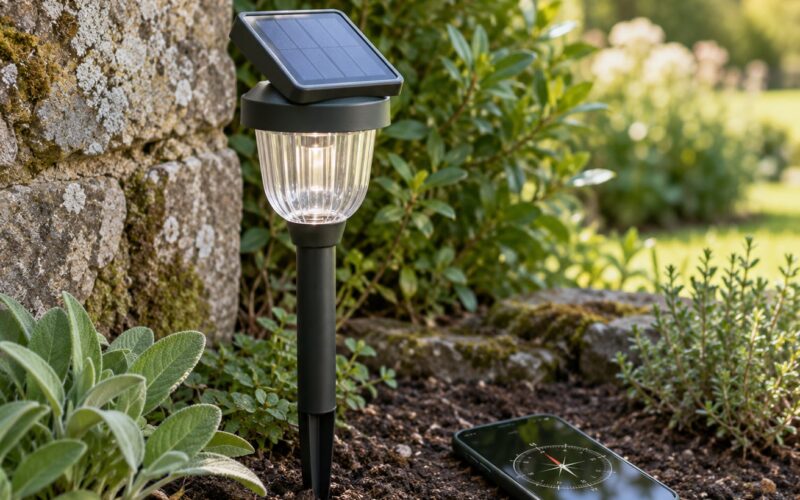
For most solar path and spike lights, IP65 is a sensible specification and will last, provided the panel gets direct sun. The panel is often the weakest point in the assembly, not the LED head, because the adhesive or gasket around the solar face is the seal most likely to give way in persistent damp.
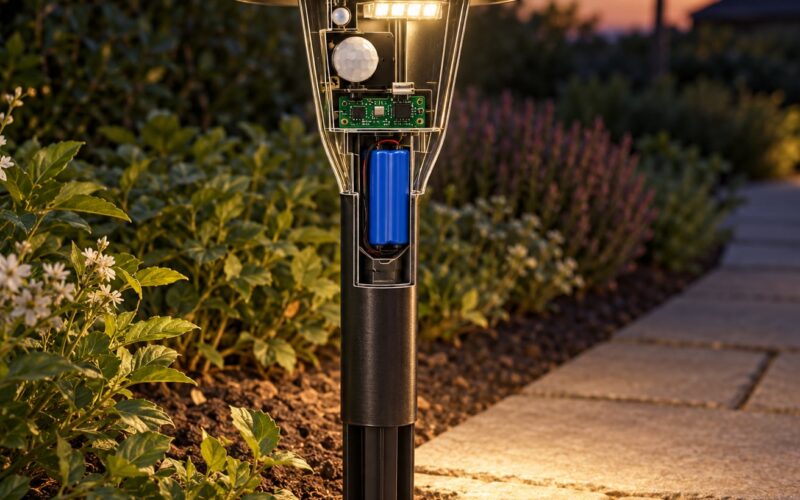
Choose IP67 for solar lights going into a low bed, beside a pond or into a garden that floods. Battery compartments on cheaper solar lights are frequently rated lower than the light head, and corrosion on the contacts is what actually ends the product’s life. A higher rating on the whole assembly matters more than a rating printed on the box for the LED.
Seasonal weather counts too. A light in a climate with cold wet winters and mild summers lives a very different life from one in a place with long hot dry spells and sudden downpours, because thermal cycling ages gaskets faster than steady damp does.
What Other Ratings Should You Check Before Buying?
IP is the first check, not the only one. The useful secondary questions are straightforward: what operating temperature range is stated, is the lens or housing UV resistant, what is the housing material, are the fixings stainless, and is the whole fixture covered or only selected parts.
Impact resistance is a separate code you may see quoted. IK ratings run from IK02 to IK10 and describe how much energy the enclosure withstands from a defined impact, which matters for wall packs near a football net, car park columns and anywhere a mower or a hedge trimmer might clip a spike light.
Seal integrity is the part buyers rarely get to inspect, so ask instead. Electricians on r/ukelectricians put it plainly: if a supplier cannot produce a certificate for the rating they claim, treat the claim as unproven. In the United States you may also encounter NEMA 4X enclosures, which are a separate but broadly comparable outdoor standard rather than an IP number.
Which Should You Choose?
For routine exposed outdoor use above ground level, pick IP65. It is the standard specification for wall packs, porch lights, patio and string lights, and most solar path lighting, and it is what you will find on the majority of well-made garden fittings.
Move up to IP67 when the fixture sits low, sits in wet ground, stands in a puddle-prone spot, sits near water, or would be a real nuisance to reach again in a year. It costs a little more and removes a whole category of future regret.
Go further, and follow the manufacturer’s specific instruction, when the fixture will be submerged on purpose, washed with a pressure washer, or installed somewhere exposed like a flood zone or an exposed coastal wall. There, IP66 or a manufacturer-stated immersion depth is a more honest starting point than either of these two.
Frequently Asked Questions
Is IP65 good enough for heavy rain?
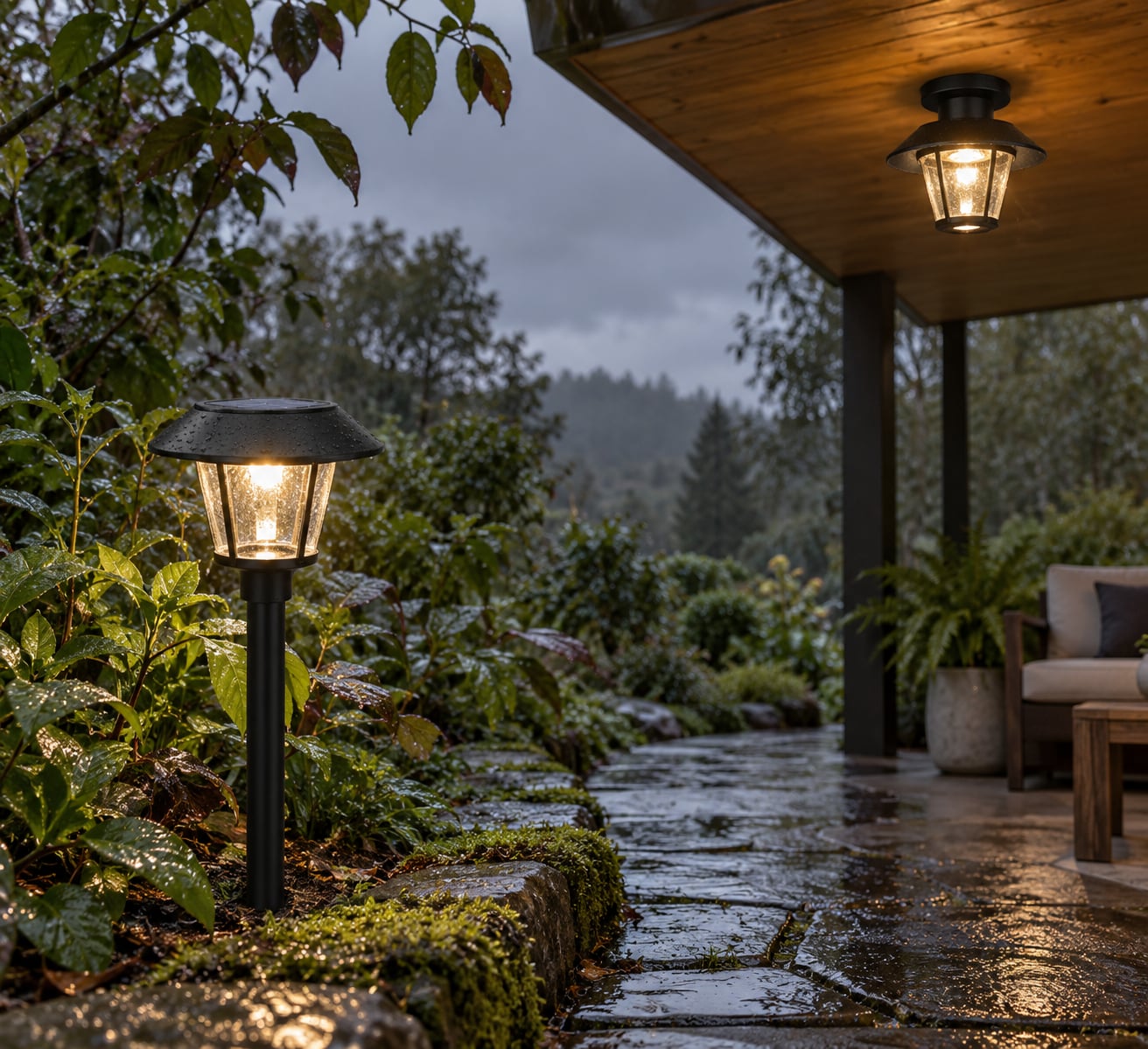
Yes, for fixtures mounted above ground level. IP65 is tested against water jets from any direction at 30 kPa, which is more severe than most heavy rain delivers. It is the wrong choice where water collects against the fixture, sits in a hollow or runs along a wall at ground level, because that is standing and flowing water rather than falling rain.
Does an IP67 rating mean the light is waterproof?
No, and the word waterproof is worth avoiding. IP67 is tested by submerging the fixture to 1 metre for 30 minutes, which covers temporary immersion such as a downpour leaving a fixture sitting in a puddle. Permanent submersion is a different test entirely, defined at a specific depth and duration by each manufacturer under the IP68 designation.
Does IP67 survive pressure washing?
It might, but you cannot assume it does. Water ratings are separate tests rather than a single scale, so an IP67 fixture has not necessarily been tested against the pressure and concentrated jet of a pressure washer. For a washed-down driveway or facade, look for a high-pressure jet rating or a written statement from the manufacturer approving that use.
What does the IP67 rating on a solar light actually mean?
The light has been tested for temporary immersion up to 1 metre for 30 minutes, which is a real benefit for solar fixtures installed low in a bed or a flood-prone garden. Check whether the rating covers the entire assembly, including the battery compartment and solar panel, since the head and the battery box are often rated separately and the panel seal is the usual failure point.
What should I do if an outdoor light has been out in heavy rain?
Do not open a fixture that is still powered, and let any water out before reconnecting anything. Then work through the simple causes first: a dirty or shaded solar panel, a dead rechargeable battery, a battery compartment switch set to off, or a photocell stuck on. Most solar lights that stop working after rain were never wet inside at all.
Conclusion
The difference between IP65 and IP67 is a difference in exposure, not quality. IP65 handles rain and jets on fixtures mounted above ground level, while IP67 adds tested protection against temporary immersion for low, wet and hard-to-reach positions. Both are dust-tight, and neither is a permanent submersion or pressure-washing rating.
Start with the location rather than the number. Look at where the water will actually come from, check the manufacturer’s full specification, and then look at the weakest exposed part of the fixture, because that is the one that decides whether it is still working three winters from now.