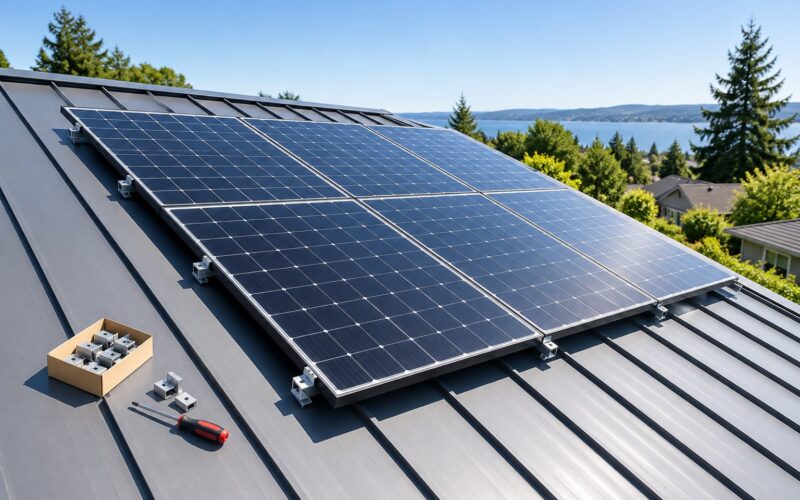
If you want the short answer: the physical work of a rooftop solar installation takes one to three days on site, while the whole residential project usually runs two to five months from first quote to Permission to Operate, or PTO. Most of that wait is paperwork moving through your installer, your local building department and your utility, not labor on your roof.
That split trips up a lot of people. Sales conversations tend to focus on install day because it is easy to picture, and it is the shortest part of the schedule. The stages that decide whether you pay your first solar bill in June or in October are the ones nobody sees.
Last reviewed in October 2026. This guide covers residential grid-tied systems in the United States, with a note at the end on off-grid and battery-only setups.
Table of Contents
- How Long Does a Solar Installation Take? Typical Timelines
- What Is the Difference Between Installation Day and the Full Project Timeline?
- How Long Does Each Stage of a Home Solar Installation Take?
- How long does a solar installation take from contract to Permission to Operate?
- Stage 1: Site assessment (1 to 2 weeks)
- Stage 2: System design and engineering (1 to 3 weeks)
- Stage 3: Permitting (2 to 8 weeks)
- Stage 4: Equipment and scheduling (2 to 8 weeks)
- Stage 5: Installation (1 to 3 days)
- Stage 6: Inspection (1 to 3 weeks)
- Stage 7: Interconnection and PTO (2 to 8 weeks)
- What Factors Can Make a Solar Installation Take Longer?
- How to Prepare Your Home Before the Installers Arrive
- What Happens During the Solar Installation?
- Can You Install Solar Panels Yourself?
- How Can You Avoid Delays and Unexpected Work?
- When Will Your Solar System Start Producing Electricity?
- Frequently Asked Questions
- Do solar panels work immediately after installation?
- How long does PTO take for solar?
- How long does it take to get solar panels installed after signing the contract?
- Does adding a battery extend the solar installation timeline?
- How long does solar permitting take in my state?
- Why is my solar installation taking so long?
- Conclusion
How Long Does a Solar Installation Take? Typical Timelines
Most straightforward residential solar installations take one to three days of physical work and roughly two to five months end to end. A simple single-story roof with an existing 200 amp panel and no shading usually sits at the fast end. Tile roofs, steep pitches, older panels needing replacement, a battery add-on, or a utility with a slow interconnection queue push it toward the slow end.
The honest range most experienced installers quote is somewhere between four and six months for a standard grid-tied project, because that covers the outliers without frightening anyone. Ads that promise power in a few weeks are describing the install itself, not the project.
Season matters too. Spring and summer are peak booking season, and crews can be scheduled six to ten weeks out before anyone climbs a ladder. In the quieter months that wait often drops to three or four weeks. If your project is time-sensitive, signing in the fall can put panels on your roof before the spring rush.
What Is the Difference Between Installation Day and the Full Project Timeline?
Install day is the part where a crew is on your property: mounting racking, setting panels, wiring the inverter and connecting the system to your electrical panel. The full timeline includes every queue that comes before and after that, and it is the only number that changes what you actually pay on your utility bill.
| Stage | Typical duration | Who controls it |
|---|---|---|
| Consultation and site assessment | 1 to 2 weeks | Your installer |
| System design and engineering | 1 to 3 weeks | Your installer |
| Permit filing and review | 2 to 8 weeks | Local building department (AHJ) |
| Equipment ordering and crew scheduling | 2 to 8 weeks | Installer and suppliers |
| Physical installation | 1 to 3 days | Your installer |
| Post-install inspection | 1 to 3 weeks | Building department |
| Utility interconnection review | 2 to 8 weeks | Your utility |
| Permission to Operate and activation | A few days to 6 weeks | Your utility |
Two of those rows are outside your control entirely, and they are the two that most often run long. Permit review belongs to your local authority having jurisdiction, and interconnection review belongs to the utility. Everything else you can influence at least a little by responding quickly and having accurate information ready.
For context on how variable this really is, homeowners on r/solar have reported everything from roughly two months to 135 days between signing and switching the system on. One Southern California user had a city permit granted on February 14, an install on March 3, and was still waiting on PTO weeks later. A user in an Alberta solar group installed on June 2, passed inspection by June 13, and was still waiting on approval weeks afterward.
How Long Does Each Stage of a Home Solar Installation Take?
How long does a solar installation take from contract to Permission to Operate?
Plan on two to five months, with four months being the most common single figure. Add a battery and you are more likely looking at three to six, because storage hardware has its own lead time and some utilities treat storage systems differently on the application form.
Stage 1: Site assessment (1 to 2 weeks)
An installer walks the roof, measures the planes, photographs the electrical panel, shades the property with a sun path tool, and discusses your energy use. This is also where they flag problems early, like an electrical panel with no room for a disconnect or a roof with more shading than the photos suggested.
Stage 2: System design and engineering (1 to 3 weeks)
The designer sizes the array, picks the inverter, drafts the plan set that the building department will review, and submits the interconnection application to your utility. Larger or more complex systems take longer to engineer. Starting this application early is one of the most effective ways to shorten a project, because the utility queue often runs in parallel with permitting.
Stage 3: Permitting (2 to 8 weeks)
This is usually the longest phase and the one installers and homeowners argue about most. Some jurisdictions approve a residential photovoltaic plan set in two to three weeks. California data often shows permits averaging roughly 13 to 19 days, but individual approvals have stretched past 60 days in heavily reviewed jurisdictions. A rejected plan set, usually over a detail like a structural note or a conduit layout, restarts part of that clock.
Stage 4: Equipment and scheduling (2 to 8 weeks)
Panels, inverters and racking ship after the permit is approved, and batteries can take considerably longer than the rest. The installer then books the crew. If your contract was signed in April, you are probably looking at a June or July install date.
Stage 5: Installation (1 to 3 days)
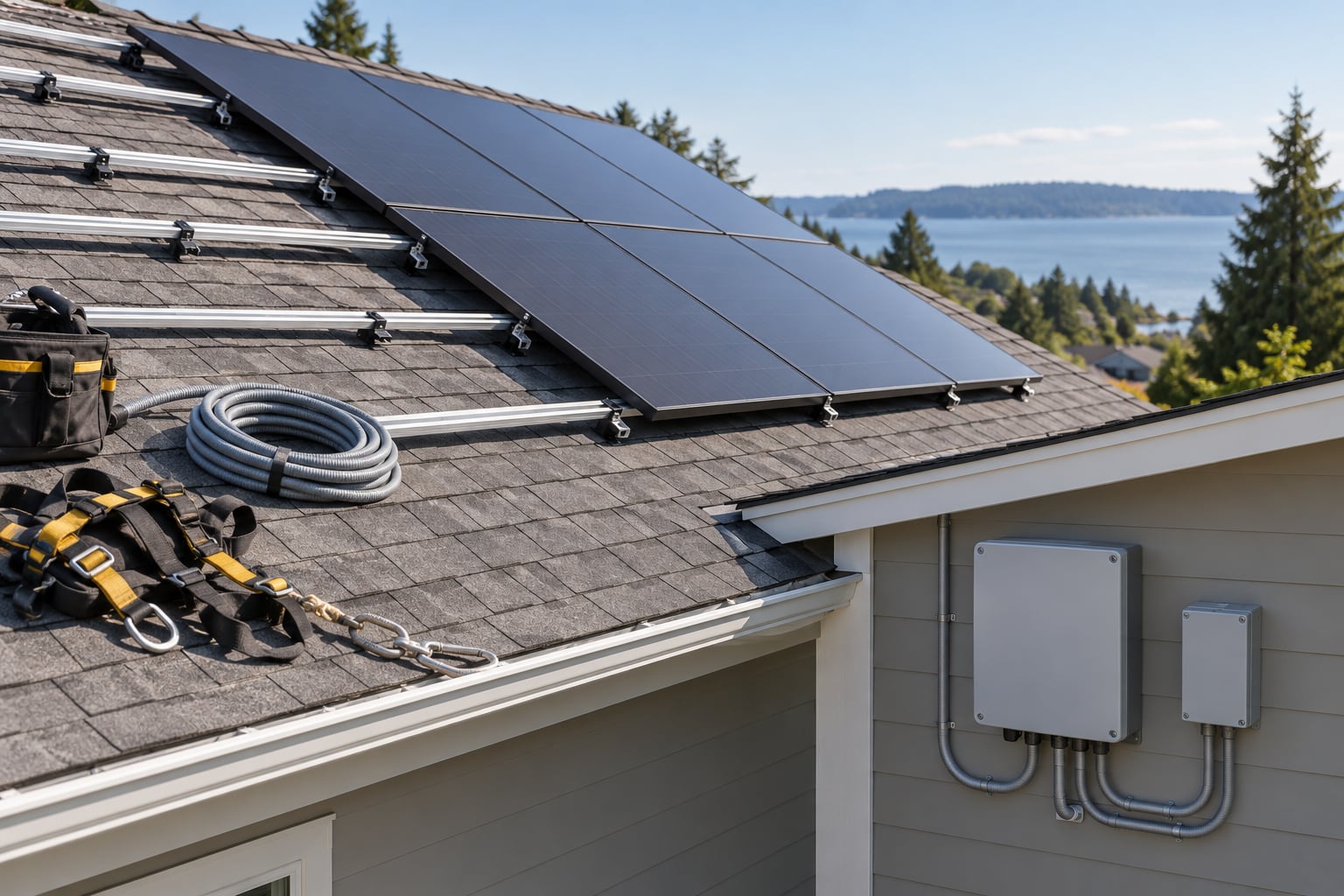
One day for a simple system, two for a more involved array, three when there is a battery, a service panel swap, or roof work that has to happen first. The crew sets up fall protection, mounts racking, runs conduit, places panels, installs the inverter and rapid shutdown, and connects to your panel.
Stage 6: Inspection (1 to 3 weeks)
The building department sends an inspector to verify the installation matches the approved plan set. Failures are usually small, such as a missing label or a fastener torque issue, and a re-inspection adds another week or two.
Stage 7: Interconnection and PTO (2 to 8 weeks)
Your installer submits the interconnection request for permission to operate, and the utility reviews it, sometimes with a meter swap or a remote approval. Homeowners report four to eight week waits for interconnection review in some California territories, and one user described waiting seven months for an interconnect agreement. After PTO is issued, the system usually goes live within a few business days.
What Factors Can Make a Solar Installation Take Longer?
Roof age and condition come first. If your roof needs a re-roof before panels go on, or if mounting requires cutting into brittle old shingles, the project gains days or weeks and the schedule slips until the weather cooperates.
Steep or unusual roof geometry adds time on site. Multiple planes, dormers, skylights, and tight access points mean more flashing work and more safety setup. So does a roof that cannot be reached by a ladder from the ground.
Shading is a design problem more than a schedule problem, but a shaded roof means more string design and sometimes a smaller array, which means a revised plan set and another permit review cycle.
Electrical upgrades are the most common surprise. An older panel with no spare breaker space, a meter that needs replacing, or a main breaker rating that no longer matches code can add days of on-site work plus a re-inspection. Ask specifically whether your electrical service can handle the system before you sign.
Battery storage extends the schedule in two ways. The hardware itself can carry a lead time measured in weeks, and the utility may require separate documentation for storage on the interconnection application.
Permit complexity follows the same logic. Historic districts, HOAs with design committees, and structural requirements all add review layers. HOA approval in particular is a queue your installer cannot enter for you.
Utility requirements vary enormously between territories. Some utilities process residential interconnection in a couple of weeks. Others, particularly in denser or more heavily subscribed territories, publish ranges that stretch to two months or more.
Weather is the last one and the least controllable. Rain, snow, high wind, and extreme heat all push install dates, and roofs often need to be dry and safe for crew members to work.
How to Prepare Your Home Before the Installers Arrive
- Clear the path from your driveway to the electrical panel and up to the roof access point. Crews move ladders and material.
- Secure pets indoors on install day and on inspection day. A ladder going up and down a wall is no place for a dog.
- Know where your electrical panel and meter are, and make sure they are accessible and not behind stored items.
- Photograph your existing panel, meter and any equipment before work starts. That record helps with warranty claims later.
- Plan for a brief power interruption. The crew disconnects the grid to tie in, usually for under an hour, and will tell you in advance.
- Move outdoor furniture, planters, grills and anything fragile from the eaves line. Nobody enjoys finding a dented planter.
- Ask your installer whether landscaping, gutters, or a satellite dish need to come off and who handles that.
- Leave clear notice for anyone else with access to the property, including cleaners or a house sitter.
What Happens During the Solar Installation?
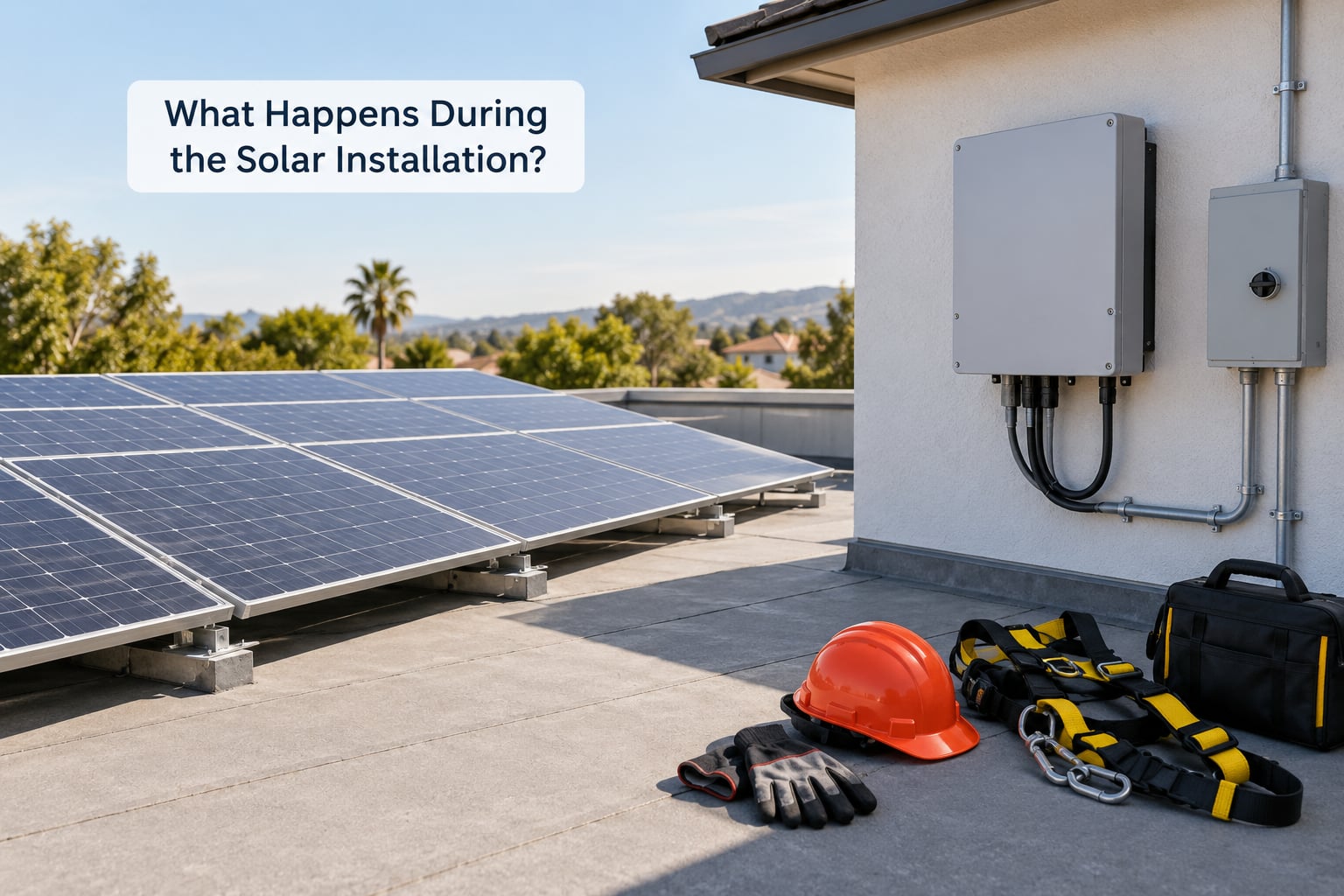
The crew starts by setting up fall protection and laying out where panels will go. Roof work comes first, because the mounting hardware has to be anchored and flashed before anything electrical is connected.
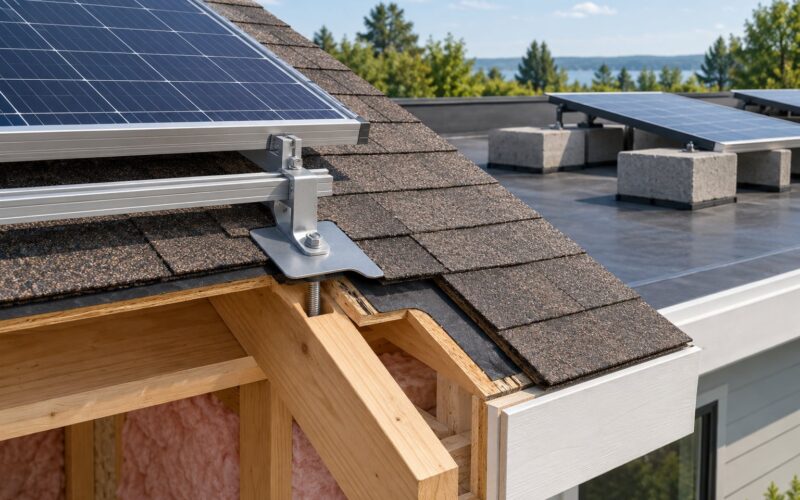
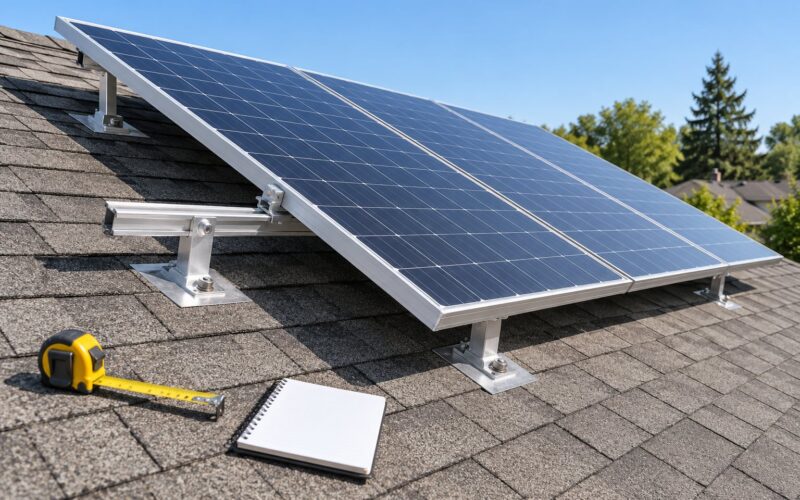
Racking and mounting hardware is attached to the roof structure, each penetration flashed and sealed. Panels are then set, clamped, and wired into series strings. Below, the inverter and rapid shutdown device get mounted in a ventilated, accessible spot that installers will need to reach for servicing years from now.
Conduit runs from the array down to the electrical panel, where the crew installs the disconnect, labels breakers, grounds the system, and completes the tie-in. They test the equipment, walk you through the monitoring app, and clean up before leaving.
That electrical work should be done by qualified professionals following the manufacturer’s instructions and local requirements. Solar wiring sits next to your home’s main service, and mistakes there are not a homeowner-level project.
Can You Install Solar Panels Yourself?
Experienced do-it-yourself installers can handle a lot of the physical work, and some people do it for off-grid cabins or remote structures where interconnection is not involved. On a grid-connected home, the picture changes quickly.
A grid-tied system needs an electrical permit, a plan set, structural sign-off for the mounting, and a formal interconnection agreement with the utility before it can energize. Most jurisdictions require a licensed electrician for the tie-in specifically, and several do not allow a homeowner to pull that permit at all.
There is also insurance. Many providers ask about roof penetrations and workmanship, and a DIY install can complicate a claim. The short version: off-grid in a remote location is one thing, connecting a grid-tied array to a utility service is another.
How Can You Avoid Delays and Unexpected Work?
Ask for a written, milestone-dated schedule at contract signing, with a realistic PTO estimate and the date your crew is reserved. Installers who will not give you a PTO range at signing are telling you something.
Confirm in writing that the installer files the permit and the interconnection application, rather than assigning those jobs to you. A large share of reported delays trace back to paperwork that was never submitted or submitted with errors.
Provide current utility bills and a clear description of your energy use before design. Accurate usage data reduces the back-and-forth that stalls engineering.
Ask whether a structural review or an electrical service upgrade is needed, and get the answer before contract signing rather than install week.
Ask about equipment availability, especially if you want storage. A battery ordered early can remove weeks from the back half of the schedule.
Respond quickly to HOA applications, plan set corrections, and utility emails. These are small tasks that sit in someone else’s queue while your project waits.
Get multiple quotes, but do not confuse quote speed with project speed. The fastest salesperson is rarely the one with the cleanest permitting record in your jurisdiction.
When Will Your Solar System Start Producing Electricity?
Panels generate power the moment they are exposed to sunlight, which is usually the day after installation. What you cannot usually do is use or export that power through your normal service until permission to operate is issued.
That gap is the part homeowners find hardest. For two to eight weeks your system is producing and your meter is still counting every kilowatt-hour you use, and in some cases you cannot net against what you export. Owners reporting a bill spike during that window are not imagining it.
One timing detail catches people: federal clean energy tax credits are generally tied to when the system is placed in service, not when you receive PTO. Those are two different dates, and which one falls in your tax year can change your credit. A tax professional should confirm how this works for your situation.
Frequently Asked Questions
Do solar panels work immediately after installation?
They produce electricity as soon as sunlight hits them, typically the day after install. But a grid-tied system usually cannot use or export that power until permission to operate is issued, which takes two to eight more weeks. Until then your meter still records all the electricity you use.
How long does PTO take for solar?
Permission to operate usually takes one to four weeks after the post-install inspection, once the utility has everything it needs. Homeowners in slower territories report waits of six weeks or more, and a few have described waits measured in months. Submitting complete interconnection paperwork the day after install makes the biggest difference.
How long does it take to get solar panels installed after signing the contract?
From contract to install day, plan on six to twelve weeks. That covers design, plan set drafting, permit review, equipment ordering and crew scheduling. Signing during peak spring and summer season adds another four to six weeks of scheduling delay compared with the quieter months.
Does adding a battery extend the solar installation timeline?
It usually does, by two to six weeks. Battery hardware can carry its own production and shipping lead time, some utilities want separate documentation for storage, and the physical install often stretches to two or three days instead of one. Ordering the battery early, before permits are approved, offsets most of the delay.
How long does solar permitting take in my state?
Most residential jurisdictions approve a photovoltaic plan set in two to three weeks, but the range runs from under a week to more than two months. California data often shows permits averaging roughly 13 to 19 days. Ask your installer how many solar permits the local department approved last month, because that beats any national average.
Why is my solar installation taking so long?
The most common reasons are a plan set that got rejected and had to be resubmitted, an HOA that has not scheduled its design review, equipment that arrived late, or incomplete interconnection paperwork. Find out which stage you are actually in by asking your installer for the last submitted date and the name of the person or office holding it.
Conclusion
The roof work is quick and the paperwork is slow. One to three days on site, two to five months end to end, with permitting and utility interconnection accounting for most of the calendar time.
Start by requesting a site assessment and asking for a written schedule with a realistic PTO date. Confirm that your installer handles permit and interconnection filing, and ask whether roof condition, electrical service, or an HOA could add time to your particular project.