Most home solar projects need three separate approvals before a single panel is switched on: a building or structural permit and an electrical permit from your local Authority Having Jurisdiction (usually a city or county department), a utility interconnection application that ends in Permission to Operate, and HOA or zoning approval if you live in a planned community. That is the short answer to what permits do you need for home solar, and it holds for most permanently installed systems.
The confusing part is that no single agency covers all of it. Your city signs off on the roof, your utility decides whether your meter can handle the export, and your homeowners association may have its own architectural review. Rules change from one county to the next, so treat everything below as a national framework and confirm the specifics with your own local office before you buy equipment.
Table of Contents
- Do You Need a Permit for Home Solar?
- What Permits Do You Need for Home Solar by Project?
- Solar Panel and Battery Permit Requirements
- How Do Local Rules Change the Permit Process?
- Can Homeowners Install Solar Without a Permit?
- What Permits Do You Need for Home Solar on Special Properties?
- How to Get a Home Solar Permit
- What Permits Do You Need for Home Solar: A Five-Minute Checklist
- What Documents and Plans Should You Submit?
- Do You Need Utility Permission to Connect Solar?
- What Can Delay or Void a Solar Permit?
- Frequently Asked Questions
- How much does a home solar permit cost?
- How long does it take to get a solar permit?
- Do solar panels need building permission or only an electrical permit?
- Do I need a permit to add a home battery?
- Can I install solar panels myself without a permit?
- Does a solar permit expire if installation is delayed?
- Conclusion: Start With Your Local Solar Office
Do You Need a Permit for Home Solar?
You almost certainly do, if panels are being fastened to your roof, wired into your electrical system, or connected to the grid. Permanently installed grid-tied systems and anything with a battery fall into the permitted category in the large majority of US jurisdictions.
What decides the answer is how the hardware interacts with your home and with the utility network. Equipment that is hard-wired, bolted to structure, or able to feed electricity back through the meter is treated as construction, so it gets reviewed. A small, factory-assembled kit with its own plug and no connection to your service panel generally does not.
A few factors consistently push a project into permit territory: a service panel upgrade, a battery, a visible street-facing array, a ground mount, a historic property, or a new circuit for an EV charger running off the same inverter. Any of those and the plan set grows.
Forums are full of contradictions on this, because both sides are partly right. Homeowners in some r/solar threads say their county waved a retrofit through with no paperwork, while the same question in a diysolarforum thread produces warnings about fines. The difference is almost never the technology. It is which authority handles the address and what edition of the code they are working from.
What Permits Do You Need for Home Solar by Project?
Different projects pull different approvals. The table below sorts the common ones by who issues them and when they apply.
| Approval | Who issues it | When it applies |
|---|---|---|
| Building or structural permit | City or county building department | Any array attached to a roof, wall, or ground structure, especially on older homes or in high snow or seismic zones |
| Electrical permit | Building department electrical division or the county electrical inspector | Any hard-wired system, inverter tie-in, service panel work, or new circuit |
| Plan or zoning review | Planning or zoning department | Ground mounts, visible street-facing arrays, accessory structures, and homes in overlay districts |
| Fire marshal review | Local fire prevention office | Battery storage installations and, in wildfire-prone areas, some array locations |
| Historic or design review | Landmarks commission or historic district board | Homes inside a certified historic district or under local landmark protection |
| Utility interconnection application | Your electric utility or its distribution provider | Any system that exports power or changes service, including batteries on grid-tied homes |
| HOA approval | Your homeowners association | Any property inside a planned community with architectural or appearance rules |
Note that the first two usually arrive as a single combined permit at many smaller departments, and the last one sits outside government entirely. That mix is why “just get a permit” is bad advice for a solar project.
Solar Panel and Battery Permit Requirements
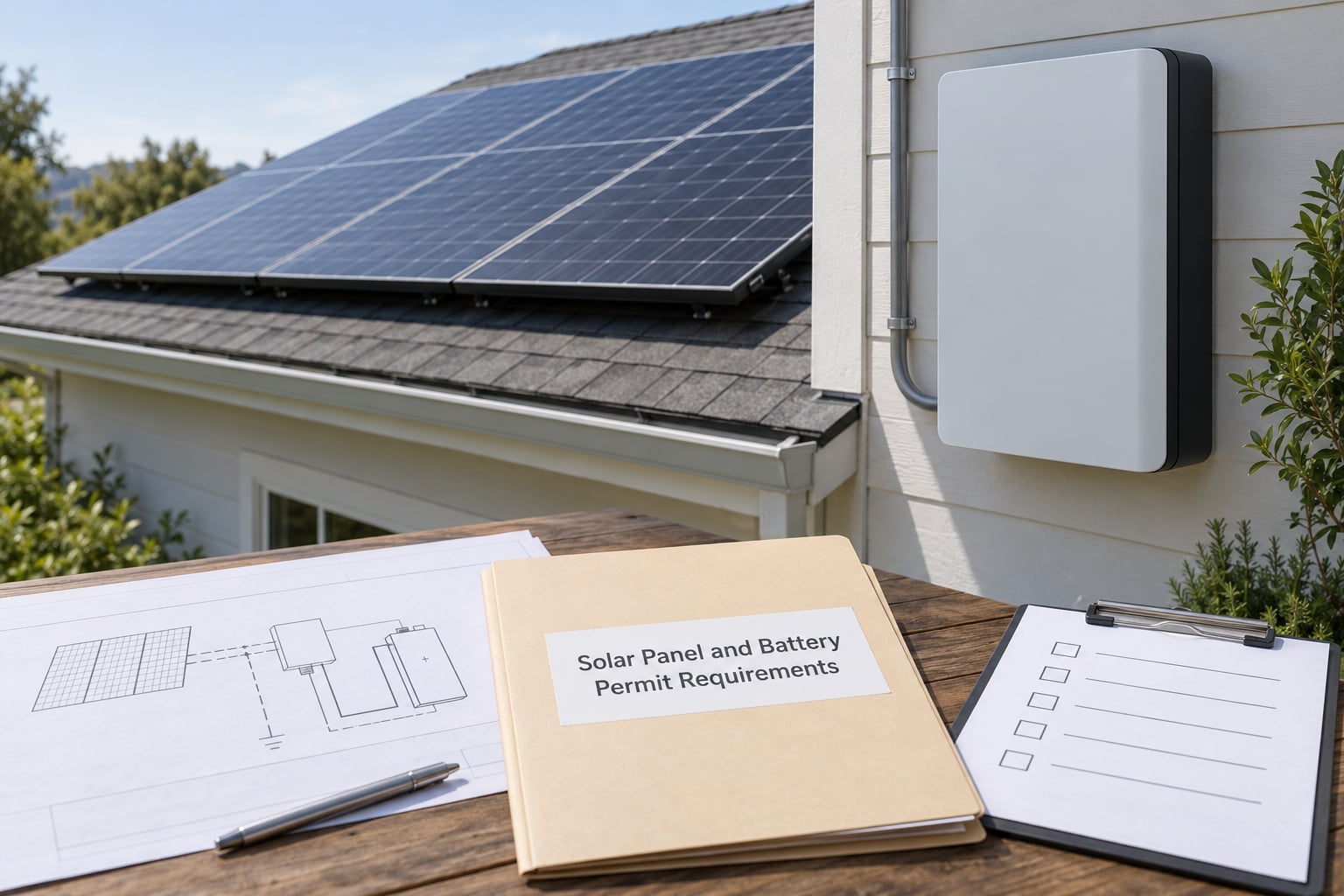
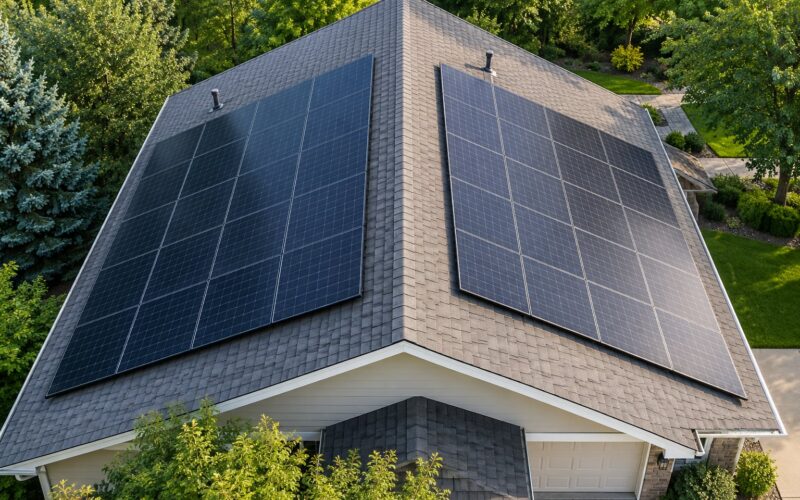
A conventional flush-mounted roof array is the easiest project to permit. It does not change the roof profile, it is not visible from the street, and a standard plan set covers it.
Everything outside that baseline gets more attention. Roof-integrated or tile-replacement solar has to be shown as part of the roofing assembly. Ground mounts trigger zoning review over setbacks, screening, and height. A wall or carport array needs structural calculations for wind and the attachment surface. A battery triggers fire code review for separation distance from the home, wall mounting, and ventilation.
Batteries are the fastest-moving piece of this whole topic. A wall-mounted unit sitting next to a service panel is a different review than a battery installed in a detached shed, and a battery in a garage or closet often draws extra questions about the room itself. Ask the fire marshal or building department directly rather than assuming your electrical permit covers it.
One more wrinkle worth planning for: if your system also serves a new EV charger or a heat pump, the combined load can push your service past its current rating and trigger a panel upgrade review, which is a much bigger scope than the solar work itself.
How Do Local Rules Change the Permit Process?
Start by identifying your Authority Having Jurisdiction, the office that will actually review and sign the work. For most homeowners that is a city building department, but it is sometimes a county, a township, or a regional authority that covers several communities.
The practical way to find it is to search the name of your city or county together with “building department solar permit”, then look for a residential plan review or permit services page. Once you are there, check four things: whether a combined electrical and building permit is issued, whether the office offers an instant or express solar permit, what the submittal checklist is, and who to call with questions before you submit.
State-level laws shape what happens after the local review. Solar access laws limit what an HOA can refuse, and state interconnection rules set deadlines for how fast a utility must respond to an application. Neither one lets you skip your local permit.
Ask the building, planning, fire, and electrical offices, and then the utility’s interconnection team, not just one of them. Getting four different answers in four different conversations is normal, and it is how you build a plan set that survives first review.
Can Homeowners Install Solar Without a Permit?
Owning your home usually lets you pull an owner-builder permit and do the work yourself, but that is not the same as skipping the permit. The electrical scope still has to be reviewed and inspected, and many jurisdictions require a licensed electrician for the service-side connections no matter who owns the roof.
Here is the distinction people get wrong most often. Mounting panels, running conduit on the roof, and landing a small array on rails are often owner work. Tying into the panel, working inside the service equipment, and running a new circuit frequently are not.
Some authorities simply do not issue homeowner electrical permits at all. That is why the right first question for what permits do you need for home solar is not about panels, it is about who is allowed to do the wiring. Ask before you buy anything.
Plug-in and portable solar products sit outside this whole conversation. Nothing is fastened to the structure, nothing touches your wiring, and there is no grid connection.
What Permits Do You Need for Home Solar on Special Properties?
Some addresses have extra authorities layered on top of the standard set, and they are the ones that generate the most surprises.
Historic districts and landmark homes. A landmarks commission or historic district board may require design review before the building department will even accept plans. Setbacks from the street, panel color, and mounting visibility all come up.
Rentals and condos. The permit follows the property, not the person. If you do not own the roof, you need written permission from the owner, and the owner or their agent is who files. Condominiums add association approval on top of any governing documents.
Wildfire-risk zones. Fire-prone jurisdictions have adopted rules that touch solar specifically, including requirements around rapid shutdown, defensible-space setbacks, and where conduit and disconnects may sit. Check the fire authority before you settle on a layout.
Protected trees and shared service. Removal or trimming a protected tree can require its own arborist sign-off. And a meter or service panel shared with a detached structure, an accessory dwelling unit, or a neighbor’s feeder raises questions that a single-family template will not cover.
Ground-mounted arrays in a conservation area or a rural township can also pull in a wetlands or stormwater review. Ask early, since these approvals usually run on their own clock.
How to Get a Home Solar Permit
The sequence matters more than the paperwork itself. Work started before approval is the single most common way a solar project gets into trouble.
- Confirm your jurisdiction and scope. Call the building and electrical offices with your address and describe the project in one sentence: array size, roof or ground mount, battery or no battery, service panel change or no change.
- Ask about express review. Larger cities run instant or automated solar permit programs, and the same code can be approved same-day in one place and take weeks in another.
- Get the design done. Your installer, or your engineer if you are doing it yourself, produces the site plan, roof layout, single-line diagram, and equipment data sheets.
- Submit the application and pay the fee. Fees are usually calculated from the system size and may include a separate plan review line and an inspection line.
- Respond to corrections quickly. Incomplete plan sets are the most common rejection, and each resubmission can reset the clock.
- Build only after approval is issued. Approval in writing, not a verbal promise from the counter.
- Schedule the inspection. There is often a rough-in inspection before the panels are covered and a final inspection after.
- Apply to the utility for Permission to Operate. The city permit does not authorize energizing the system.
What Permits Do You Need for Home Solar: A Five-Minute Checklist
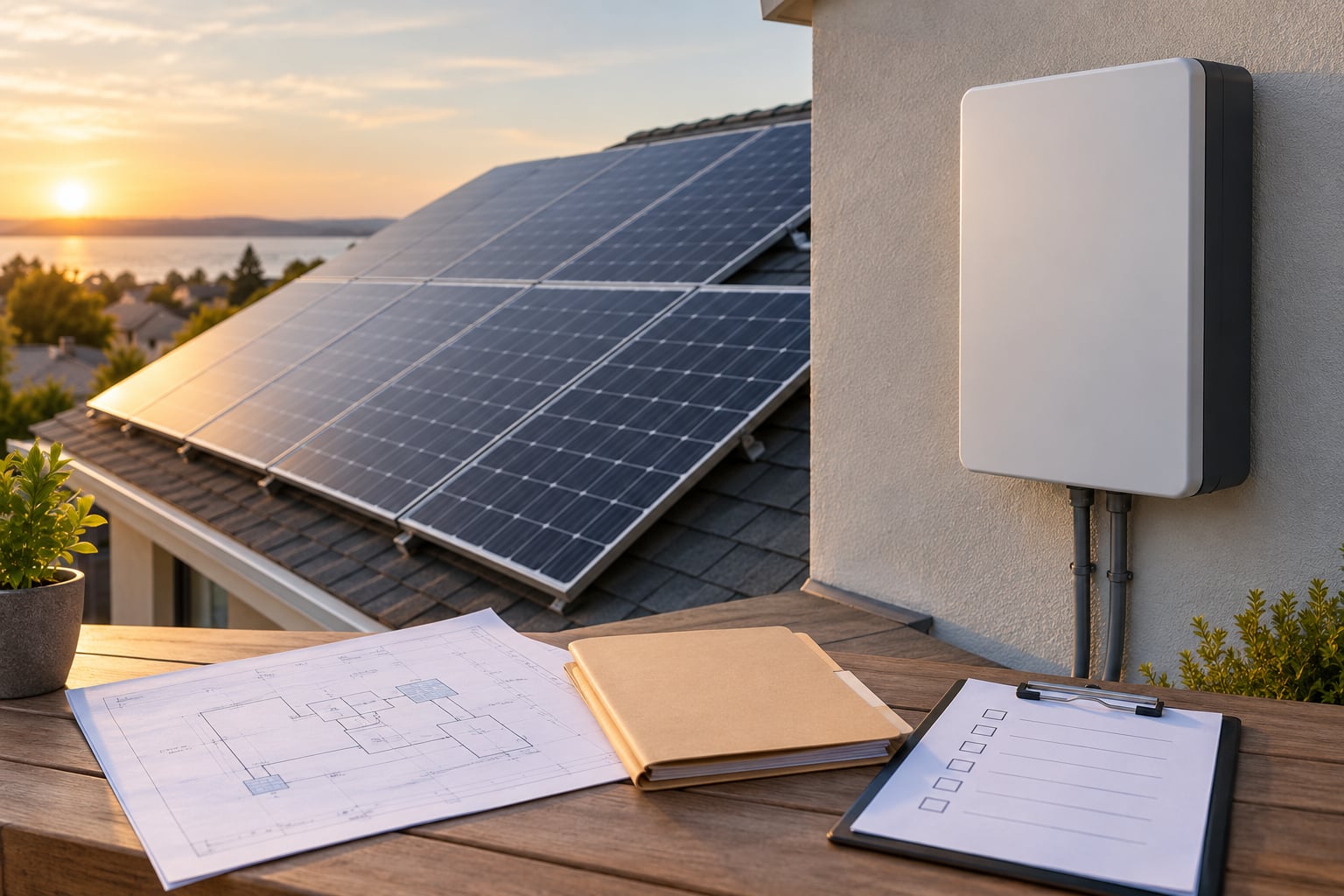
Before you spend money, confirm each line with your local office: building permit for structural attachment, electrical permit for the inverter and service tie-in, fire review if a battery is included, zoning review for a ground mount or visible array, historic review in a protected district, HOA sign-off in a planned community, and a utility interconnection application with Permission to Operate at the end. Ask each authority in writing and keep the answers.
What Documents and Plans Should You Submit?
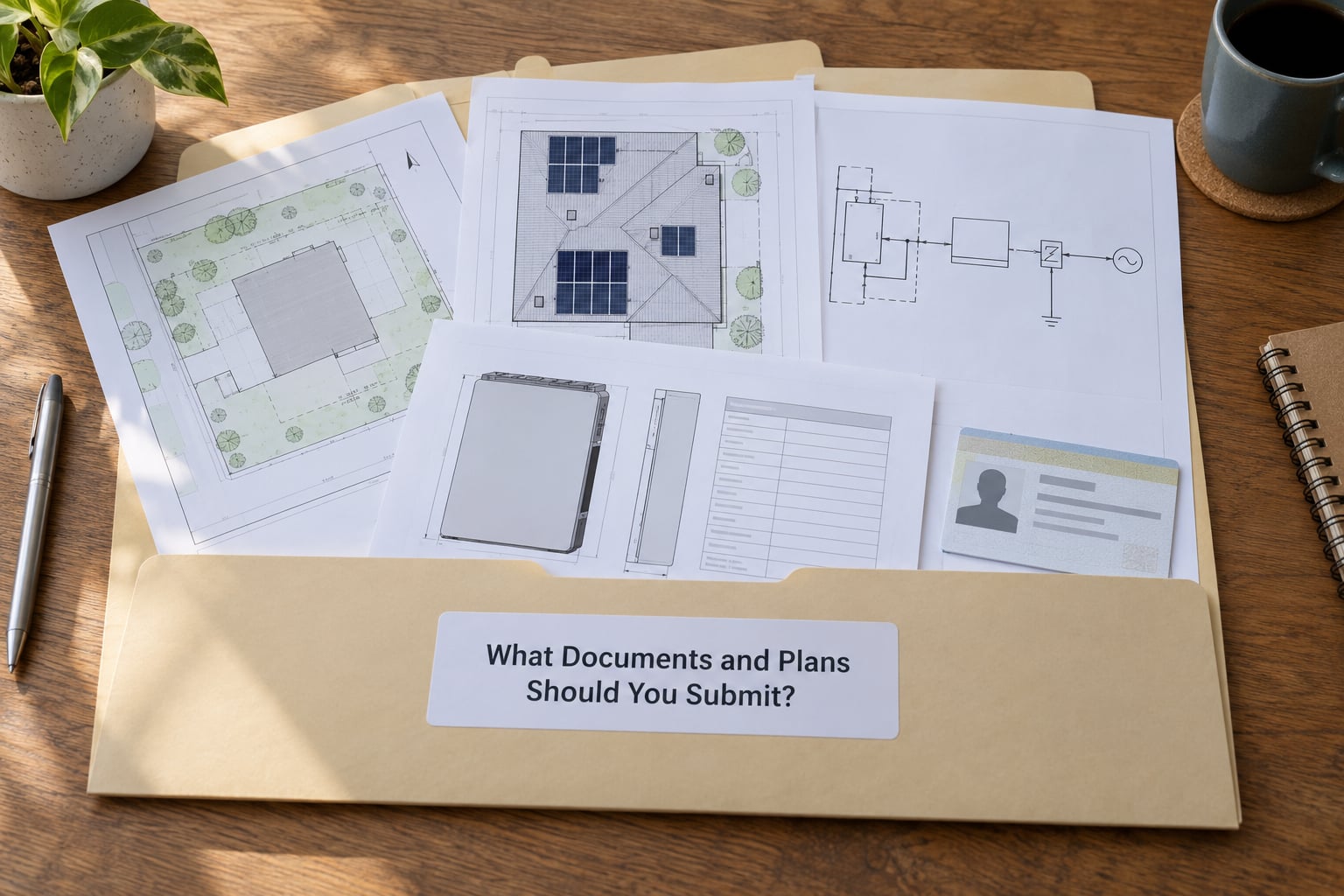
Not every authority asks for every document, but the core set is remarkably consistent. Have these ready before you walk into the portal.
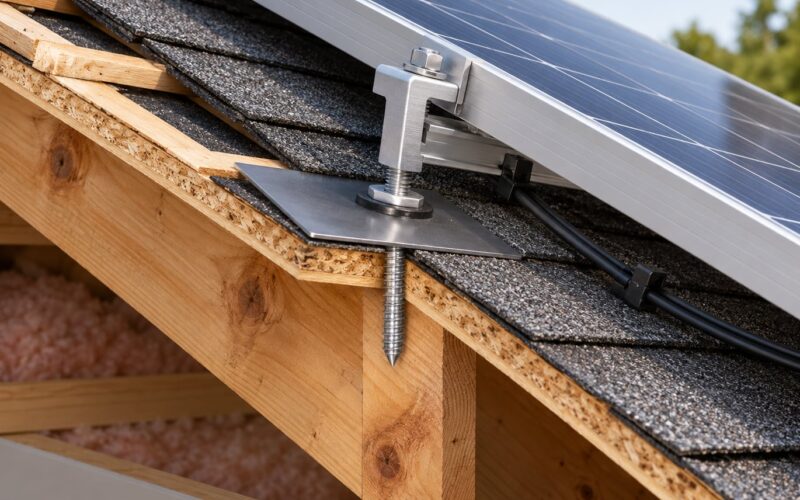
A site plan showing the property, the array position, the service point, and any existing equipment. A roof layout or attachment plan identifying rafters and trusses, plus the mounting hardware and how it attaches. A single-line diagram tracing modules, inverter, disconnects, metering, and the interconnection point. Equipment specification sheets for the modules, inverter, and any battery or rapid shutdown device. A structural letter or engineering stamp when the roof age, snow load, or span makes the calculation non-obvious. A homeowner’s affidavit or owner-builder form if you are applying in your own name. Contractor credentials, including license number, when a company is filing for you. And battery fire-safety details such as the unit’s chemistry, dimensions, and proposed mounting location if a battery is included.
A licensed installer or a permit service assembles most of this from standard templates. Filing it yourself is entirely doable, but only if you have a compliant plan set rather than a rough sketch.
Do You Need Utility Permission to Connect Solar?
Yes, and this is the approval most people forget. A municipal building permit says the installation is code compliant. It does not authorize your system to push power onto the utility’s network or to run in parallel with the grid.
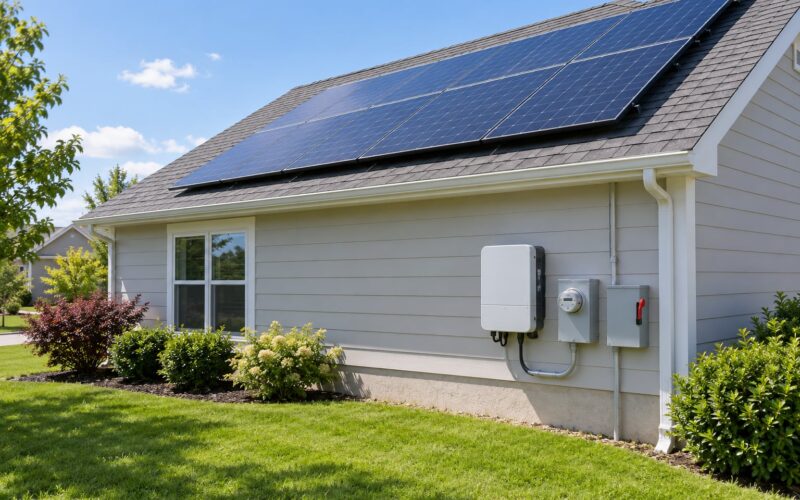
The utility reviews the application for interconnection, which usually covers equipment that is on its approved list, conductor and overcurrent sizing, anti-islanding protection, and where the disconnect sits. Depending on the system, they may cap export at a fixed amount or require a limited power control device so the house can never feed more than the service can carry.
Interconnection also drives the meter. Some installations get a second meter or a bidirectional meter swap, which means a utility technician and possibly a short outage.
The order usually runs: city inspection passes, you submit proof of that inspection to the utility, the utility completes its review, and then Permission to Operate is issued. Only after PTO can the system be energized. Homeowners in r/solar and r/Powerwall threads describe waiting weeks after a clean city inspection purely on utility side, so build that time into your schedule.
What Can Delay or Void a Solar Permit?
Most delays trace back to a short list of avoidable problems.
Incomplete plan sets. A missing structural letter or a diagram that does not show the rapid shutdown device sends the application back, and the review clock restarts.
Equipment that does not match the drawings. Swapping inverter models after approval is a common reason for a stop-work order.
Work started early. Mounting rails or running conduit before approval is in hand can mean removal, not just a fine.
Missed inspections. Covering the roof before the rough-in inspection is a classic fail. A re-inspection is another fee and another wait.
Unpermitted extras. Adding a second inverter, a generator input, or a battery transfer switch later means going back to the AHJ for a revision.
Designing more capacity than the site supports. A proposed array that exceeds the approved structural plan or the utility’s export limit is rejected on the numbers, not the hardware.
One more, less technical: some offices have begun declining homeowner-submitted electrical plans altogether, or charging a large fee simply to review a residential solar drawing. Ask about both before you invest a weekend drawing your own diagrams.
Frequently Asked Questions
How much does a home solar permit cost?
Permit fees are usually calculated from system size, and most jurisdictions charge a plan review line plus an inspection line. Small residential projects often land in the low hundreds of dollars, while larger systems with a battery or a service panel upgrade cost more. Local rules vary, so ask your Authority Having Jurisdiction for a written fee estimate before you submit. Inspection and re-inspection fees are sometimes billed separately and can surprise owners.
How long does it take to get a solar permit?
Some cities with automated or express solar permit programs approve a compliant plan set the same day, while smaller jurisdictions can take several weeks. Count correction cycles separately, since each resubmission restarts review. Utility interconnection review and Permission to Operate usually add their own waiting period after the city signs off. Homeowners report a realistic end-to-end timeline of about a month, but your local office sets the pace.
Do solar panels need building permission or only an electrical permit?
Usually both, because a solar project has two distinct parts. The structural side covers how panels attach to your roof or a ground structure, so a building permit applies. The electrical side covers the inverter, disconnects, wiring, and the tie-in to your panel, so an electrical permit applies. Some departments issue both as one combined document. A ground mount, battery, or service panel upgrade can add further review on top of those two.
Do I need a permit to add a home battery?
In most places, yes. A battery is treated as an energy storage system and typically needs electrical review plus a separate fire code review covering separation distance, mounting, and ventilation. Where it is installed can change the answer, since a unit in a detached structure may be treated differently from one next to the panel. Ask both the building department and the fire marshal before ordering equipment, and confirm the unit is on the utility’s approved list.
Can I install solar panels myself without a permit?
You can usually own the project and often do the roof-side work, but skipping the permit is a separate and much riskier decision. Many jurisdictions issue owner-builder permits, though some require a licensed electrician for the service-side connections and will not permit homeowner electrical work at all. Unpermitted systems can be fined, ordered removed, denied Permission to Operate, and cause problems with insurance or a future sale. Confirm your local rules first.
Does a solar permit expire if installation is delayed?
Often yes. Residential permits commonly carry a validity period of 180 days, and if work has not started or a final inspection has not been completed by then, the permit lapses and has to be reactivated or reissued. Extensions may be available on request, but they are not automatic. This catches people who pull a permit, then take months to source equipment. Check the expiration date printed on your approval and write it in your calendar.
Conclusion: Start With Your Local Solar Office
The first move is a single phone call to your local solar, building, or electrical office, and it settles most of what permits do you need for home solar faster than any amount of online research. Describe your project, ask exactly which approvals apply to your address, and get the answer before you sign anything or schedule installation. Then start the utility interconnection application early, because that clock runs independently of the city’s.
For any hard-wired system, use a licensed solar installer or electrician. Owner work is legal in many places, but the service-side connections are where mistakes turn into a failed inspection, a denied Permission to Operate, and a problem that follows you when you sell the house.