Wind and solar work together on the grid because they rarely peak at the same time. Solar output follows the sun, so it ramps up at dawn and fades at sunset. Wind output follows weather systems, and it frequently strengthens overnight and during the winter months when sunlight is weakest. Because a grid has to balance supply and demand continuously, pairing two resources with different rhythms smooths the total curve and cuts how much backup is needed.
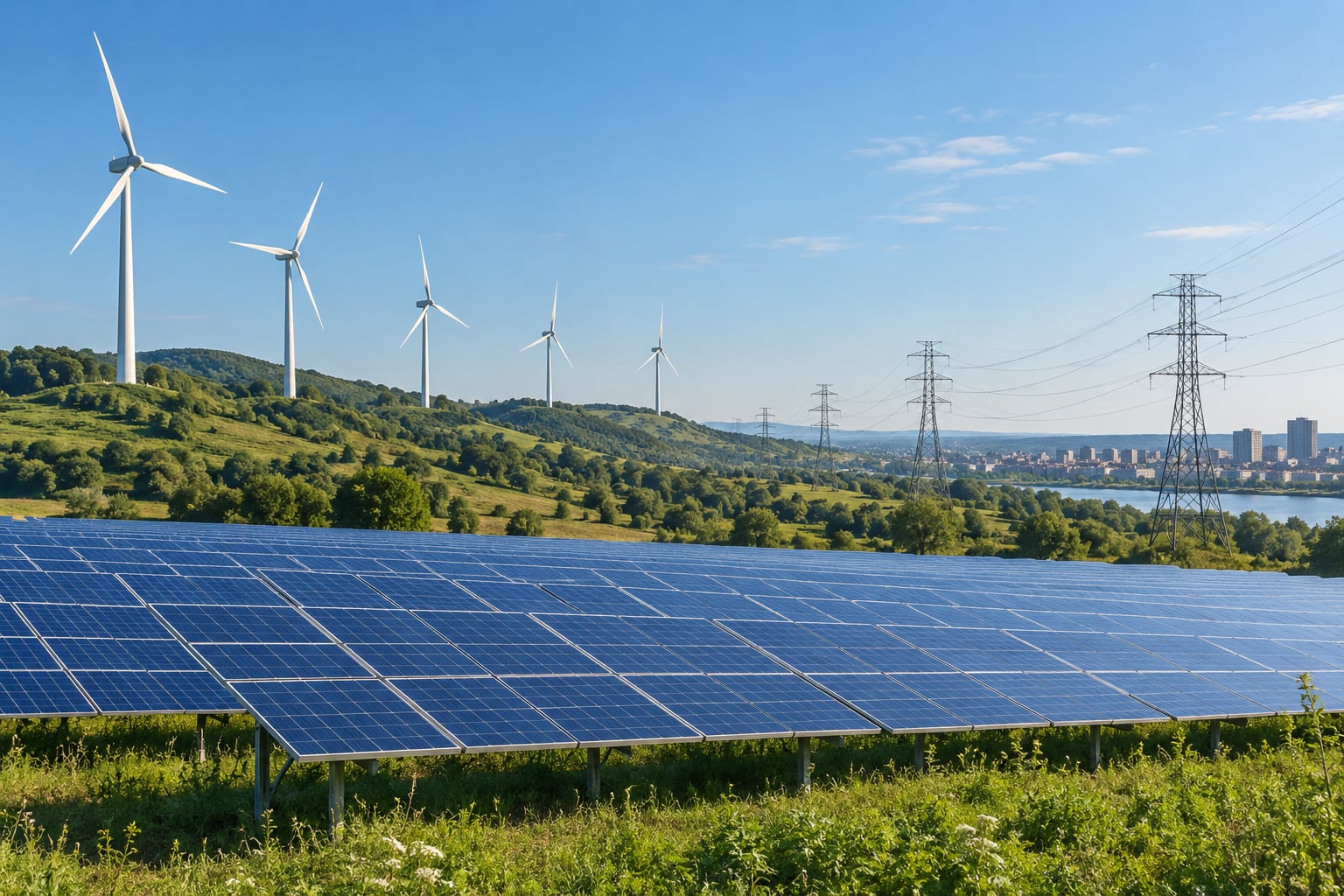
The important thing to understand first is that the grid does not keep solar for one neighborhood and wind for another. Every generator, from a rooftop array to a thousand-turbine wind farm, feeds the same interconnected transmission network. Electricity is a shared pool, and operators mix sources against whatever the demand happens to be that hour.
Table of Contents
- How Wind and Solar Work Together on the Grid
- What Happens When Wind and Solar Power the Grid?
- How frequency and demand set the balancing problem
- Why Combining Wind and Solar Is More Reliable
- How the Grid Handles Changing Renewable Output
- The main balancing tools, roughly in order of how fast they act
- What Storage Does for Wind and Solar
- The four storage types and what each is good at
- How Wind and Solar Affect Electricity Prices
- How Wind and Solar Work Together on the Grid Over Time
- Common Myths About Wind and Solar
- Do wind and solar always need coal plants to back them up?
- Can solar and wind really coexist on one grid?
- Does every home with solar need a battery?
- Do transmission lines not matter?
- Is renewable generation unreliable by nature?
- What Homeowners Can Learn from Grid-Scale Wind and Solar
- Frequently Asked Questions
- Can wind and solar work together on one grid?
- Do coal plants still need to back up wind and solar?
- Is electricity wasted when wind and solar supply is high?
- Do I need a home battery if I have solar?
- How quickly does the grid respond to changes in wind and solar output?
- Conclusion
How Wind and Solar Work Together on the Grid
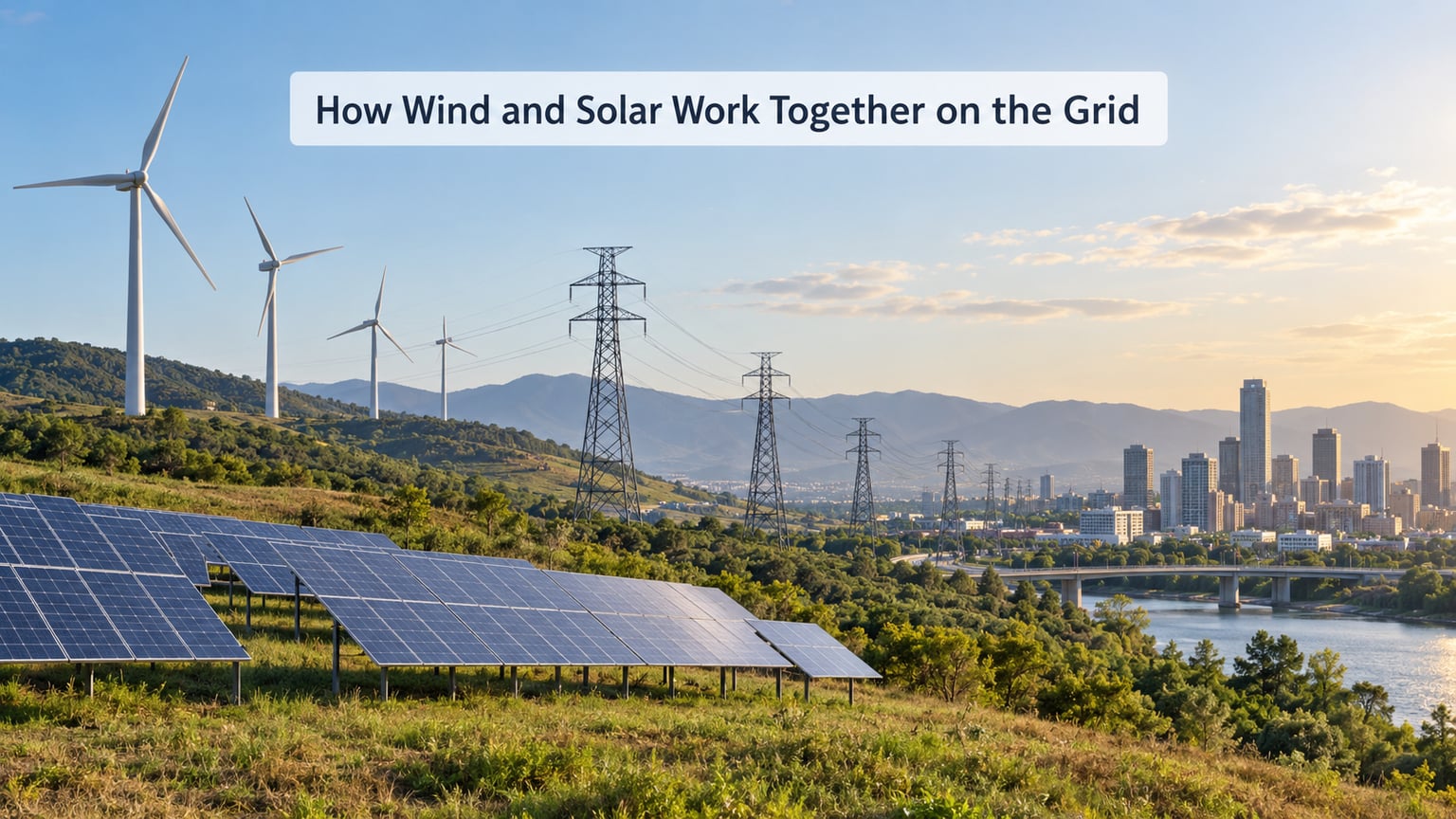
Here is the short version. A solar farm produces most of its power in a broad hump around midday. A wind farm often produces more at night, during winter storms, and in the late afternoon when demand is climbing. When both are connected to the same transmission system, the combined output is flatter, which means fewer fossil-fueled peaking plants running for a few expensive hours.
Think of a sunny, still summer afternoon. Solar is strong, wind is weak, and total demand is climbing toward the evening peak. Now think of a windy winter night. Solar is producing nothing, wind might be running at nameplate, and homes and offices need steady power anyway. Neither day is a crisis on its own. Together they cover more hours with less help.
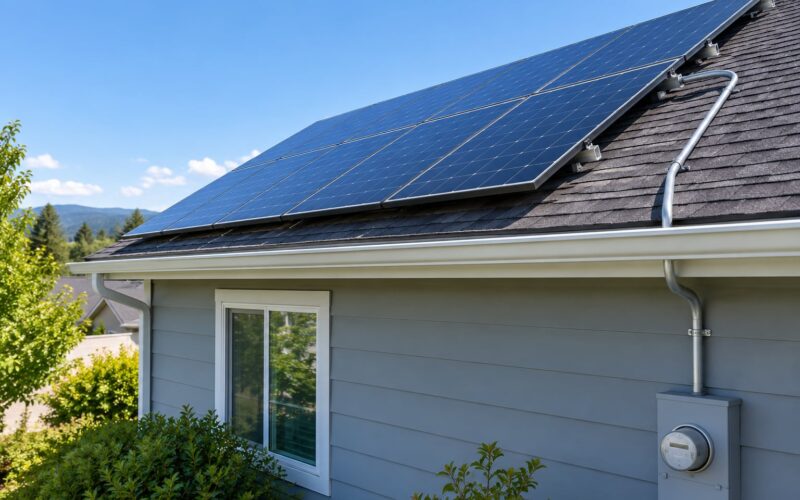
Connecting to the grid also means something people often get wrong. A grid-connected system does not power a specific home through some dedicated wire. The energy goes into the network, mixes with everything else, and comes back out through the local distribution network. What your utility is actually supplying you is a mix, and your rooftop solar is credited against what you draw rather than physically routed to your refrigerator.
The term for this balancing act is renewable energy grid integration, and it is the whole reason utilities talk about wind and solar as a portfolio rather than as separate projects.
What Happens When Wind and Solar Power the Grid?
Power leaves a wind turbine or a photovoltaic array as electricity generated at the site. A substation steps the voltage up, because moving large amounts of power long distances at low voltage wastes energy as heat. High-voltage transmission lines then carry it across hundreds of miles to a regional control center, and substations step it back down before it reaches distribution feeders and individual meters.
Turbines and most modern solar inverters produce alternating current, or AC, which matches what the grid uses. AC is valuable precisely because its frequency naturally synchronizes to the network. Every generator on the system has to hold the same frequency, which in most large interconnections is 60 hertz. When generation and demand drift apart by even a fraction, the frequency sags or rises, and the system reacts within seconds.
How frequency and demand set the balancing problem
Demand is never flat. It dips overnight, climbs in the morning, holds steady through the afternoon, then jumps in the evening when people get home and switch on lights, heating and appliances. Grid operators forecast that curve in advance and schedule plants to match it.
The number they track closely is net load, which is total demand minus renewable generation. When solar is at its midday peak, net load falls into a valley. As the sun sets, net load climbs steeply. That shape is sometimes called the duck curve, and a mix of wind and solar can soften both ends of it.
Why Combining Wind and Solar Is More Reliable
Neither resource is reliable in the sense of constant output. What makes a combination more dependable is that their weak moments rarely land on top of each other. Solar loses output under thick cloud and in winter; wind loses output in high-pressure systems that bring clear, still weather. When a large high-pressure ridge sits over a region for several days, though, you can get long stretches of low sun and low wind at once. Honest coverage of how wind and solar work together on the grid has to include that case.
| Factor | Solar | Wind | Combined on the grid |
|---|---|---|---|
| Typical peak output window | Late morning to mid-afternoon, around solar noon | Often overnight, late afternoon and during winter storms | Covers both the daytime hump and the evening and overnight load |
| Strongest season | Summer, with long days | Winter and shoulder seasons, varies by region | Reduces seasonal depth of the output curve |
| Short-term predictability | High for the next several hours | Lower, driven by moving weather | Blends a predictable signal with a varied one |
| Duration of output swings | Minutes to hours as clouds pass | Hours to days as systems move through | Fewer long, correlated gaps |
| Shared strength | Zero fuel cost, very predictable daytime ramp | Zero fuel cost, strong overnight and winter output | Lower need for gas peaking and less fuel burned at peak hours |
| Reliability limitation | Nothing at night, reduced output in winter, cloud transients | Still-air periods, icing, transmission bottlenecks | Still exposed to multi-day calm, cloudy weather and congested lines |
There is another shared strength that is easy to miss: wind power rises roughly with the cube of wind speed, so a turbine can deliver far more than its rated power in a gust and far less in still air. That burst capability is one reason a wind farm paired with a modest solar array can firm up capacity in a way neither source manages alone.
How the Grid Handles Changing Renewable Output
Operators deal with variability in a predictable order. They forecast weather and demand days ahead, build a net load shape for each hour, then commit resources to cover it. As the real day unfolds, short-term forecasts update and resources are adjusted.
The main balancing tools, roughly in order of how fast they act
- Forecasting. Weather models produce hour-ahead and day-ahead solar and wind estimates that operators refine with historical data and recent output.
- Flexible conventional generation. Hydroelectric and gas plants can ramp quickly, which makes them the backbone of intraday balancing. Gas peakers are expensive to run and usually run at peak hours only.
- Battery energy storage. Lithium-ion systems charge in seconds and discharge just as fast, so they cover short gaps and provide fast frequency response.
- Pumped-storage hydro. Large reservoirs pump water uphill when power is cheap and release it through turbines when power is needed. Response is slower than batteries but duration is far longer.
- Demand response and flexible load. Electric vehicle charging, water heating, and industrial processes can shift consumption into high-renewable hours on command.
- Reserves and curtailment. Uncommitted capacity is held ready for surprises. When output exceeds what lines and demand can accept, operators curtail the excess, which is generation deliberately reduced or disconnected.
That last item matters because people often assume extra renewable electricity is simply thrown away. It is not automatically wasted, but when the local lines are full and midday demand has already been met, there may be nowhere useful for the electrons to go. Grid congestion and slow interconnection queues are now the practical limit on adding more wind and solar in many regions, more so than the physics of the resources themselves.
What Storage Does for Wind and Solar
Storage does not create energy. It moves energy from when it is cheap and plentiful to when it is valuable, which is exactly the problem a combined wind and solar fleet creates at the midday surplus and the evening shortage.
The four storage types and what each is good at
Utility-scale batteries dominate new capacity because they respond in under a second and can be sited almost anywhere. A typical system might discharge for two to four hours, which covers the evening ramp rather than an overnight gap. Pumped-storage hydro is older and slower but can run for ten hours or more, which suits long seasonal or multi-day deficits. Thermal storage, such as molten salt in a concentrating solar plant or heated water in a tank, stores heat and shifts generation by hours with far lower degradation concerns. Home batteries sit at the smallest scale and mostly shift a household’s own evening usage.
Adding wind to a solar project usually reduces the storage requirement, because wind output arrives overnight when solar cannot follow. That is the single strongest engineering argument for wind and solar hybrid system planning.
Storage has limits worth stating plainly. It is expensive, it does not help during a long stretch of low sun and low wind, and it does not fix a congested transmission line. It complements the other balancing tools rather than replacing them.
How Wind and Solar Affect Electricity Prices
Wind and solar have no fuel cost, so in the wholesale market they usually bid at or near zero. Generators are paid to produce, and they produce whenever the wind and sun allow. The result is that adding renewable supply tends to push down the price paid for energy in the hours it is most abundant, especially the midday hours on clear days.
Transmission changes that effect. Cheap midday power in a sunny region is only useful if it can reach a region that needs it. New lines and pumped storage both push surplus hours toward higher-value hours, so the price benefit spreads out across the day instead of clustering at noon.
What a household pays is a different thing. A retail tariff includes generation, but also the wires, substations, capacity reserves, taxes and programs the utility is required to deliver. Those costs stay whether or not renewables are cheap at that hour. On some tariffs, midday solar production actually lowers what you pay only if your export is compensated well; on others, exported power earns far less than the retail rate you import at.
The outcome depends on the local generation mix, how the grid is built, how much storage and transmission exist, and the market rules in that state. A region with lots of cheap midday hydro behaves differently from one that depends on evening gas.
How Wind and Solar Work Together on the Grid Over Time
Picture a typical weekday as a single chart with three lines: demand, solar, and wind.
From midnight to roughly 5 a.m., demand is low. Solar is at zero, and wind is often at one of its daily highs, because nights are frequently the calmest time thermally and surface friction drops. From 6 a.m. to mid-afternoon, solar climbs steeply and typically covers most of the daytime load on its own, so wind and gas step back. Between 4 p.m. and sunset is the hard window: solar collapses quickly while demand peaks. Then night falls, demand settles, and wind picks up again while batteries discharge through the early evening.
Seasonally the same logic applies. Winter brings shorter days and weaker solar, but it also tends to bring stronger, more frequent mid-latitude storm systems and higher nighttime wind. Summer delivers the opposite: long sunny afternoons, low overnight wind, and a heavy afternoon and evening cooling demand.
Operators do not plan around an exact hourly match, because there is no guarantee any single hour lines up perfectly. They plan around a range of possible outcomes, commit a portfolio that stays balanced across many plausible days, and keep reserves for the day that does not follow the forecast.
Common Myths About Wind and Solar
Do wind and solar always need coal plants to back them up?
Not in the way the myth suggests. Many grids have reduced or retired coal generation while adding wind and solar, because the gap that coal filled was met by gas, hydro, storage, demand response and transmission instead. What renewable-heavy grids still need is firm capacity for extended low-wind, low-sun periods, and that capacity does not have to come from coal specifically. The resource that fills the role depends heavily on the region.
Can solar and wind really coexist on one grid?
Yes, and they are now routinely built on the same transmission network. The engineering concerns are real but manageable: matching ramp rates, maintaining frequency and voltage, and building enough wires and storage to move power to where it is needed. Those are cost and construction problems rather than physical impossibilities.
Does every home with solar need a battery?
No. A grid-tied array without storage is the cheapest and most common setup. A battery only makes sense when you want backup during an outage, when your tariff rewards shifting usage into cheaper hours, or when you have unreliable service. Adding one because it feels necessary is a common and expensive mistake.
Do transmission lines not matter?
They matter enormously. Congested lines are a leading reason renewable projects wait years to connect and a leading reason otherwise-usable output gets curtailed. Building wind and solar without building wires produces cheap power that cannot reach the loads that need it.
Is renewable generation unreliable by nature?
Any single resource has gaps. Reliability comes from having several kinds of resource plus storage, flexible demand and interconnecting lines available at once. Grids with high wind and solar penetration stay reliable because of that portfolio, not because any one source is constant.
What Homeowners Can Learn from Grid-Scale Wind and Solar
The lessons from utility-scale operations translate into a few practical decisions at home.
Rooftop solar sizing follows from the grid’s view rather than your own. On a sunny afternoon your array is most likely producing the most, and your neighbors around the country are doing the same. That is exactly when export value tends to be lowest, which is why checking your utility’s export rate matters before you size a large array.
Time-of-use tariffs and EV charging are the cheapest form of storage you can add. Scheduling a car to charge at midday, or shifting water heating to a lower-priced window, does the same job a battery does, without the battery.
A home battery earns its place if outages are a real concern or your tariff prices evening hours steeply. Before buying one, check how long your critical loads really need and whether an outage even needs the whole house.
Two things catch hybrid projects out. First, equipment mismatch: many solar-optimized MPPT charge controllers have no wind-generator input and will overcharge from a fluctuating source, so a hybrid controller or separate inverter is needed. Second, the interconnection queue. New grid-connected renewable energy system projects, including residential ones in some states, can face months or years of study and utility review before approval.
A home-scale wind turbine is a genuinely different proposition from a wind farm. It needs an unobstructed fetch of open ground, a tower that clears turbulence from buildings and trees, and local approval. Most hybrid discussion online ends at that same reality check, and the practical result is that solar plus a battery is usually the realistic home option.
For any electrical work, follow the manufacturer’s instructions and use a licensed electrician or solar installer. Grid-tied equipment must be configured by someone who understands anti-islanding requirements and your utility’s interconnection rules.
Frequently Asked Questions
Can wind and solar work together on one grid?
Yes. Both feed the same transmission network, and operators combine their output against total demand. Solar covers much of the daytime load while wind frequently runs overnight and in winter, so the combined curve is flatter than either resource alone. At home the same idea uses a hybrid charge controller or two inverters feeding a common battery bank.
Do coal plants still need to back up wind and solar?
Many grids have retired coal while adding renewables, filling the gap with gas, hydro, storage, demand response and new transmission. What high-renewable grids still need is firm capacity for extended low-wind and low-sun stretches. That capacity can come from several sources, and which ones make sense depends on the fuel mix and geography of the region.
Is electricity wasted when wind and solar supply is high?
Not automatically. Surplus output can charge batteries, pump water uphill, heat water in thermal storage, or serve demand that has been shifted into those hours. It only becomes curtailment when lines are congested or demand is already met, which is why transmission and storage decide how much of that surplus is useful.
Do I need a home battery if I have solar?
No, and most systems do not have one. A battery is worth considering when you want outage backup, when your time-of-use tariff prices evening hours steeply, or when your service is unreliable. If none of those apply, a grid-tied array on its own is simpler and cheaper, and scheduled EV charging can shift usage for free.
How quickly does the grid respond to changes in wind and solar output?
Battery systems respond in under a second and handle fast frequency regulation. Hydro and gas plants ramp within minutes to tens of minutes, and pumped hydro takes longer still but runs for many hours. Because wind and solar are forecast days ahead and refined hourly, most large changes are anticipated rather than met with a surprise response.
Conclusion
Wind and solar complement each other because they run on different clocks. Solar covers the day, wind covers a good share of the night and the winter, and the shared transmission network blends them into one supply that operators forecast and balance with hydro, gas, storage, flexible demand and reserves. The honest limit is that multi-day calm and cloudy spells still happen, so a reliable grid needs a broad portfolio rather than two sources alone.
If you are a homeowner, the first step is not buying equipment. Read your local generation mix and your tariff, check the export rate, then decide whether a battery or an EV charger earns its place. That is the same sequence a grid planner follows, just at a much smaller scale.