Grid stability is the power grid’s ability to keep electricity supply and demand balanced in real time, holding system frequency and voltage inside safe limits so service keeps flowing without widespread outages. Here is what grid stability actually means, how the system holds it, and what it changes for a house with rooftop solar, a battery or outdoor solar lighting.
I spend a lot of time writing about solar lights and home energy gear, and the same question keeps surfacing in the comments: does my house make the grid worse? The honest answer is no, but the reason is more interesting than most people expect. Understanding grid stability starts with one idea, and everything else builds on it.
Table of Contents
- What Is Grid Stability?
- Frequency stability: the speed of the whole system
- Voltage stability: the pressure in the pipes
- Why Does Grid Stability Matter for Your Home?
- The flicker nobody can explain
- Why your solar goes dark in an outage
- Loads that punish an unstable grid
- How Does the Electric Grid Stay Balanced?
- Who sets the rules
- What Happens When Solar Power Changes?
- How Grid Stability Affects Solar Lighting and Home Energy
- What Can Homes Do to Support a More Stable Grid?
- Shift flexible loads away from the evening peak
- Let your battery and EV follow the grid
- Take part in demand response when it is offered
- Keep your own equipment in good shape
- Frequently Asked Questions
- Is the US grid 50 or 60 Hz, and does it always run at exactly 60?
- How stable is the United States power grid?
- What country has the most reliable electric grid?
- Which state has the least reliable power grid?
- Do grid-tied solar and home batteries work during a power outage?
- Conclusion: Start with Reliable Power
What Is Grid Stability?
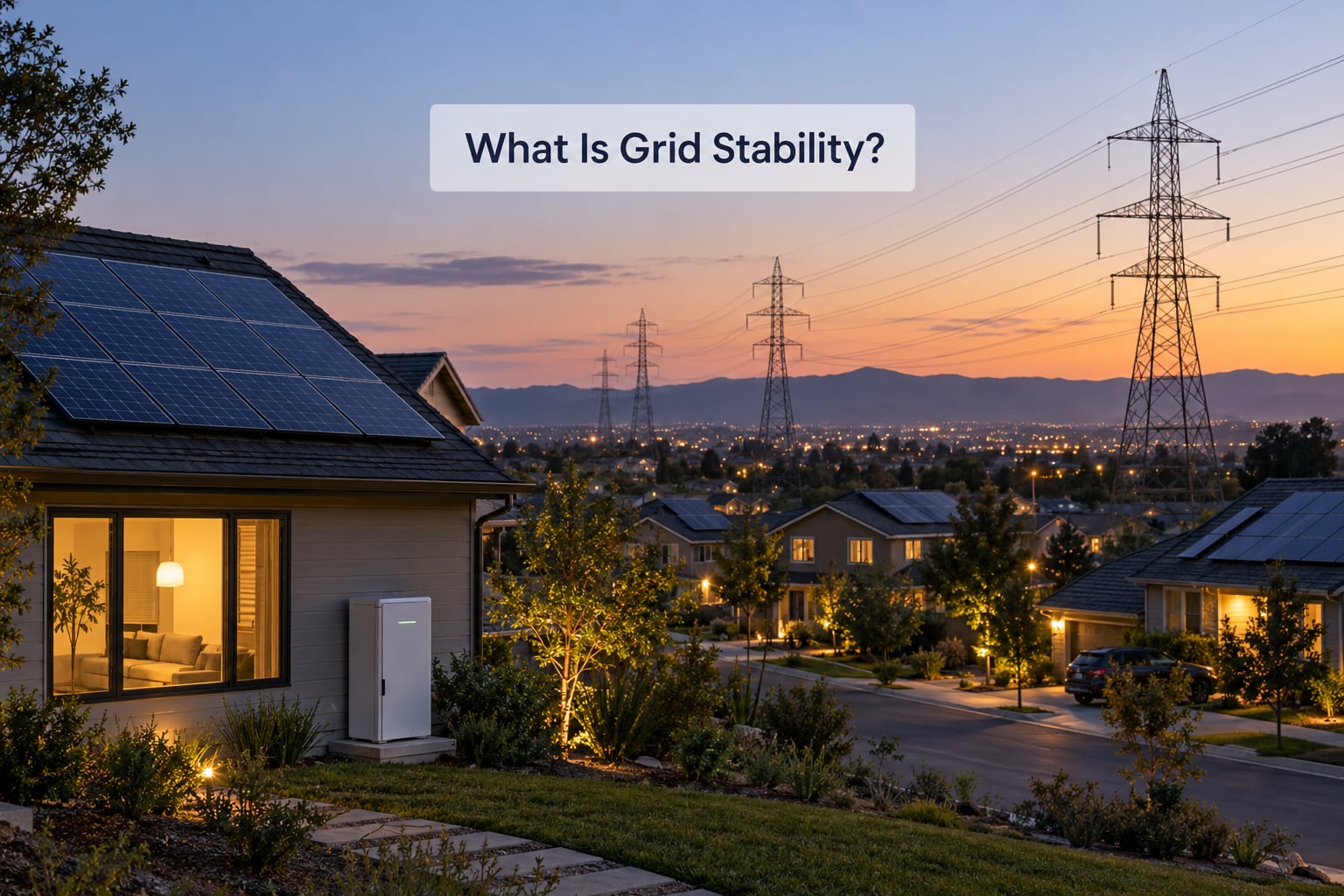
Grid stability means the grid can absorb a sudden change in supply or demand without breaking. Electricity at grid scale cannot be stored in a tank or held in a warehouse; it moves at the speed of light and has to be consumed the instant it is generated. Stability is the continuous process of keeping those two sides matched.
It is worth separating grid stability from two words people use interchangeably with it. Grid reliability is about whether the wires, transformers and generators physically stay in service, so equipment does not fail. Grid resilience is about recovering after something does go wrong, usually within days. Stability sits upstream of both: it is the live, second-by-second condition of the system while it is running.
Frequency stability: the speed of the whole system
Every generator on the grid spins at a speed tied to frequency. In North America the nominal number is 60 Hz, meaning the current reverses direction 60 times a second, 120 times in a full cycle. Much of the rest of the world runs at 50 Hz.
Frequency moves when generation and consumption diverge. If a large plant trips offline, demand now exceeds supply and frequency dips. If a big generator suddenly disconnects from a quiet period with little load, frequency rises. Because generation physically cannot be stored, the mismatch has to be resolved in seconds.
Utilities do not aim for exactly 60.00 Hz at all times. Standard operating limits are roughly 59.95 to 60.05 Hz, and most of the time a large interconnection sits somewhere close to 60.00. A sustained reading near 59.90 Hz is a signal that reserves are responding, and a reading below 59.3 Hz risks tripping equipment offline.
Voltage stability: the pressure in the pipes
Voltage is the electrical equivalent of water pressure, and it behaves differently from frequency. It is local rather than global, which means it is managed with equipment sited near the load: substations, capacitor banks, tap changers, static VAR compensators and reactive power from generators.
A different framing helps. Frequency is the health of the whole body. Voltage is a body part. A transmission line from a distant plant can sag to an unusable level at one substation while the system frequency never budges at all.
| What is measured | Normal operating range | Typical cause of trouble | Where it is managed |
|---|---|---|---|
| Frequency (Hz) | About 60.00 Hz, limits near 59.95 to 60.05 | Generation lost or added faster than load responds | System-wide, by governors and reserves |
| Voltage | Varies by region, held inside a set band | Too much or too little reactive power near a load | Local, by substations and reactive sources |
| System strength | Described by short-circuit capacity and inertia | Fewer synchronous machines online | Long-term, by regional planning and plant mix |
Why Does Grid Stability Matter for Your Home?
Stability problems reach a house as dimming, flicker and equipment that trips itself off. Most of the time these are small and self-correcting. Occasionally they escalate into a brownout, where voltage drops but service continues, or a blackout, where service stops entirely. Knowing which one you are looking at saves a lot of wasted troubleshooting.
The flicker nobody can explain
People in DIY solar forums frequently describe lights dimming for a moment when the air conditioner or a well pump starts. That is usually a real, local voltage event: a large motor draws a big inrush of current, voltage at the panel dips briefly, then recovers. It is a symptom of a system working as designed rather than a sign of failure, though repeated events on several appliances are worth a call to your utility.
Users on r/solar and r/SolarDIY also describe grid-tied inverters refusing to start after an outage until the utility line is confirmed stable. That behavior is deliberate. A grid-following inverter measures the grid to synchronize its output, so when the grid is down or frequency is off nominal, it has nothing to lock onto and shuts down.
Why your solar goes dark in an outage
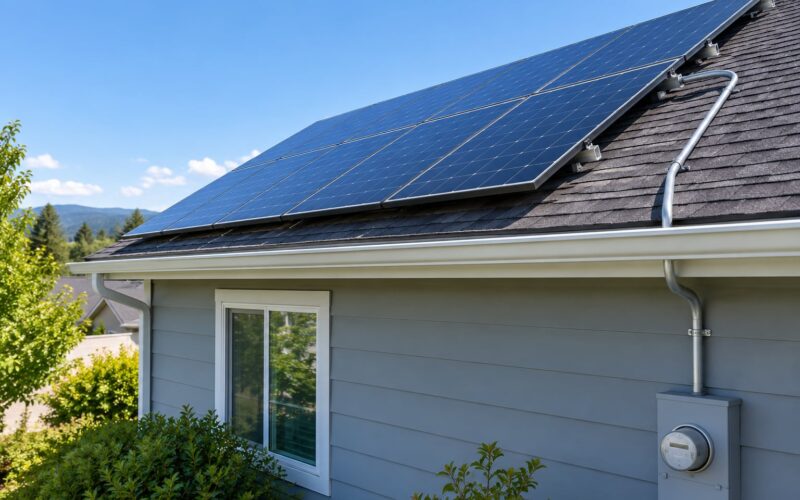
This is the single most common homeowner confusion I see. A standard grid-tied system shuts off during an outage by design, because an islanded house that is still connected to live distribution lines creates a hazard for line crews. Only a system with a battery, a transfer switch and hybrid inverter capability forms its own local island and keeps running.
If you are weighing a battery, ask the installer specifically whether the system is island-capable and what loads it can carry. That answer, not the size of the panel array, decides whether the lights stay on.
Loads that punish an unstable grid
Household refrigerators, medical monitors, oxygen concentrators, home oxygen and continuous positive airway pressure machines, and aquarium equipment all care about power quality more than the average load. When a brownout is called, non-lithium backup is often recommended for medical gear, and that decision belongs with your clinician rather than with an equipment list.
Everything else in the house is more forgiving, but the cost of instability is not zero. Sagging voltage shortens the life of motors and electronics, and repeated brownouts mean spoiled food, rescheduled appointments and a cold house in winter.
How Does the Electric Grid Stay Balanced?
There is no single control room doing the balancing by hand in real time. Operators manage a balancing market that settles after the fact, while physical equipment reacts automatically in milliseconds and tens of seconds. The response unfolds in a predictable order.
- An imbalance occurs. A plant trips, a large feeder opens, or a block of rooftop solar drops off as clouds move in.
- Frequency or voltage drifts. Inertia slows the frequency change, and governors on remaining generators see the error within seconds.
- Reserves respond. Primary or spinning reserves act first, followed by regulation and then flexible capacity. Batteries can respond in well under a second; combustion turbines take several minutes to be useful.
- The system recovers or cascades. If the response is fast and large enough, frequency returns to normal. If it is not, automatic protective relays begin disconnecting parts of the network, and a cascading failure can shut down large regions.
Transmission lines move power over long distances; distribution lines, which include the line to your house, deliver it locally. Demand response is the demand side of the same balancing act: a utility or aggregator pays a household or business to delay or reduce load for a short window, commonly by pausing EV charging or raising thermostat settings by a degree or two.
Energy storage does the same job faster and more precisely. A battery energy storage system connected to the grid can absorb excess generation or discharge into a shortfall within a fraction of a second, which is why operators pay for fast frequency response as an ancillary service even when the underlying energy has little value.
Who sets the rules
Grid stability is governed, not improvised. The Federal Energy Regulatory Commission oversees bulk electric reliability, the North American Electric Reliability Corporation develops the standards that utilities operate under, and equipment that feeds grid-connected electricity must meet interconnection standards such as IEEE 1547. Those standards dictate how a rooftop solar or battery system behaves when the grid is abnormal, including when it must disconnect.
What Happens When Solar Power Changes?
Solar output is weather-driven, so it rises and falls with the day. On its own, that pattern is handled: midday surplus is simply absorbed by demand and exports on the distribution network. The difficulty arrives where the ramp is steepest.
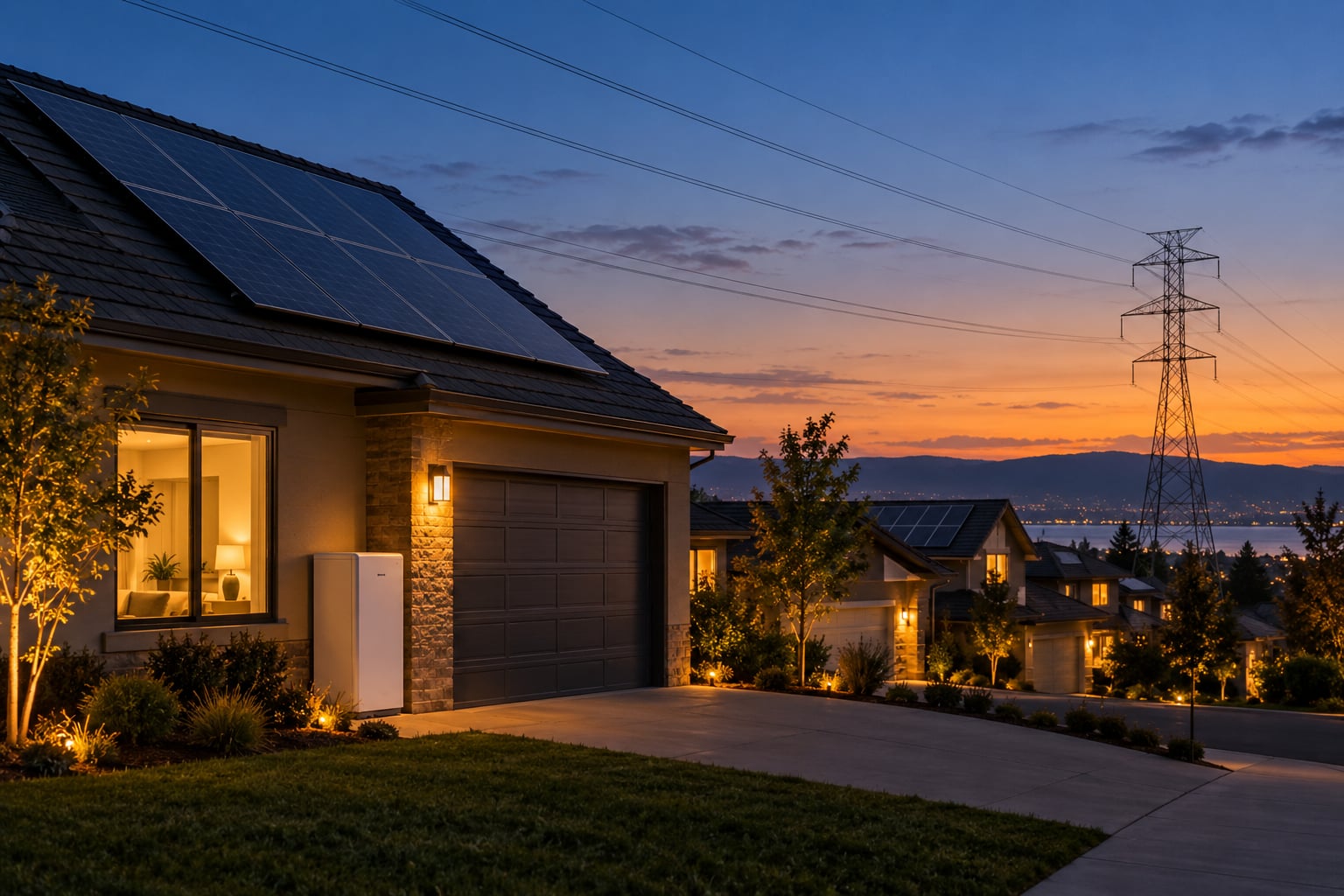
California’s independent system operator popularised the term duck curve for the shape of net demand on a heavily solar grid. Solar ramps up steeply in the morning, flattens around noon, then collapses at sunset just as people come home, cook dinner and run the air conditioner. The output change in a single evening ramp can exceed anything a coal fleet previously had to follow, and it is why a lot of the storage now sitting on the grid sits there in the first place.
The second challenge is subtler. Traditional generators are large spinning masses. When something goes wrong, their momentum resists the change for a second or two, buying the rest of the grid time to react. Inverters do not have that mass, so as their share grows, system inertia falls and the grid becomes more sensitive to the same disturbances.
None of this means solar is a bad addition to a home. Grid-scale work has spent two decades solving it, and your rooftop system does not destabilize the network. It just explains why your installer now asks about your battery, your utility’s interconnection queue, and your evening usage.
How Grid Stability Affects Solar Lighting and Home Energy
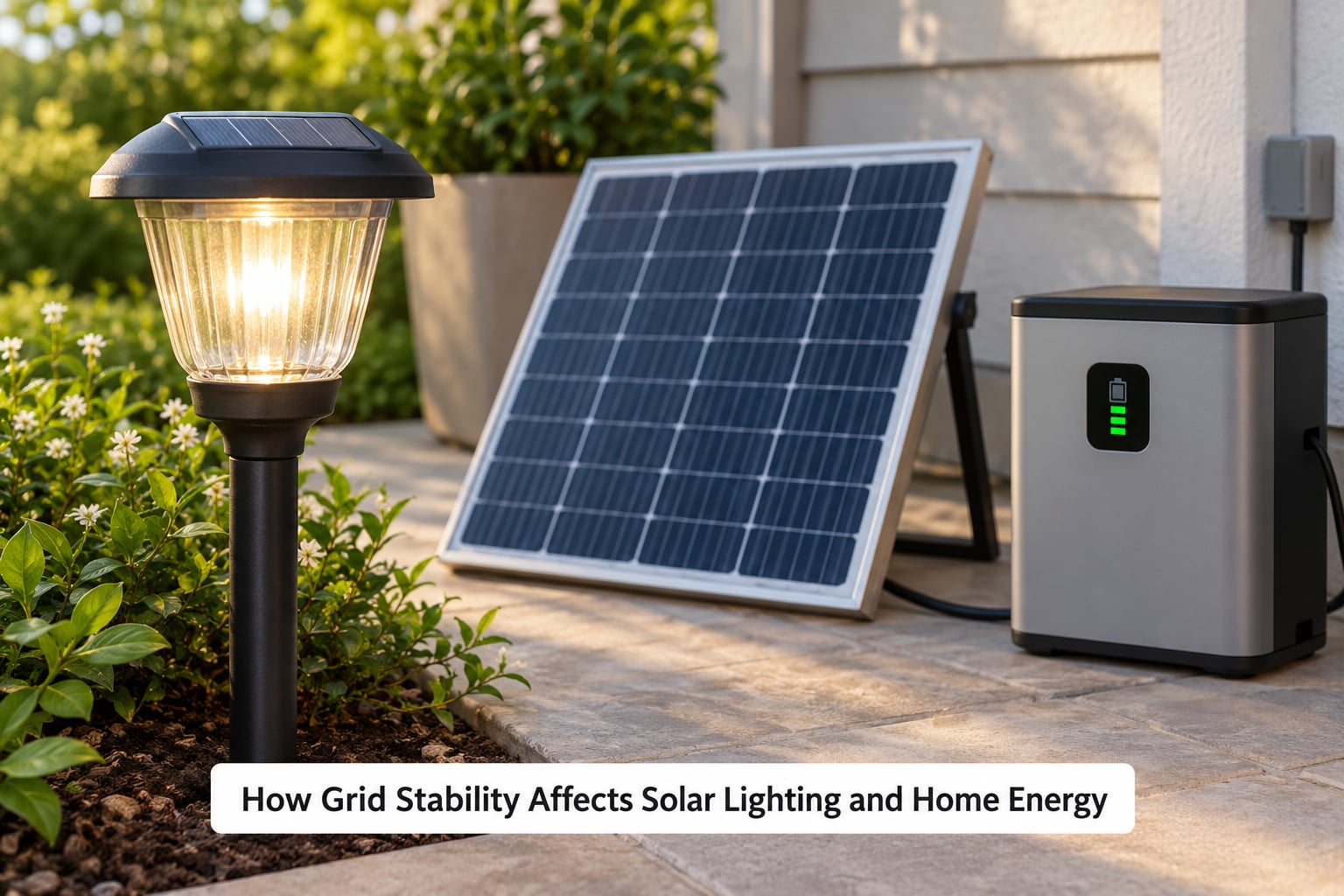
Standalone solar garden lights are the simplest case. They charge a small battery from daylight, switch on at dusk and run until the battery empties. They do not sit on the utility network, so grid stability never touches them, and their autonomy is what makes them useful along a path where running a cable would be impractical.
Grid-connected outdoor lighting is different. Path lights, landscape fixtures and driveway lighting on a hardwired circuit depend on the same service as everything else, and they will blink out during a brownout or blackout exactly like your refrigerator will.
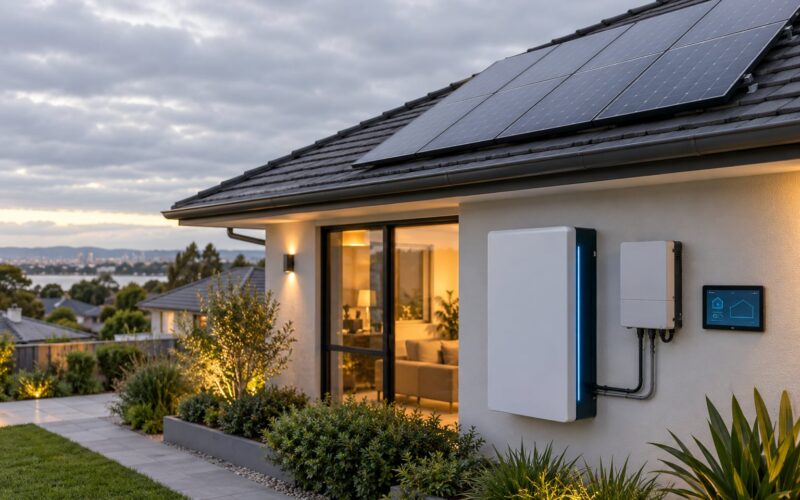
Home batteries sit in the interesting middle. During normal operation they follow the grid and charge cheaply, then discharge in the evening when solar production falls and household demand rises, which takes load off the evening peak. During an outage, an island-capable system keeps a defined set of circuits alive independently.
Rooftop solar plus storage is where the two ideas meet. The panel handles daytime supply, the battery covers the evening gap, and the grid covers everything the house cannot produce itself. Planning a system in that order, rather than sizing panels first, is what grid-aware installers recommend.
What Can Homes Do to Support a More Stable Grid?
Being honest about scale: a household is a rounding error in a regional balance, and no individual action decides whether the grid holds together. What households can do is cheap for them and useful to operators, mostly by being flexible at the wrong times.
Shift flexible loads away from the evening peak
Run the dishwasher, laundry and EV charging before sunset rather than after. Many utility tariffs include a lower rate during those hours for exactly this reason, and a time-of-use rate makes the shift pay for itself.
Let your battery and EV follow the grid
Many utilities, EV charging networks and vehicle apps now offer programs that delay charging or discharge a home battery during short events. Enrolling takes minutes, and the compensation is usually direct.
Take part in demand response when it is offered
A thermostat nudge of a degree or two, a delayed dishwasher cycle or a paused water heater during a short event is a real, measurable contribution. Refrigeration and HVAC loads are the usual targets because they tolerate small, short changes without anyone noticing.
Keep your own equipment in good shape
Clean the panels so they produce what they should, clear vegetation away from the service line, and have battery terminals and connections checked if your system is more than a few years old. Failing equipment is a reliability problem before it becomes a stability problem.
One boundary matters here: anything involving your panel, your main service, a transfer switch or a battery enclosure is electrical work for a licensed electrician. So is anything involving the utility’s side of the meter. Do it yourself only for the parts a manufacturer’s manual actually covers.
Frequently Asked Questions
Is the US grid 50 or 60 Hz, and does it always run at exactly 60?
The United States uses 60 Hz, while much of Europe, Asia and Africa uses 50 Hz. It does not sit exactly at 60.00 all day. Utility standards allow roughly 59.95 to 60.05 Hz during normal operation, and frequency drifts by tiny fractions as generation and consumption change second by second. Readings a little off nominal are normal and are exactly what governors, batteries and reserves are correcting.
How stable is the United States power grid?
The US grid is one of the most reliable large power systems in the world, built on very high-voltage transmission and multiple interconnections that can import power when one region falls short. That said, reliability is not uniform. Weather is the biggest cause of outages, particularly ice storms, hurricanes, heat waves and wildfire, and a small number of regions report far more interruptions than the national average. Regional plans are updated regularly by the regional reliability organizations.
What country has the most reliable electric grid?
Switzerland, Norway and Singapore are usually cited near the top in international reliability comparisons, and all three combine very few customers affected by outages per year with short average interruption times. Rankings move year to year because the data comes from industry association reports rather than a single regulator. Reliable service correlates with an aging transmission network, strong interconnections and limited vegetation exposure, not with any one fuel type.
Which state has the least reliable power grid?
No single state ranks worst every year, because reliability is tracked by utility and region rather than by state lines. States with long rural feeders, heavy tree cover, coastal storm exposure or high wildfire risk tend to average the worst numbers, and parts of the Southeast, the Gulf Coast and the rural West come up often. Use your own utility’s outage history as the most useful guide, since conditions vary enormously within one state.
Do grid-tied solar and home batteries work during a power outage?
A standard grid-tied solar system shuts down during an outage, because its inverter follows the grid and cannot operate once the grid is gone. It also has to stop, since energizing live distribution lines would endanger line crews. A home battery changes this only when the installation includes a hybrid inverter and a transfer switch that can island the house. Ask your installer whether the system is island-capable and exactly which circuits it supports.
Conclusion: Start with Reliable Power
Grid stability is the grid’s real-time habit of matching supply and demand so frequency and voltage stay in range, and why it matters to your home is straightforward: when it slips, your lights dim, your inverter shuts down and your cold appliances suffer. Your rooftop solar is not the threat to that balance, and plenty of solar equipment works well alongside it.
Start with three things. Write down when your household actually uses power, then check whether your solar setup is island-capable or simply grid-following. Talk to your utility or your installer about time-of-use rates and demand response before you change any hardware, and leave panel, service and battery work to a licensed electrician. In 2026, that sequence is still the fastest route to power that behaves the way you expect.