Selling a house with rooftop solar is mostly a paperwork problem, not an equipment problem. What happens to solar panels when you sell a house comes down to three things: the panels stay bolted to the roof and pass to the buyer as a permanent fixture, the contract you signed with the installer or provider decides who pays what at closing, and any lien on the title has to be cleared before funds move. This guide walks through each case, the documents involved, and the order things happen in.
General information only, not legal or tax advice. Loan, lease and title rules vary by lender, provider and state. Updated for October 2026.
Table of Contents
- What Happens to Solar Panels When You Sell a House?
- How ownership of the panels changes the sale
- What happens to solar panels when you sell a house if you own them?
- What happens to solar panels when you sell a house if you still owe money on them?
- How leases and power-purchase agreements are handled
- What paperwork must be prepared before listing
- How the title company, attorney, and lender verify the system
- What the buyer needs to know before taking ownership
- Do solar panels affect the home’s appraisal or sale price?
- Can the seller remove the panels before the sale
- What happens during closing if the transfer cannot be completed
- How to transfer the system without interrupting service
- Frequently Asked Questions
- Can a new homeowner use the federal solar tax credit after buying a house with panels?
- How long does it usually take to transfer a residential solar system?
- What happens if a leased solar system cannot be transferred to the buyer?
- Does the seller need to notify the utility before closing?
- Will the remaining solar warranty automatically cover a new homeowner?
- What to do before listing your solar home
What Happens to Solar Panels When You Sell a House?
The panels do not come down. Roof-mounted solar is treated as a fixture, so it transfers with the real estate unless the sale contract says otherwise. Whether that transfer is clean or complicated depends entirely on how the system is owned: paid off and owned outright, still on a loan, or held under a lease or power-purchase agreement.
| How you own the system | What happens at closing | What the buyer inherits | Main risk |
|---|---|---|---|
| Owned outright, paid off | Nothing to pay. The system transfers with the deed. | Full ownership, remaining warranty, utility account in their name | Buyers and agents underestimate future inverter replacement |
| Solar loan or home equity loan | Payoff collected from sale proceeds at the title company, or the buyer assumes the loan if the lender allows | Either a clean owned system or a monthly payment they underwrote | A lien that is not released blocks closing |
| Solar lease or power-purchase agreement | Transferred with the buyer’s credit approval, or bought out by the seller | A 20 to 25 year payment obligation they did not expect | Most buyers refuse to assume it, shrinking your buyer pool |
If you are in the third row, start the paperwork now. Agents say over and over that lease transfer takes far longer than sellers expect, and a buyer who discovers an attached lease during the inspection period usually asks for a price reduction or a seller-paid buyout.
How ownership of the panels changes the sale
What happens to solar panels when you sell a house if you own them?
Ownership is the cleanest path, but the paperwork is not optional. Sellers who bought their system outright still need to hand over permits, the interconnection approval, warranty certificates and production history, and they need to say in the sale contract how the equipment value is being treated.
Most sales contracts list the system as a fixture included in the price, which is the normal treatment for permanently attached equipment. A few buyers’ agents argue the panels are personal property that the seller should be removing or pricing separately, and that argument usually loses, but only when the contract language is clear.
Two details cause the most trouble. First, outstanding permits and utility approvals that were never closed out can surface during buyer’s due diligence, and local building departments differ on whether a transferred permit needs re-inspection. Second, roof penetrations and flashing age: if the panels are 12 years old, a diligent buyer will want to know what condition the roof underneath is in.
State property law governs whether attached equipment is a fixture, and the deed language can override the default. If your sale is in a state you are not familiar with, or if the system sits on a structure that is not the residence itself, have a real estate attorney read the contract language rather than assuming.
What happens to solar panels when you sell a house if you still owe money on them?
Financed solar splits into two very different situations. A dedicated solar loan may or may not be assumable, and the answer depends on the lender, not the installer. A home equity loan or home equity line of credit used to pay for the system is different: that debt is secured by the house itself, so a UCC-1 financing statement or deed of trust appears on the title and must be released.
Realtors describe the practical reality plainly: when a loan is not assumable, the buyer has no path forward except a seller payoff. That is why financing the system with a product-secured loan is easier to unwind than financing it against the home.
Plenty of sellers financed solar with a mortgage refinance or a cash-out refinance. In that case the solar is bundled into the existing mortgage payoff, and the title company handles it the same way it handles the rest of the balance. That is what happens to solar panels when you sell a house with this kind of financing: nothing solar-specific happens at all.
How leases and power-purchase agreements are handled
A lease or PPA does not travel with the property by itself. The provider owns the equipment until the buyout option is exercised, and the contract usually gives the provider a say in who may take over. In practice, most providers will consider an assignment request from a buyer who passes their credit check, but approval is not automatic and the provider sets the terms.
Three outcomes are common. The buyer qualifies and assumes the agreement, leaving the balance term intact. The provider approves a buyout and you settle the remaining balance from sale proceeds. Or nobody qualifies, in which case you look for a buyer willing to take the contract, negotiate a credit at closing, or remove the system if the contract even allows it.
Leased homes are harder to sell because the obligation is long and the buyer has no asset at the end of it. Renters with a 20-year payment schedule on a 30-year mortgage are not a normal buyer profile, and the agents who work these deals say that one lease in the listing is worth a real price concession.
For comparison, PPA and lease structures both keep the panels on the provider’s balance sheet, while a solar loan puts ownership with you from day one. That single distinction explains almost every difference in resale friction.
What paperwork must be prepared before listing
Gather the file before you sign the listing agreement, not when the first offer arrives. Buyers’ agents ask for the same handful of documents, and having them ready shortens the inspection cycle.
- Purchase agreement, installation contract and any amendments
- Financing agreement, plus a current payoff statement if a loan is outstanding
- UCC-1 filing confirmation or deed of trust for any lien on the property
- Lease or PPA documents with the buyout schedule attached
- Building permit and final inspection record from the local jurisdiction
- Utility interconnection approval and net metering or interconnection agreement
- Equipment warranty certificates, including the inverter and any battery
- Monitoring account credentials and 12 months of production history in kilowatt-hours
- Installer contact details for service and future removal
Then check your tax position. If you claimed the federal residential clean energy credit and you dispose of the property within five years of installation, part of that credit is recaptured under the rule sellers call the 33% rule. The recapture is calculated on the credit you actually claimed, and it is owed whether or not the buyer keeps the panels. Sellers frequently discover this during escrow rather than at installation, so ask your tax preparer early.
Net metering deserves its own line in the file. Most utilities will not carry a rate onto a new owner’s account automatically. The buyer may need to re-enroll, and in a few states the tariff that rewarded your original system no longer exists in the same form, which changes the savings story the panels were sold on.
How the title company, attorney, and lender verify the system
The title company or escrow attorney works from documents, not from the roof. They run a title search that shows any UCC-1 filing, deed of trust or other lien tied to the property, and a solar loan secured by the home will show up there. Nothing closes until that filing is released with a payoff and a recorded release.
For a dedicated solar loan that is not on the title, the lender sends the payoff figure directly to the title company, which deducts it from the sale proceeds. One seller described watching the title company deduct a solar payoff alongside the mortgage, with the buyer never involved, and that is the normal mechanic.
Attorneys get involved when the contract is not standard: a lease transfer with a provider that needs its own approval, a sale in a state with different fixture rules, an estate or divorce settlement where the system value has to be divided, or a refinance that requires the solar lien to be subordinated rather than paid off.
What the buyer needs to know before taking ownership
Buyers worry about the panel array, but the equipment they inherit is mostly boxes. Panels are usually warranted for 25 years with output declining gradually, while inverters are commonly warranted for 10 to 12 years and batteries for 10 years. A 15-year-old system may therefore have expiring inverter coverage, and replacing one later is a real cost the buyer wants priced in.
Production history is the most persuasive document you can hand over. A year of monthly kilowatt-hours compared against the seller’s usage tells the buyer whether the array is performing or slowly losing output, and it makes a price conversation far calmer.
Insurance is another point buyers check. Some carriers ask about roof penetrations, flashing condition and whether a licensed electrician inspected the system. A current inspection report and a clear photo of the roof before installation, if you have one, answers that question cheaply.
Finally, set expectations about output. A system sized for a family that has since reduced its electricity use will produce surplus that nets out less than it once did. Buyers who understand that before they make an offer are easier to work with than buyers who find out on their first bill.
Do solar panels affect the home’s appraisal or sale price?
Sometimes, and the honest answer is that appraisers have no settled method. One appraiser described solar as a new arena with no consensus, and panels are regularly treated as value-neutral rather than as an asset. A purchased system does not automatically add a fixed amount to the appraisal, and anyone promising a specific figure is guessing.
What does move the needle is buyer appeal in markets where electricity is expensive and efficiency is valued, plus comparable sales that already include a PV premium. Installer and industry sources cite third-party research on homes with solar selling faster and, in some datasets, closer to asking price, but the effect varies by region and those studies are not appraisals.
A leased system is the hardest case, because the appraiser may treat the panels as someone else’s property and therefore worth nothing to the owner of the land. That asymmetry is exactly why buyers discount a leased home, and why buying out the contract before listing can recover more value than it costs.
Does solar make a house harder to sell? With owned and documented equipment, rarely. With an attached lease, often. Keep that framing in mind when you decide whether to work the problem or let the buyer’s lender work it for you.
Can the seller remove the panels before the sale
You can, subject to the contract. A lease or PPA usually prohibits removal by the homeowner, and a financed system may require the lender’s consent because the collateral is the equipment. Owned systems are the most straightforward, but the roof is still yours to repair.
Removal means a licensed solar installer disconnects the equipment, the utility approves a disconnect at the meter, and a roofer patches and reseals every penetration. A roof letter documenting the condition of the roof before the array went up is worth more than a new shingle line, and without one, buyers and insurers treat every penetration as an open risk. Roofers describe a plane of exposed decking or a cut shingle line as a problem that follows the house for years.
Removal also ends your production. If you are selling in a state with favourable net metering, the buyer loses that value when the system comes off, and the market tends to notice. The case for stripping panels is emotional far more often than financial, and sellers who remove a working system to avoid a conversation usually get a worse price than the one they feared.
Any electrical work here belongs to a licensed professional, following the manufacturer’s instructions for isolation and shutdown. Do not plan to have the new owner or their electrician improvise the transfer.
What happens during closing if the transfer cannot be completed
Plenty of deals close with an unresolved solar item, and the fix usually comes down to money or timing. A title company can sometimes hold a portion of proceeds in escrow until the payoff or the lien release is recorded, which lets the sale proceed without waiving the requirement that the title be clear at funding.
Other outcomes depend on the parties. The buyer may assume an eligible loan or lease if the lender or provider approves. The buyer may purchase the system outright at a negotiated figure, which is common when a lease is nearly paid off. A credit at closing can offset what the buyer takes on, essentially paying you for the assumption. And where the contract permits it, the seller can remove the system and reduce the price to reflect the loss.
None of these is automatically right. The correct path depends on your remaining balance, the buyer’s financing, the contract language and how much time is left before the contract expires. What is never optional is disclosure: hiding an attached lease or an outstanding lien is the mistake that turns a solvable problem into a lawsuit.
How to transfer the system without interrupting service
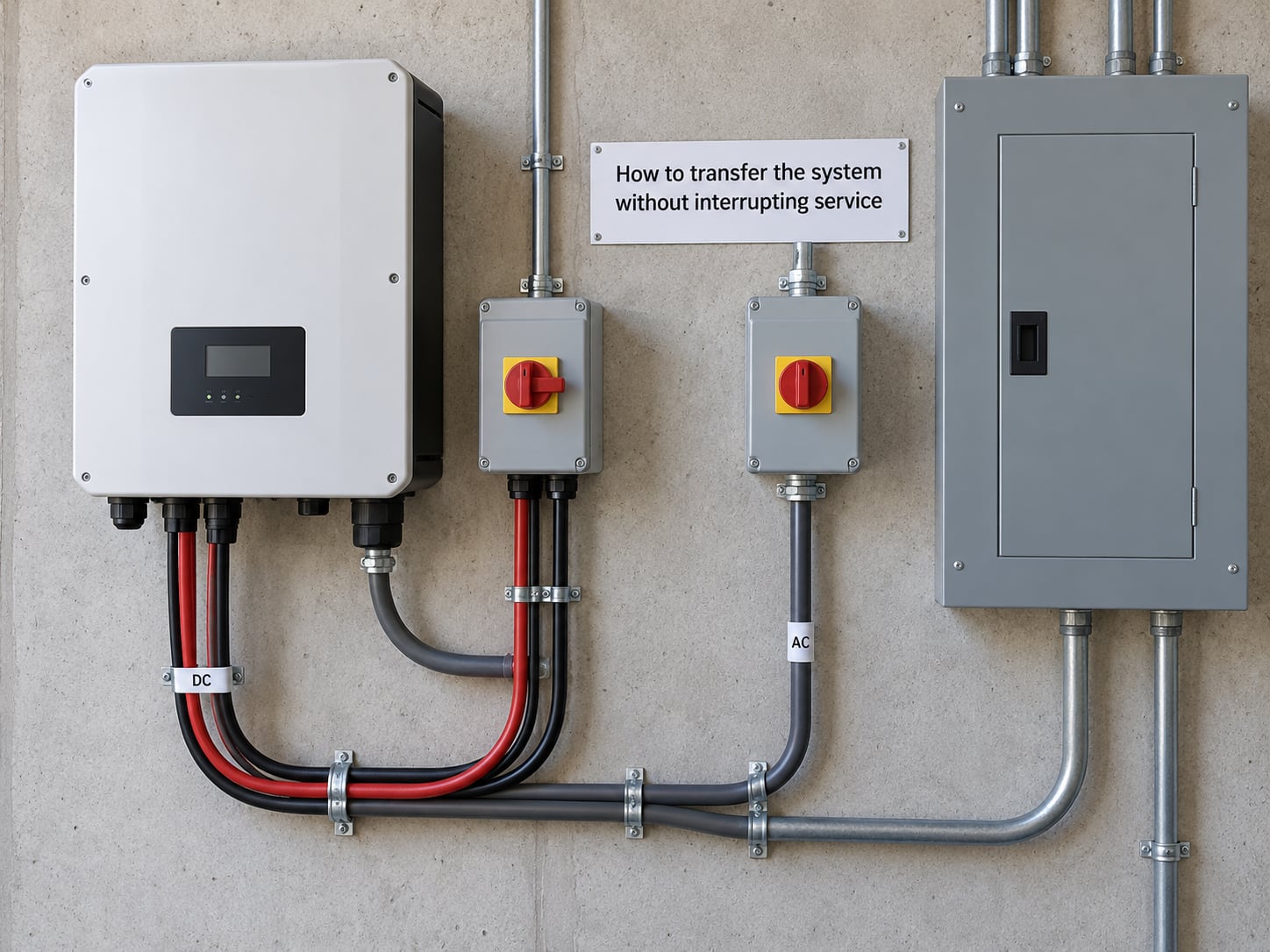
Power keeps flowing through most of this. The goal is to change who is on the paperwork without a gap in production, and the sequence below is the order that works most of the time.
- Four to six months out. Pull the contract, financing and utility files together and confirm whether the loan is assumable or the lease is assignable. Ask the provider for their transfer timeline in writing.
- Tell your listing agent early. The disclosure goes in the listing paperwork, not in a text message after the offer. Agents who know about the system in advance route it to buyers who can handle it.
- Before the inspection. Hand over permits, interconnection approval, warranty certificates, monitoring access and 12 months of production data as a single packet.
- Offer accepted. The buyer’s lender reviews any assumable loan or lease as part of underwriting. Lease providers run their own credit approval, which is a separate track with its own delay.
- Under contract. The title company orders the payoff statement and confirms the UCC-1 release. If you are removing the system instead, this is when the disconnect and the roofer get scheduled.
- Before closing. Permits and inspection records transfer or are closed out with the local jurisdiction, and the utility is notified of the ownership change in writing.
- Closing day. The utility takes a final meter reading, the monitoring account changes hands with new login credentials rather than shared passwords, and the title company records the lien release or lease assignment.
- After closing. Give the buyer the installer contact, maintenance records, warranty claim instructions and the roof letter if you have one, then close your own utility account and monitoring profile.
Net metering credits and banked energy are the items most often dropped in the handoff. Ask the utility specifically what happens to any accumulated balance and whether the new owner re-enrolls under the same tariff or a current one.
Frequently Asked Questions
Can a new homeowner use the federal solar tax credit after buying a house with panels?
No. The federal residential clean energy credit generally attaches to the property that hosts the system, not to the person. A buyer who inherits an existing system does not claim the credit for panels already installed, and the seller remains the taxpayer of record for any credit already claimed. If the property is sold within five years of installation, part of the claimed credit may be recaptured. Buyers should ask for documentation of what was claimed and when.
How long does it usually take to transfer a residential solar system?
For an owned, paid-off system, a few weeks is typical: permits and utility paperwork move with the closing. For a financed system, expect a few weeks to a couple of months while the lender approves an assumption or issues the payoff. Lease and PPA transfers take longest because the provider runs its own credit approval, and agents regularly report these taking longer than sellers anticipate. Start the request before your listing goes live.
What happens if a leased solar system cannot be transferred to the buyer?
You generally have three choices: find a buyer willing to take the contract, negotiate a credit at closing so the buyer is compensated for assuming it, or buy out the remaining balance yourself from the sale proceeds. Some contracts also allow you to remove the system, though removal costs money and leaves roof penetrations. A partial buyout arranged with the provider is worth asking about, because the remaining balance and the buyout figure are often different numbers.
Does the seller need to notify the utility before closing?
In practice, yes, even where the utility does not formally require it. The utility needs the ownership change to set up the new owner’s interconnection and metering, and net metering enrollment usually has to be redone. Ask the utility what it needs and when, and request a final meter reading on the closing date. Unreturned credits or banked energy on your account can otherwise become a dispute between the two owners after you have moved out.
Will the remaining solar warranty automatically cover a new homeowner?
It depends on the manufacturer and the warranty document. Some residential panel and inverter warranties transfer automatically with the property, while others require the new owner to register the system, and battery warranties frequently limit transfer or shorten coverage after a change of ownership. The installation workmanship warranty from the installer is a separate contract and may not transfer at all. Have the warranty documents reviewed and, where needed, registered in the buyer’s name before closing.
What to do before listing your solar home
Start with the contract. Pull the purchase, financing or lease agreement plus the payoff or buyout figures, and that one file tells you which of the three paths you are on and roughly how much cash, if any, has to come out of the sale. Then confirm that path with three people: the title company or closing attorney about the lien, the lender or lease provider about transfer or payoff, and the utility about interconnection and net metering.
Most solar sales go smoothly because someone assembled the paperwork early. When people ask what happens to solar panels when you sell a house, the answer they get is almost always determined by which of those three paths you are on, and the ones that stall are the ones where the lien, the lease or the tax recapture surfaced after the buyer was under contract.