Vehicle to home charging is bidirectional charging that lets an electric car send power stored in its battery back into a house, so the car runs appliances and keeps the lights on during an outage. Most EV chargers only push power into the battery; this one pulls power back out.
That single reversal changes what a car is. Instead of being a device that consumes electricity on your driveway, it becomes a large home energy asset you already own. The catch is that the car, the charger and the electrical panel all have to be built for the job, and that is where most of the cost and most of the confusion sit.
Table of Contents
- What Is Vehicle to Home Charging? Quick Guide
- What Does Vehicle to Home Charging Mean in Practice?
- How Does Vehicle to Home Charging Work?
- What Equipment Is Needed?
- V2H vs. V2G: What Is the Difference?
- Can You Charge a Home From an Electric Car?
- How Much Does Vehicle to Home Charging Cost?
- What Are the Benefits and Drawbacks?
- How to Set It Up Safely
- Is Vehicle to Home Charging Worth It?
- Frequently Asked Questions
- Can any electric car charge a house?
- How much of a house can an electric car power?
- How long does vehicle to home charging take?
- Does vehicle to home charging work during a power outage?
- Do EVs lose battery life from powering a home?
- Is vehicle to home charging safe for my home’s electrical system?
- Conclusion
What Is Vehicle to Home Charging? Quick Guide
Put simply, vehicle-to-home charging (V2H) is two-way power flow between an EV battery and a residential electrical system. Electricity flows grid to car during charging, then car to house when the car exports it. The whole system depends on hardware that was designed to handle both directions safely.
Not every EV can do this, and the confusion starts with three terms that get used almost interchangeably. The table below separates them by where the electricity goes.
| Type | Full name | Where power goes | Typical output | Needs bidirectional hardware |
|---|---|---|---|---|
| V2L | Vehicle to load | Car to one appliance or a small outlet | Around 1.5 to 3.7 kW | No, a standard outlet often works |
| V2H | Vehicle to home | Car to the house, and back to the grid in some setups | Around 5 to 11.5 kW continuous | Yes, plus a transfer switch and islanding control |
| V2G | Vehicle to grid | Car to the utility network | Matches charging rates, often 5 to 10 kW | Yes, plus utility program enrolment |
The practical distinction is simple. If you plug your car into a regular wall outlet and get power for a kettle, you are using V2L. If your car powers the refrigerator during a blackout, you are using V2H, and that requires a wall box, a home integration kit and utility sign-off.
What Does Vehicle to Home Charging Mean in Practice?
Three everyday situations come up, and they need different levels of capability.
- Running the house off the car. The car charges overnight, then supplies the home through a dedicated circuit during an outage or, with the right setup, during a peak tariff window.
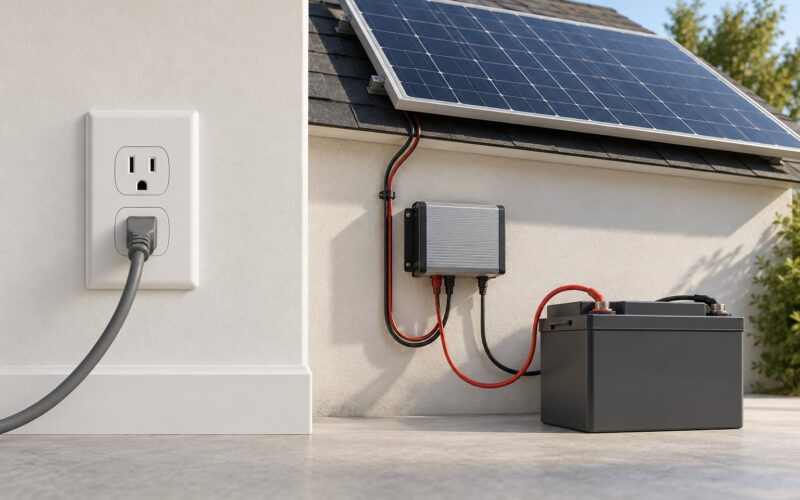
- Absorbing excess solar. On a bright day your panels may generate more than the house can use. A bidirectional charger can push that surplus into the car instead of exporting it at a low rate.
- Selling back to the grid. Energy leaves the property and lands on your meter as an export, which needs a utility program rather than just a capable car.
Owners running two EVs say the availability worry mostly disappears when one car is always parked at home. The single-car commuter has a harder problem, because the backup is sitting at work during the storm.
How Does Vehicle to Home Charging Work?
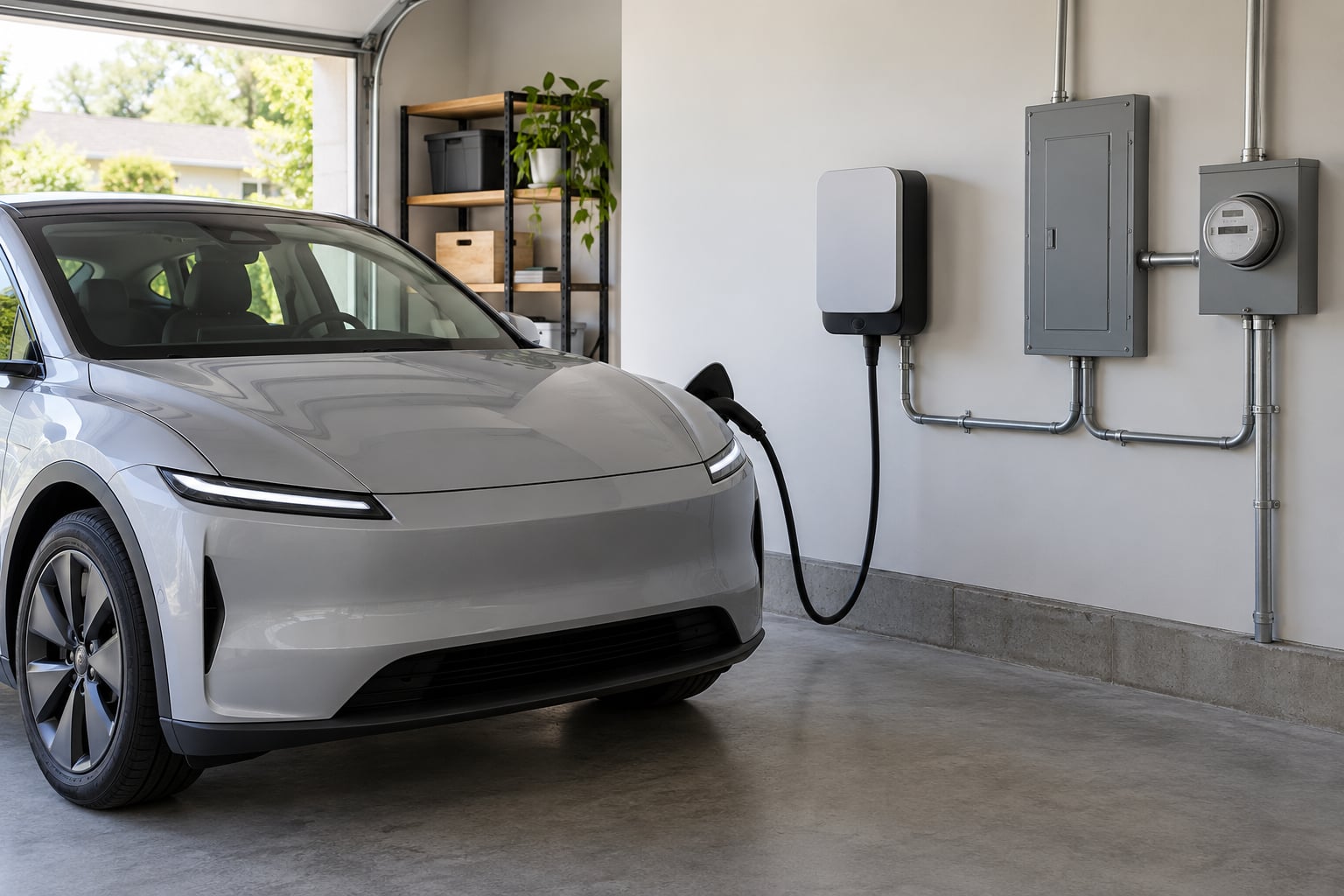
The charging path runs in reverse of a normal home charger. A standard EVSE sends alternating current from the house into the car’s onboard charger, which converts it to direct current and pushes it into the battery cells. For export, the chain reverses and adds a safety layer.
The process breaks into three steps.
- Two-way power flow. The car’s onboard inverter and a bidirectional EVSE negotiate over a communication protocol, ISO 15118 for most modern vehicles. Only hardware built for that conversation can change direction safely.
- DC to AC conversion. Energy leaves the battery as direct current. It passes through the vehicle’s onboard inverter or an external bidirectional unit, which converts it to the alternating current a house runs on.
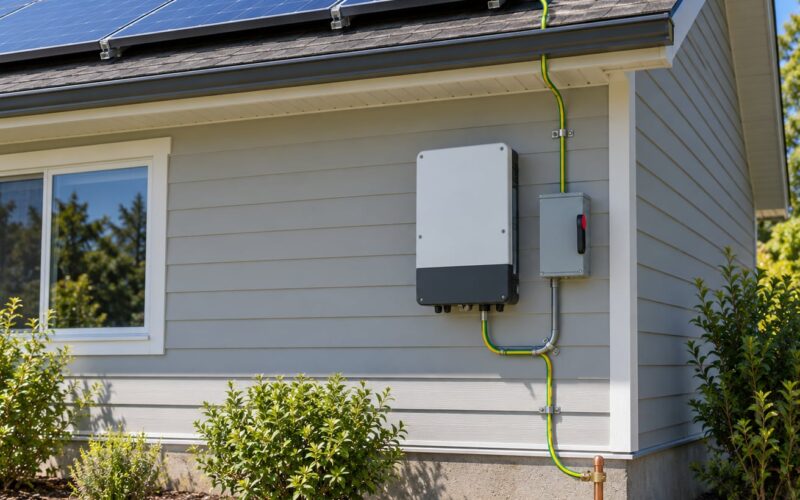
- Islanding and transfer. A controller detects the outage, opens a transfer switch, and isolates the home from the utility line. The car’s power feeds the home directly and never reaches the dead grid line.
That last step is the one people skip when they read about exporting energy. Without islanding control, back-feeding a de-energised utility line is genuinely dangerous to line workers, and no permit inspector will sign off on it.
Home energy management software sits on top of the physical system. It watches the state of charge, the household load and the tariff, then decides when the car charges, when it holds back, and when it releases. You can always cap discharge at a set level so the car keeps a reserve for driving.
Round-trip efficiency usually lands somewhere in the mid-90s, so sending energy out and back costs you a small percentage. A conventional unidirectional wall box simply cannot do any of this, because it contains no inverter path back to the panel.
What Equipment Is Needed?
Four pieces have to line up, and missing any one of them stops the project.
- A bidirectional-capable vehicle. Check the owner’s manual for a V2H, V2G or V2L designation. Many manufacturers ship the inverter and advertise the feature but cap how much you can export.
- Panel capacity. Exporting needs a spare circuit, often on a 50A or 60A breaker, and enough spare capacity in the panel. Some homes need a load centre upgrade or a new subpanel.
- A bidirectional EVSE. Not every wall box is reversible. The unit has to contain the conversion and control hardware, not just the connector.
- A home integration kit. Transfer switch, meter collar, islanding controller and usually an energy management unit, all installed and commissioned together.
On top of that, utilities generally want to be notified before you export, and in some regions a permit and inspection are required. A standard home charger plugged into the same outlet is a completely different job with a much smaller footprint.
V2H vs. V2G: What Is the Difference?
The difference is the destination. V2H serves the building behind your meter, while V2G serves the utility network beyond it, usually in response to a grid request.
| Criterion | V2H (vehicle to home) | V2G (vehicle to grid) |
|---|---|---|
| Electricity destination | Your household circuits | The distribution network |
| Main benefit | Backup power and shifting usage away from peak rates | Grid balancing plus possible program payments |
| Hardware | Bidirectional EVSE plus transfer switch and islanding control | Same hardware, plus utility-approved metering and communications |
| Utility involvement | Notification, sometimes a permit | Formal enrolment in a demand response or export program |
| Availability | Wider, supported by an expanding group of manufacturers | Limited by utility program coverage, which varies widely |
| Key limitation | The car has to be parked at home and plugged in | Car availability, program rules and capped export limits |
One limitation catches people in both columns. Some vehicles throttle total export over their lifetime. Volkswagen owners report caps around 4,000 hours or 10,000 kWh of exported energy, which can effectively switch the feature off after about a year of heavy household use, so read the warranty wording before you build a plan around it.
Can You Charge a Home From an Electric Car?
Only if the car was designed to export. An ordinary EV with a standard home charger takes electricity in and stops there, so plugging it into a home energy system accomplishes nothing beyond charging the car.
Plugging an unsupported vehicle into export-capable equipment is the scenario worth avoiding. The hardware expects a handshake that confirms the battery can be discharged safely. Without it there is no defined behaviour, and the result ranges from a failed connection to damaged equipment.
There is a middle path many owners use: a portable discharge adapter that powers a single appliance, a power tool or a camping load at a few kilowatts. That is V2L and it needs far less hardware than a whole-home system, which makes it a reasonable first step for many households.
How Much Does Vehicle to Home Charging Cost?
Cost varies more by house than by car. A home with spare panel capacity and a short driveway lands in a different place from one needing a new subpanel, a meter collar and a permit. The figures below are typical US ranges and they move with region and time, so treat them as a planning band rather than a quote.
For reference, installed V2H systems generally land in the low-to-mid five figures, and dedicated home batteries sit in a similar band. A representative midpoint for a fully installed V2H setup is roughly $6,500 to $9,000, with well-equipped homes reaching past $11,000 once panel work is added.
| Cost factor | Typical share of a V2H project | What pushes it up | What pushes it down |
|---|---|---|---|
| Bidirectional charger | Largest single line item | Vendor bundling software and support | A manufacturer bundle with the vehicle |
| Home integration kit | Transfer switch, meter collar, controller | Utility-specific metering requirements | Standard kit with no custom metering |
| Electrical panel work | Wide range, often the biggest surprise | No spare capacity, old panel, subpanel needed | Modern panel with a free breaker slot |
| Installation and commissioning | Labour, permits, inspection | Trenching, long cable runs, utility coordination | Charger installed next to an existing outlet |
| Utility interconnection | Sometimes zero, sometimes a study fee | Region requires a formal interconnection review | Notification-only regions |
| Software and monitoring | Ongoing subscription on some platforms | Managed tariffs and automation services | Local control without a subscription |
Battery wear is the cost people forget. Exporting energy repeatedly adds cycles that would otherwise not happen, though most owners see far less impact than they expect when the discharge is occasional rather than daily.
What Are the Benefits and Drawbacks?
The benefits start with resilience. A car with a large battery can carry a household through an outage that would stop a small home battery, and it stays parked at home doing nothing useful the rest of the time.
Beyond emergencies, you can shift consumption away from peak tariffs, hold excess midday solar instead of exporting it cheaply, and in some regions take part in utility demand response programs.
The drawbacks are real too.
- Cost. Installed V2H often runs well beyond what most owners expect, and UK owners point out a bidirectional charger alone can exceed the price of a comparable home battery.
- Availability. Backup only exists while the car is home, plugged in and above your reserve level.
- Limited compatibility. Only a minority of EV models support export, and manufacturers cap it more often than buyers expect.
- Install complexity. Quotes vary widely because panel work differs so much between houses, which makes budgeting hard.
- Uncertain economics. Bill savings depend entirely on your tariff, and export revenue depends on rules that change.
- Apartment and rental barriers. A dedicated circuit and a parking spot are prerequisites, which rules out most apartments.
For a typical household using around 10 kWh a day, a fixed home battery is often the simpler and cheaper answer. The car wins on capacity, not convenience.
How to Set It Up Safely
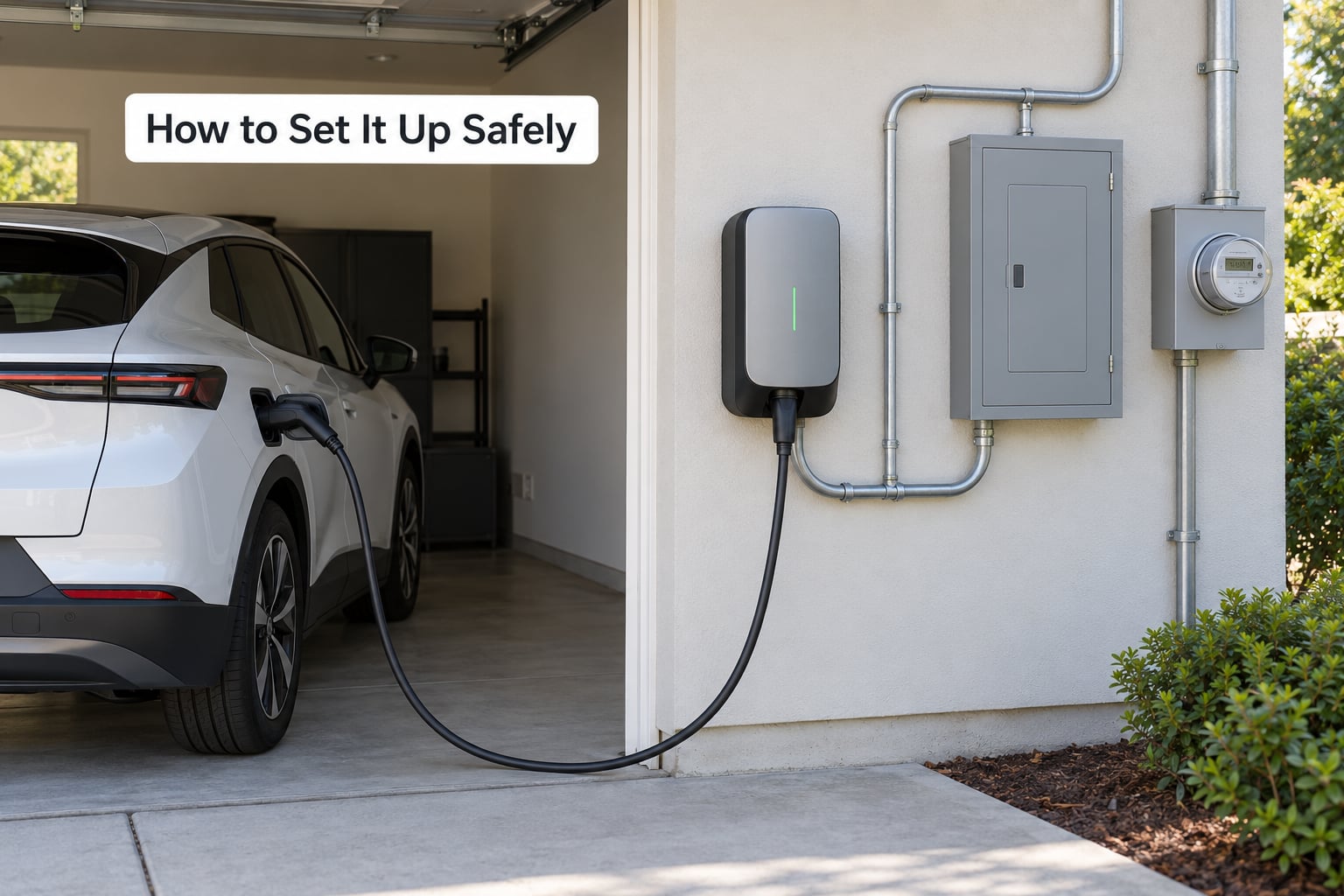
Electrical work of this kind is not a weekend project. A licensed electrician and a permit are the normal path, and the islanding component has to be commissioned properly before anything is allowed to export.
- Confirm the vehicle. Read the manual for a V2H or V2G designation and note any export caps before you spend anything else.
- Check utility rules. Ask your utility what notification, permit or interconnection review applies, and what they do not permit.
- Have a panel assessment. A licensed electrician checks spare capacity, grounding and the best circuit location.
- Get a written quote. Ask for the charger, the integration kit, the panel work and the commissioning time broken out separately.
- Install and permit. The equipment goes in, the inspector signs off, and the utility is notified.
- Set limits and test. Configure the reserve level, exercise the outage transfer deliberately, and confirm the home is genuinely isolated during the test.
Five questions worth asking an electrician before you accept a quote: how much spare panel capacity exists, which breaker and cable run are proposed, whether a meter collar is required, whether a subpanel is unavoidable, and who handles the permit and the utility notification. Clear answers to those five usually explain the gap between two quotes.
Is Vehicle to Home Charging Worth It?
It fits a fairly specific household. V2H makes sense when you already own a V2H-capable car, you run two vehicles or drive less than your daily range needs, you have real solar to store, you live somewhere with outages, and your panel has capacity to spare.
It fits badly when you drive far every day and need the range back overnight, you rent, you have a single car that is out during storms, or your panel needs serious work. In those cases a small fixed home battery, or a portable discharge adapter for essentials, serves you better for less.
| Question about your home | Favours V2H | Favours a home battery |
|---|---|---|
| How many EVs are parked at home? | Two, or one that stays home overnight | One car on a long commute |
| Outage frequency | Frequent or multi-day | Rare and short |
| Solar generation | Excess midday production | Little or no rooftop solar |
| Panel condition | Modern with spare capacity | Old, full, or needing a subpanel |
| Tariff structure | High peak rates, time-of-use pricing | Flat rate with little variation |
| Local incentives | Rebates or tax credits that apply | No support available |
A hybrid setup works well for many households: a small fixed battery covers the fridge, Wi-Fi and lights continuously, while the car handles the big loads for a day or two. It also removes the availability problem, since the house no longer depends on the car being parked.
Frequently Asked Questions
Can any electric car charge a house?
No. Only vehicles sold with a bidirectional charging function, usually listed as V2H, V2G or V2L in the manual, can send power back out. Many cars offer V2L only, which powers a single appliance through an adapter. Before buying anything, check your owner manual or manufacturer site for an export function and any cumulative export cap.
How much of a house can an electric car power?
It depends on battery size and how much you limit the output. A 60 kWh battery holding a 40 percent reserve gives roughly 36 kWh of usable energy, which covers a typical household’s daily consumption for a day or two at essential-loads level. Older drivers average about 10 kWh a day. Continuous output is usually around 5 to 11.5 kW.
How long does vehicle to home charging take?
Two different timeframes matter. Restoring power after an outage takes seconds once the system is set up correctly, since the transfer switch just changes position. Actually recharging the car afterwards takes as long as any home charge, typically several hours on a 7 to 11.5 kW circuit. Running a full household off the car for a day consumes most of the battery’s usable capacity.
Does vehicle to home charging work during a power outage?
That is the main use case, and it works because the home is disconnected from the utility line before the car supplies it. The islanding controller and transfer switch handle this automatically. The caveat is availability: if the car is not parked at home, connected, and above your reserve level, the system has nothing to give you during the outage.
Do EVs lose battery life from powering a home?
Any discharge adds cycles, so there is some long-term cost. In practice, occasional backup use is a small share of a battery’s expected cycle life, and the effect matters more if you export every day. Setting a state-of-charge reserve also protects against deep discharge. Read the warranty wording, since some manufacturers treat heavy export differently from normal driving.
Is vehicle to home charging safe for my home’s electrical system?
It is safe when it is designed, permitted and commissioned as a bidirectional system. The islanding controller prevents back-feeding the utility line, which is the main hazard. Use a licensed electrician, correctly rated equipment and a permit, and never improvise an export connection from a standard outlet. Your utility also needs to be notified before export begins.
Conclusion
Vehicle to home charging turns a car you already own into home backup and load-shifting hardware, but only when the car, the charger and the panel all support bidirectional operation and the work is done by a licensed electrician under permit.
Start with four checks. Confirm your vehicle has a genuine export function and read its export cap. Ask your utility what notification or interconnection rules apply. Have your panel capacity assessed. Then work out how much energy your household actually uses per day and what your tariff charges for it. Those four answers will tell you more than any general article, including this one.