You can lower your electric bill without solar by cutting kilowatt-hours at your three biggest end uses and by paying less for each one. In practice that means a thermostat setpoint change, sealed air leaks, large loads moved to off-peak hours, and standby draw eliminated. Most of it costs nothing at all.
Your bill is simple math: the electricity you use in kilowatt-hours, multiplied by the rate you pay for each one, plus fixed delivery charges and sometimes a demand charge. Solar attacks one side of that equation. Everything in this guide attacks both sides, and the levers are the same whether you rent or own, live in a studio or a four-bedroom.
Here is the honest version. There is no single trick. The advice that circulates most online, unplugging phone chargers and adding dimmer switches, moves the needle so little it barely registers on a monthly statement. The changes that matter are boring: where the air leaks, how warm you keep the house, when the dishwasher runs, and whether your water heater is set to 140 degrees for no reason.
Heating and cooling account for roughly half of residential electricity use in the United States, based on the Residential Energy Consumption Survey. Water heating adds another meaningful slice, and standby loads quietly take the rest. Fix the first two and you will have done most of the work available to you.
Table of Contents
- What You Need
- Step-by-Step: How to Lower Your Electric Bill Without Solar
- Find where your electricity is actually going
- Reduce heating and cooling costs first
- Change lighting and appliance habits
- Cut standby and phantom load
- Manage water heating and laundry
- Make smarter purchases and verify the savings
- Common Mistakes
- Frequently Asked Questions
- Does keeping the AC on 24 hours save electricity?
- What should I turn off at night to save electricity?
- Can a renter lower their electric bill in an apartment?
- Is a time-of-use electricity rate worth it for a household?
- Do smart plugs and smart bulbs really reduce an electric bill?
- How much can I save on electricity in a year without solar?
- Conclusion
What You Need

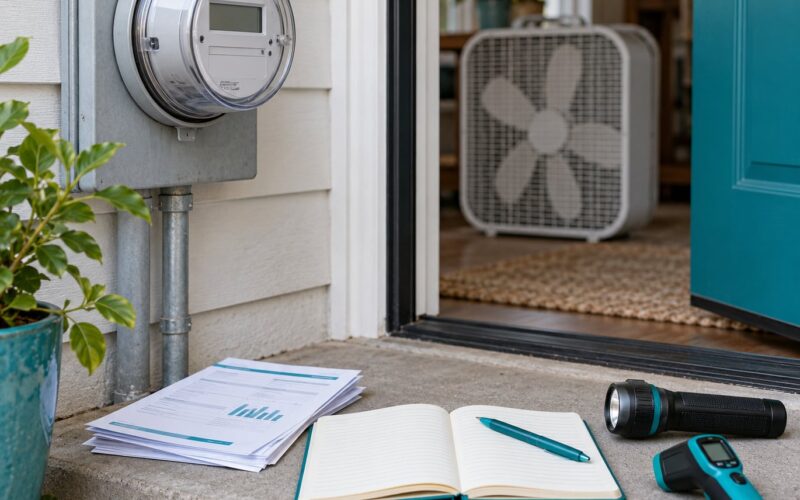
Almost nothing. A paper or digital copy of your last three bills, a phone, and about an hour of attention gets you through the first pass.
Pull three to twelve months of bills if you have them. Twelve months matters because a household that jumps from 900 kilowatt-hours in March to 2,400 in August has a seasonal problem, not a habit problem, and treating the two the same is how people end up chasing the wrong appliance.
Two tools earn their keep. A smart plug or inline energy monitor that reports live wattage costs less than a takeout order and is the single most-recommended purchase in energy forums, including r/SolarDIY, where the advice repeats constantly: find your own big consumers instead of guessing.
For older homes, also get a one-dollar incandescent bulb and a flashlight. Holding one next to a warm-weather draft around a window or a ceiling outlet is a fast, old-fashioned way to find an air leak.
A notebook or a spreadsheet is the third tool, and it is not optional. Savings you do not write down are savings you cannot confirm, and you need a baseline before you change anything.
Finally, know who owns the equipment. Renters can do almost everything on this list except attic insulation, HVAC replacement, water heater work, and exterior caulking. Knowing which column you are in keeps you out of a conversation with a landlord you did not need to have.
Step-by-Step: How to Lower Your Electric Bill Without Solar
Find where your electricity is actually going
Start by learning what you are paying for, not what you think you are paying for. On a residential bill, find the kilowatt-hour total for the current period and the prior one, subtract the earlier reading, and you have your actual usage. The rate line tells you the cents per kilowatt-hour. If your meter read is labeled estimated, the utility guessed for that cycle, which is one reason some bills shock people for no visible reason.
Then split the usage into categories. Heating and cooling typically sit near 50 percent of home electricity, water heating around 10 to 15 percent, kitchen appliances about 5 percent, dryers around 3 percent, with lighting, TVs, computers, and chargers making up most of the remainder. These are survey averages, so use them as a map and not a verdict.
Measure instead of guessing. Plug the monitor into the fridge, the microwave, the TV, the game console, the desktop computer, and the bedroom window unit, one at a time, and record the wattage. Multiply watts by hours of use to get kilowatt-hours. People running a gaming PC, a server, or a second refrigerator in a garage are routinely surprised by three or four times.
Write the baseline in your notebook, then move on. You now have a number to beat, which is worth more than any tip you have not verified.
Reduce heating and cooling costs first
Nothing else you do comes close. If your air conditioner or heat pump is more than 15 years old, or your system is sized far larger than the rooms it serves, the cooling and heating share of your bill is where the money is.
Set a summer setpoint of 78 degrees and stop fiddling. Every degree you raise the thermostat cuts cooling energy by roughly 3 to 5 percent, which is why a programmable or smart thermostat that holds 78 while you are out reliably saves in the 10 to 15 percent range. Lower it to 74 all day and you will spend more for a comfort difference most people stop noticing within a week.
Fix the air side of the equation. A clogged filter can add 10 to 15 percent to cooling costs, and a unit with a blocked return vent is running hot and inefficient. Check the filter monthly, replace it when it is grey, and clear anything within a foot of the outdoor unit so airflow is not restricted.
Then seal what leaks. Run a hand along window edges, door frames, and attic access points on a cool night. The cheapest fixes, weatherstripping and caulk, handle the biggest share of leaks in most homes. Ducts leaking into an attic or a crawl space are a separate and often larger problem, and sealing them is a job for a contractor unless you are comfortable doing it.
Use the ceiling fan. It circulates air and makes a room feel several degrees cooler, which lets you run the thermostat higher. Shades beat blinds in summer, and closing them on the sun-facing side of the house makes a measurable difference on a clear afternoon.
Know when to stop. Thermostats, filters, weatherstripping, and fan settings are safe homeowner work. Anything involving refrigerant, electrical wiring, a panel, or a duct rebuild belongs with a licensed HVAC or electrical professional.
Change lighting and appliance habits
Swap remaining incandescent and halogen bulbs for LED, which use roughly 75 to 80 percent less electricity and last far longer. Where a hallway or closet light is on for minutes at a time, a motion sensor switch beats a dimmer in both comfort and savings.
Turn off what runs outside when it is not in use. Irrigation controllers, exterior lighting, a hot tub pump, and a second fridge in a garage are common culprits, and garage fridges are frequently the largest single surprise in a home.
Run the dishwasher and washing machine only when they are full, and use the cold or eco cycle on the washer. Heating water for laundry is the expensive part, not the tumbling.
If a major appliance is genuinely near the end of its life, replace it with an ENERGY STAR certified model and compare the yellow EnergyGuide label across the sizes you are considering rather than assuming bigger is quieter and cheaper. Ductless mini-splits and heat pumps can cut heating and cooling costs substantially compared with an old system, but that is a capital decision with a real payback calculation, not a tip.
Shift what you can to off-peak hours. If your utility offers a time-of-use rate, running the dishwasher, washer, and EV charging after 9 p.m. or before 7 a.m. can cut the cost of those loads meaningfully. Check your plan before you reorganize your life around it.
Cut standby and phantom load
Phantom load is the electricity your electronics draw while switched off or in standby mode, and across a typical home those small draws add up to something a smart plug will make visible in about ten minutes.
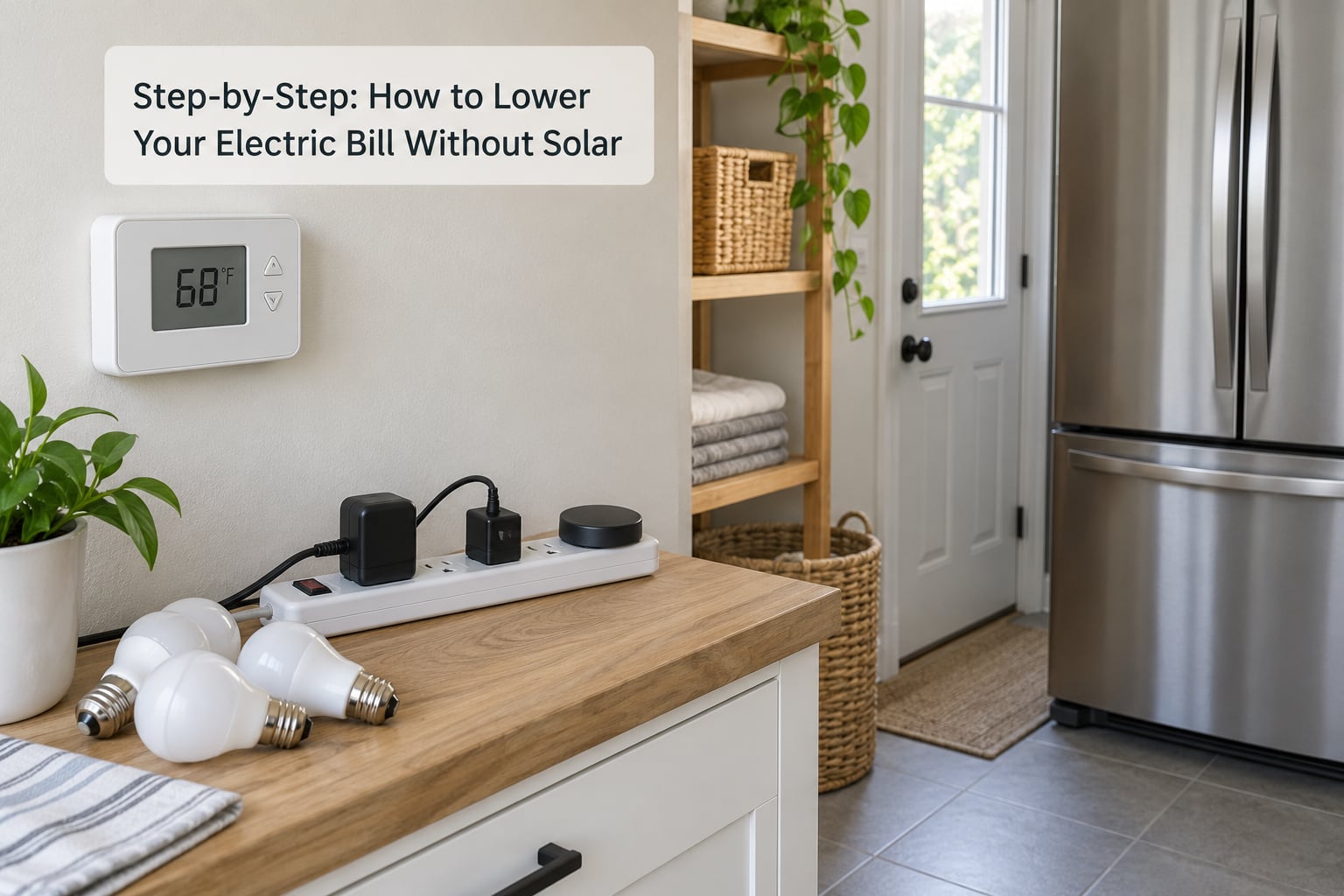
Put the television, game consoles, stereo, and desktop computer on switched power strips, and turn the strip off when you leave. This is the one that matters, because standby draw scales with how many devices you own rather than how many rooms you heat.
On a second strip, leave the fridge, freezer, and any medical equipment alone. Never unplug a refrigerator, and never cut power to a house with a freezer during a storm without planning for it.
Unplug chargers only when you have the habit and the convenience. A phone charger draws a fraction of a watt and unplugging it nightly saves pennies. Forum users are blunt about this, and they are right: the AC left running all summer costs hundreds of times more than every charger in the house combined.
If you travel for a week, switching off the water heater and shutting off major breakers is reasonable. Do it by switching individual breakers at the panel in a labeled order, and only if you know what you are turning off.
Manage water heating and laundry
Set a tank water heater to 120 degrees. Federal efficiency rules cap most new tanks at that setting, and scalding needs roughly 130, so anything above 120 is heating water you are not using. If you have gas rather than electric, the savings show up on the gas bill instead, which is a smaller and easier win.
Add an insulation blanket to an older tank, especially in a garage or basement. Low-flow showerheads and faucet aerators cut hot water volume, and cutting volume cuts the energy needed to heat it. Fix dripping taps for the same reason.
For laundry, wash full loads on cold, clean the dryer lint screen after every cycle or two, and line dry when the weather cooperates. A dryer working on damp clothes for an extra twenty-five minutes is the most common self-inflicted energy waste in a laundry room.
If you are shopping for a water heater eventually, a heat pump water heater or a properly sized tankless unit can be a big improvement in a home with electric water heating. Judge them on the whole-house fuel type and your hot water pattern, not on the sticker.
Make smarter purchases and verify the savings
Every upgrade deserves three numbers before you buy it: the upfront cost, the estimated annual kilowatt-hour savings, and how long the payback takes. If a seller cannot give you all three, that is the answer.
Compare the EnergyGuide label across models of the same type and size, and use a kWh figure you can trace to a source rather than a marketing percentage. The widely repeated claims, such as a smart thermostat saving 15 percent, are reasonable starting points that vary with your climate, system, and habits.
Do not buy a fix you will not use. A load control program that cycles your compressor, a smart water heater shutoff you never program, and a smart plug on the one outlet you never touch all cost money and save nothing.
Track results across at least two full billing cycles, and compare like with like. A thermostat change in October cannot be judged on a November bill in a state where heating is the entire cost.
Your utility likely offers rebates for ENERGY STAR appliances, weatherization, smart thermostats, and LED retrofits, and these are the rare savings that are genuinely free money. Check your utility’s website and your area’s energy office, then confirm the requirements, because most want the old unit removed or a specific model number.
Finally, question your rate plan. Time-of-use pricing, budget billing, and provider switching in deregulated markets are zero-capital changes, but time-of-use is a trap for some households. Forum users report enrollment raising base fees and adding a max-demand charge that lands in the early evening, exactly when people run the dishwasher and charge the car. Look at the demand charge language before you sign, not after.
Common Mistakes
Cranking the thermostat to an extreme. A setpoint of 68 in summer or 80 in winter costs you more and rarely feels meaningfully better. Correction: pick 78 in summer, 65 to 68 in winter, and let the schedule do the work.
Replacing equipment that still works. A ten-year-old refrigerator using twice the energy of a current model is worth replacing. A two-year-old one is not. Correction: measure first, then replace what measurement condemned.
Believing a savings percentage. A headline number assumes a specific climate, a specific system, and specific habits. Correction: treat every estimate as a hypothesis and confirm it on your own bill.
Judging a seasonal change by one bill. Your August total says little about whether July’s habits worked. Correction: compare the same month against last year, or run a controlled two-month test where one variable changes at a time.
Doing electrical work without knowing who is allowed to. Opening a panel, replacing a breaker, or running new circuits is licensed work in most places and dangerous regardless. Correction: breakers only, and a professional for anything behind the cover.
Chasing the tips with the smallest effect. Unplugging chargers, buying dimmers, and closing the blinds on a cloudy day will not move a high bill. Correction: spend your effort on the thermostat, air sealing, water heating, and standby strips first.
Leaving the AC on 24 hours to avoid restarts. This is one of the most repeated pieces of bad advice on the internet. A modern air conditioner cycles on and off by design, and it consumes less energy holding a setpoint than fighting a raised thermostat. Correction: raise the setpoint and shut the system off when nobody is home.
Enrolling in time-of-use without reading the demand charge. Off-peak savings can be entirely erased by a max-peak penalty. Correction: model your typical weekday evening load before you enroll.
Frequently Asked Questions
Does keeping the AC on 24 hours save electricity?
No. Modern air conditioners are designed to cycle on and off, and they run more efficiently once a steady setpoint is established. Leaving the system running all day means it keeps pulling full power in an empty house. Raising the setpoint to 78 and shutting the system off when nobody is home cuts cooling use far more than avoiding restarts does.
What should I turn off at night to save electricity?
Put your television, game consoles, stereo, desktop computer, and any cable or network box on a switched power strip and turn it off at night. That is where standby draw concentrates, because it scales with the number of devices you own. Leave the refrigerator and freezer alone, and skip phone chargers, whose nightly savings amount to pennies.
Can a renter lower their electric bill in an apartment?
Most of what matters is available to you without ever speaking to a landlord. Adjust the thermostat, use switched power strips, wash in cold, run full loads, line dry, seal gaps with removable weatherstripping, and swap bulbs for LEDs. You cannot insulate the attic, replace the HVAC system, or work on the water heater, so the savings ceiling is lower but still meaningful.
Is a time-of-use electricity rate worth it for a household?
It depends entirely on when you use power. Households with electric vehicles, heat pumps, or water heating that can shift to late night often save. Households that run the dishwasher and laundry in the early evening, right inside the peak window, can end up worse once a max-demand charge is applied. Read the demand charge language and model a normal week before enrolling.
Do smart plugs and smart bulbs really reduce an electric bill?
Smart plugs pay for themselves when they reveal or cut standby draw on entertainment and office equipment, which is where phantom load concentrates. Smart bulbs save real electricity and last longer than the bulbs they replace, but the bill impact in a home that has already converted to LEDs is small. Buy plugs to measure, not to gadget.
How much can I save on electricity in a year without solar?
A meaningful share of a typical household total, with most of it coming from three places: heating and cooling behavior, water heating settings, and standby loads. The spread across households is wide, since a home with an oversized ductless system and a second refrigerator behaves nothing like an efficient apartment. That is why measuring your own usage beats trusting a percentage.
Conclusion
Three things, in order. Pull your last twelve months of bills and write down your baseline kilowatt-hours, then find your actual rate per kilowatt-hour so you know which side of the equation you are attacking. Next, measure your three biggest suspects with a smart plug, because the answer is rarely the appliance you suspected. Then make one measurable change, thermostat or water heater temperature most likely, and compare the same month next year before you decide whether to keep going.