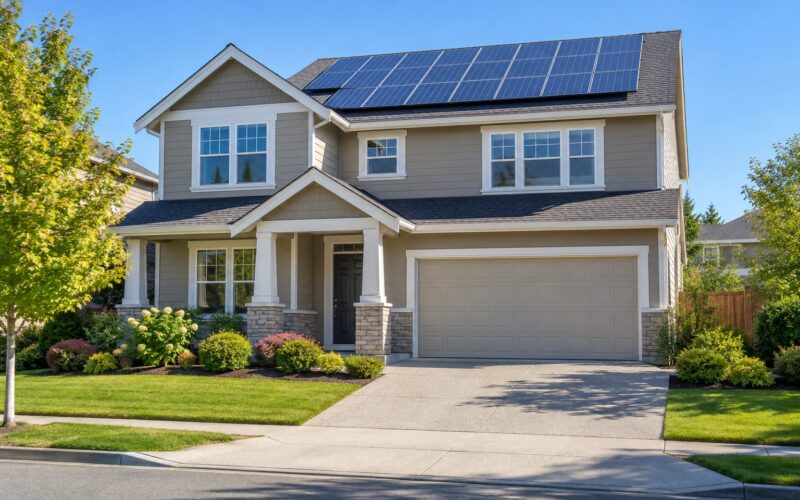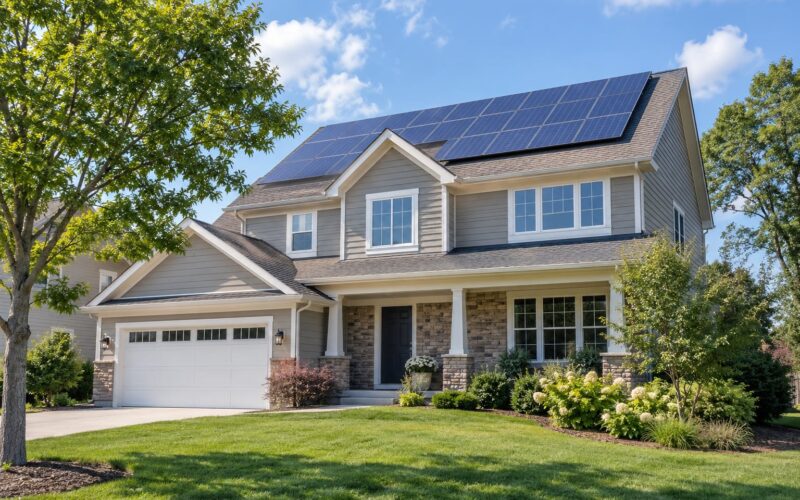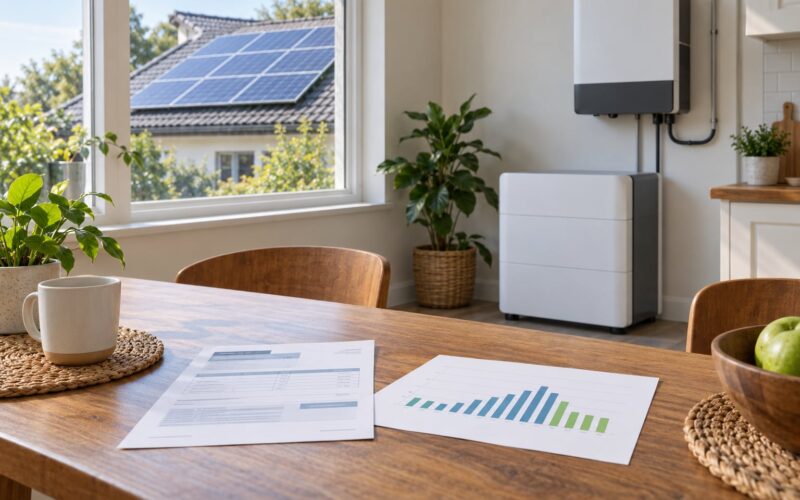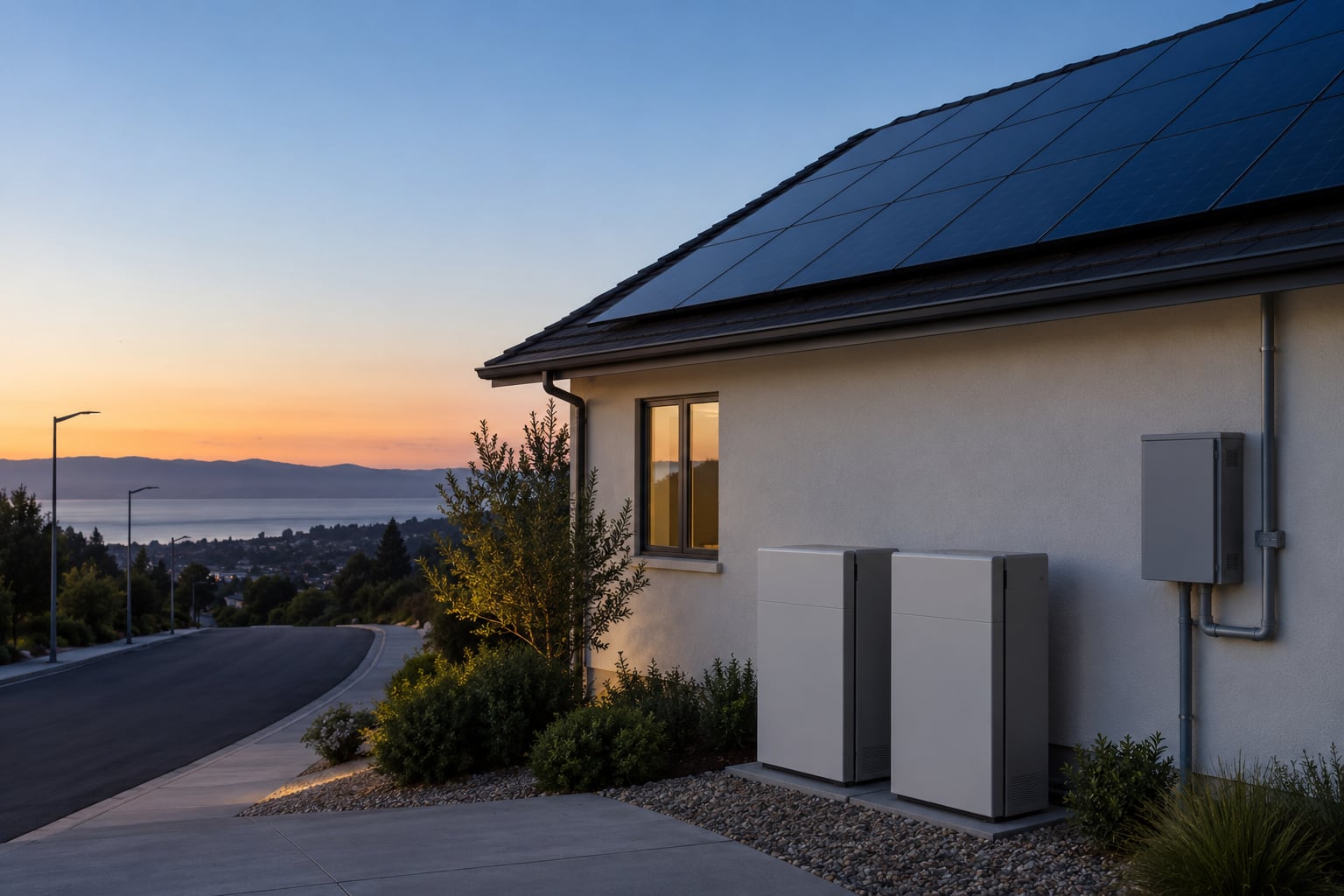
If you have a standard grid-tied system, nothing happens to your panels at all. They keep converting sunlight into electricity the whole time the grid is down. What switches off is the inverter, because of a safety feature called anti-islanding. So what happens to solar panels in a power outage is simple: the panels work, the power just cannot reach your house until the grid comes back or a battery takes over.
I know that sounds like a trick answer, because most people find a monitoring app sitting at zero production and assume something broke. On forums, owners post the exact same message after their first blackout: sunny sky, zero output, panic. It is normal behavior, not a fault.
A few exceptions matter. Solar garden lights behave completely differently, since they carry their own small battery. And a system with storage, or an inverter that can island, will keep some circuits alive. This guide walks through all three cases, plus what to do in the first minutes of an outage.
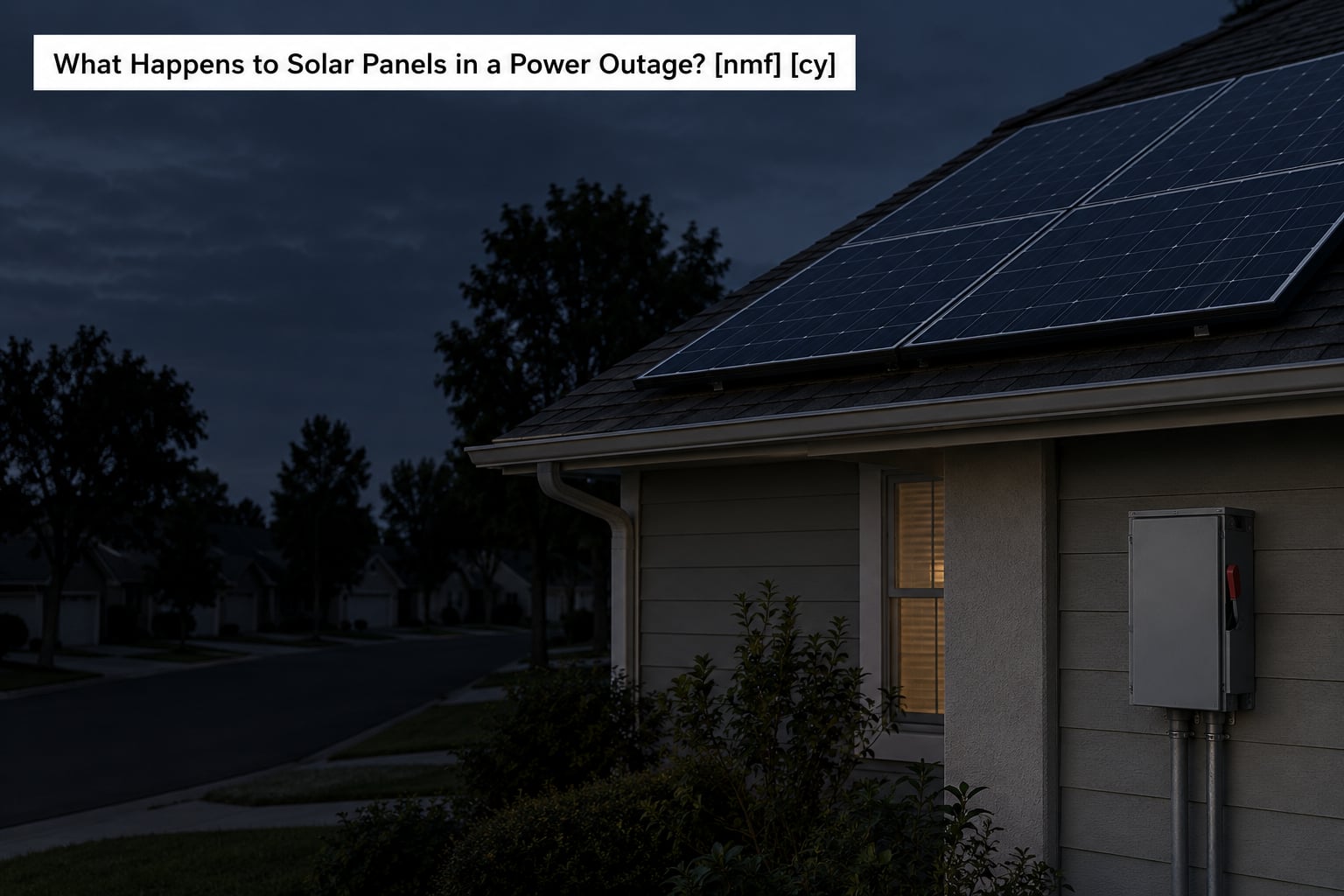
Table of Contents
- What Happens to Solar Panels in a Power Outage?
- Why Grid-Tied Solar Panels Shut Down
- How a Battery Changes Solar Power During an Outage
- What happens to solar panels in a power outage once a battery is installed?
- What Happens to Solar Panels on an Off-Grid System
- Do Solar Lights and Panels Behave the Same Way?
- How Much Solar Power Is Available During an Outage?
- What Happens to Solar Panels in a Power Outage: Safety Checklist
- Frequently Asked Questions
- Will solar panels damage appliances during a power outage?
- Why are my solar panels not working when the power is out?
- Can I use a solar generator to charge a phone during a blackout?
- How long can a home solar battery power a house during an outage?
- Can an installer add backup power to solar panels I already have?
- Do solar panels start working again when the grid power comes back?
- Bottom Line
What Happens to Solar Panels in a Power Outage?
The short answer depends on which of three things you own: the panels, the inverter, or a battery. Almost every home system has the first two and not the third, and that combination produces no usable power in an outage.
The panels themselves are unaffected by a blackout. A photovoltaic module makes DC from light, and it has no idea the utility is down. Nothing about a line failure, a downed pole or a tripped breaker harms glass sitting on a roof in the sun.
The inverter is where the decision gets made. Its sensors watch grid voltage and frequency continuously, and when both collapse it opens the connection within a fraction of a second. That leaves you with a working array pointed at a house it cannot feed.
Your monitoring app will usually show zero or a communications error rather than a production figure, because the inverter is no longer reporting to the site. Homeowners on r/solar and r/SolarDIY read that as a broken array and only find out otherwise after the installer confirms expected anti-islanding behavior.
Two other things change during an outage. Net metering credits stop accruing, so any power the panels make is uncredited or simply curtailed. And if your system includes a battery, it may switch to backup mode automatically and start discharging, which surprises owners who never told anyone the battery was live.
Why Grid-Tied Solar Panels Shut Down
Grid-tied systems shut down because a de-energized utility line looks exactly like a live one to the people repairing it. A single home running several kilowatts back into a downed line could electrocute a lineworker standing on a bucket truck.
So anti-islanding is written into the safety standards every grid-connected inverter must meet, and the relay inside your inverter is the thing enforcing it. This is not a quirk or a manufacturer decision. Code requires it.
The technical distinction worth knowing is between two inverter types. A grid-following inverter needs the utility to tell it what frequency and voltage to match, so when the grid dies it has nothing to reference and stops. A grid-forming inverter creates its own reference and can run the house alone. That is the whole backup story in one sentence.
| System type | During an outage | Power at night | Panels still generating? | Install complexity |
|---|---|---|---|---|
| Grid-tied, no battery | Shuts off immediately | None | Yes, unusable | Lowest |
| Grid-tied with battery | Keeps backed-up circuits live | Yes, until the battery drains | Yes, usable | Moderate |
| Hybrid with grid-forming inverter | Takes over the whole home or selected panel | Yes | Yes, usable | Higher, often needs service upgrade |
| Fully off-grid | Unaffected by grid status | Yes, battery only | Yes, usable | Highest |
Most homeowners sit in the first row and find out during their first storm. That expectation gap is the single most repeated complaint in solar owner groups, because the sales conversation usually leads with savings and never mentions the word islanding.
How a Battery Changes Solar Power During an Outage
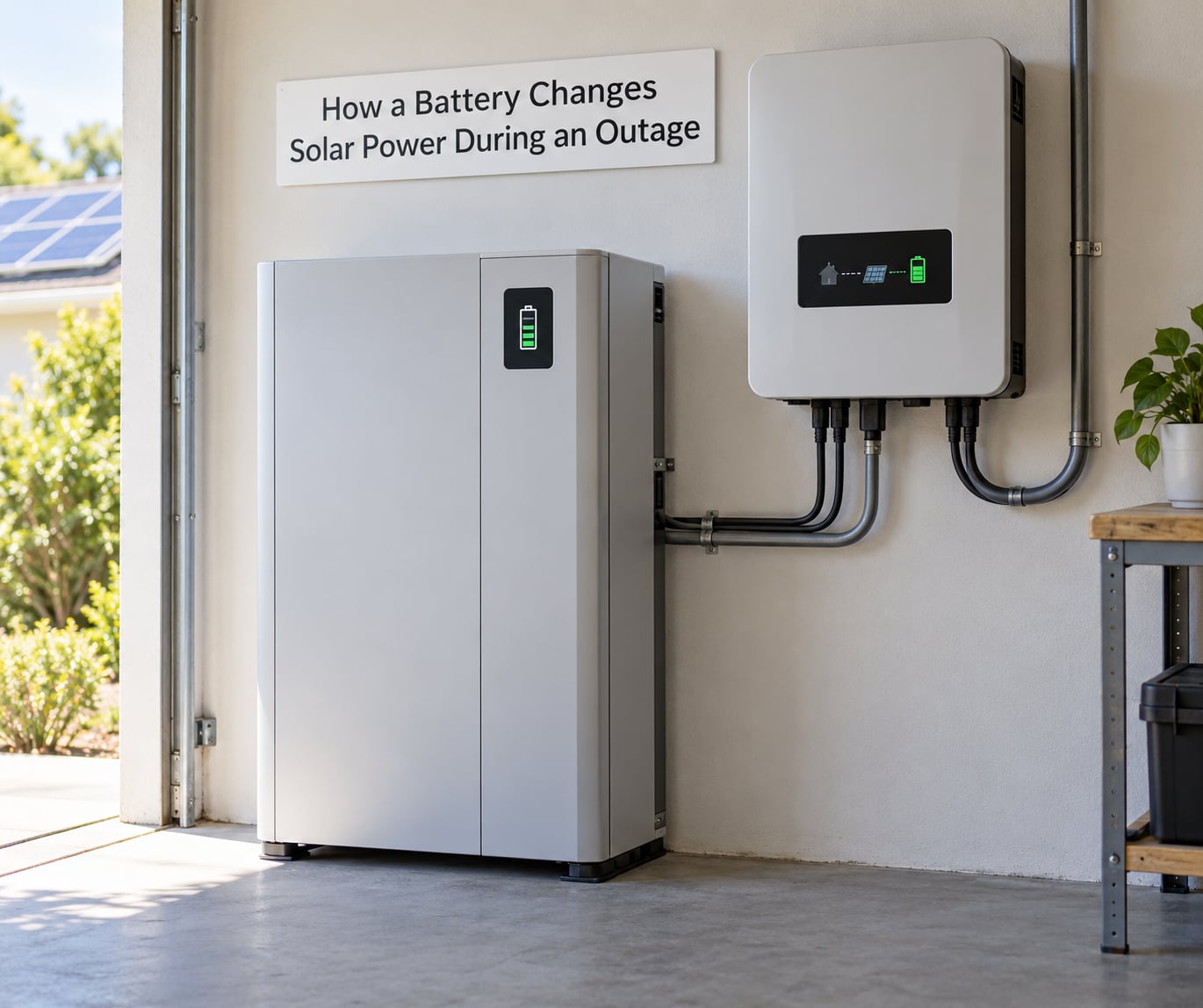
A battery changes the answer because it decouples your house from the grid. While the sun is up, surplus panel output charges the battery instead of going out to the utility. During an outage, the inverter draws on that stored energy and feeds your circuits.
What happens to solar panels in a power outage once a battery is installed?
The inverter trips off the grid exactly as before. A transfer switch, either inside the inverter or a separate auto-transfer switch, opens the connection to the utility lines and closes the connection to the home. On better equipment that handover takes a couple of seconds and you do not notice it.
Where the power goes depends on how the system was designed. An essential load panel backs up only selected circuits, usually the refrigerator, some lights, the internet router and outlets near the kitchen. Whole-home backup uses a larger, grid-forming inverter and often needs a service panel upgrade, which is why it costs more to install.
Two numbers decide how long you last. The first is usable capacity in kilowatt-hours after depth of discharge, since most lithium batteries are only drained to about 90% to protect themselves. The second is the inverter’s continuous output in kilowatts, which is a hard ceiling no battery can lift.
A caveat worth remembering: some homeowners report their system switching onto battery with no outage in progress. That usually means the grid signal was flaky rather than dead, so the inverter did exactly what it was designed to do. If it keeps happening, ask your installer to check the monitoring history.
What Happens to Solar Panels on an Off-Grid System
A fully off-grid array has no grid connection at all, so there is nothing to shut down. When the utility goes dark, the array keeps feeding the inverter, the inverter keeps feeding the house, and the battery covers the hours when the sun is down.
The limits are entirely local. Once the battery empties, the house has no source until the sun returns. A three-day storm with heavy overcast can mean a long wait, so off-grid owners usually pair their batteries with a generator.
Wire sizing and inverter compatibility matter more here than anywhere else. Standalone systems carry every amp the house uses, so undersized conduit or an inverter that cannot handle the load will trip under real demand. DIY forums still argue about the legality of islanding a grid-tied array with a manual transfer switch, and the short version is that a licensed electrician should handle it, not a weekend project.
Do Solar Lights and Panels Behave the Same Way?
No, and this is where a lot of confusion starts. Solar garden lights are self-contained. A small panel charges a built-in rechargeable battery during the day, a photocell switches the light on at dusk, and it runs until the battery runs low. Nothing to do with the utility, nothing to do with an inverter.
That design also explains their limitations. A week of cloudy days and the light stops working until it recharges, and a shaded or dusty panel charges far less than the label suggests. Home photovoltaic arrays follow a completely different set of rules.
How Much Solar Power Is Available During an Outage?
Start with capacity rather than panel count. Take the battery’s nameplate kWh, multiply by the depth of discharge it is allowed to reach, and that is roughly what you can hand to the house.
Then divide by the average load in kilowatts. A refrigerator that cycles on and off averages around 100 to 150 watts, a router with a modem nearer 20 watts, and an LED bulb about 10 watts. Add them up, and you get the runtime.
A 10 kWh battery used to about 90% gives roughly 9 kWh of usable energy. Against a combined load of about 400 watts, that is around 22 hours of steady supply, less if the sun comes out and the panels are taking over part of the work.
Here is what that looks like for common loads:
| Usable battery energy | Typical runtime | What it can carry |
|---|---|---|
| 5 kWh | Roughly 8 to 12 hours | Router, phone charging, two LED lights |
| 10 kWh | Roughly 20 to 24 hours | Refrigerator, internet, several lights, a laptop |
| 15 kWh | Roughly 1 to 2 days | Refrigerator, freezer, lights, Wi-Fi, small medical devices |
| 20 kWh and up | Roughly 2 to 3 days | Most essential circuits, sometimes well or sump pumps |
Panel size does not extend that at night, and cloudy weather shrinks it fast. A multi-day winter storm is where solar-plus-battery systems hit their honest ceiling, and a portable generator is still the practical answer for events lasting longer than a day or two.
What Happens to Solar Panels in a Power Outage: Safety Checklist
During the first minute, stay away from the roof and the outdoor equipment. Panels can still be producing lethal DC in full daylight even with the inverter off, so treat every array as live whenever the sun is up.
Check your monitoring app to see whether the system went to backup mode or shut down. If a battery is installed, the app usually reports state of charge and which circuits are energized, which tells you what to run first.
Decide your loads before switching anything on. Turning on a space heater or the water heater against a small battery empties it in minutes, and the fastest way to survive an outage is running a short list.
Do not attempt to bridge the outage with a manual transfer switch or a generator wired in yourself. Backfeeding a grid that utility crews believe is dead is exactly the accident anti-islanding exists to prevent. Generators and batteries also need clearance from anything combustible, and a battery cabinet needs ventilation, not a plywood lean-to.
Call a licensed electrician or your solar installer for any fault: a burning smell, damaged conduit, a repeatedly tripping breaker, or production that stays at zero after the grid is confirmed stable. Do not reset equipment that has been wet or exposed to storm damage.
Frequently Asked Questions
Will solar panels damage appliances during a power outage?
No. A standard grid-tied system disconnects from the utility, so your appliances see nothing at all rather than an unstable supply. The inverter stops rather than sending a partial or dirty signal to your outlets. The only genuine risk comes from people trying to bridge the grid with a manual transfer switch, which is exactly why anti-islanding exists.
Why are my solar panels not working when the power is out?
Because the inverter has gone into anti-islanding protection. Your panels are still converting sunlight into DC, but the inverter has opened its connection to the dead grid, so there is no usable AC output. Your monitoring app will show zero production or a communications error. That is expected behavior, not a broken system, and output returns when the grid does.
Can I use a solar generator to charge a phone during a blackout?
Yes, if you own a portable power station rather than a panel alone. Those units have a rechargeable battery charged by an integrated solar panel and deliver power through USB and AC outlets. A bare solar panel cannot charge a phone directly, because phone charging needs regulated output at the right voltage. Check the unit’s output rating before heading out.
How long can a home solar battery power a house during an outage?
Take usable capacity, which is nameplate kWh times depth of discharge, then divide by your average load in kilowatts. A 10 kWh battery used to 90 percent gives about 9 kWh, which runs a refrigerator, router and several lights for roughly 20 to 24 hours. Runtime drops sharply over multiple cloudy days when the panels cannot refill it.
Can an installer add backup power to solar panels I already have?
Often yes. Most retrofit paths need a hybrid or grid-forming inverter, a transfer switch or essential load panel, and a battery sized to the loads you want backed up. Some existing arrays have enough capacity and the conduit in place, while others need new wiring or a service upgrade. Your installer can confirm from the inverter model whether islanding is possible at all.
Do solar panels start working again when the grid power comes back?
Yes, they restart on their own with no homeowner action. The inverter waits for grid voltage and frequency to stabilize, recloses its connection, and resumes exporting. Most systems reconnect within a few minutes to an hour. If yours does not come back after a couple of hours, check the monitoring app for an error code before resetting anything.
Bottom Line
Short version of what happens to solar panels in a power outage: ordinary grid-tied panels shut off safely, and nothing about them is damaged while they do it. To get power through a blackout you need storage or an islanding-capable inverter behind a transfer switch or essential load panel.
Start by finding your inverter model and checking its manual for the word islanding. That single answer tells you whether your system can carry your house tonight.