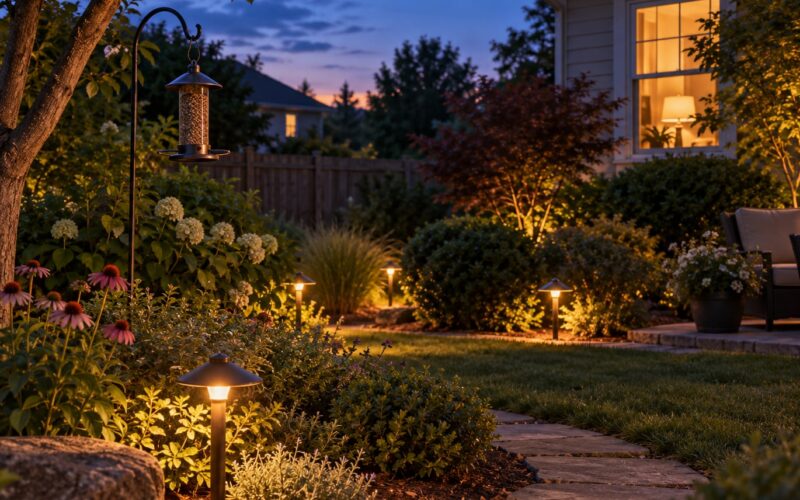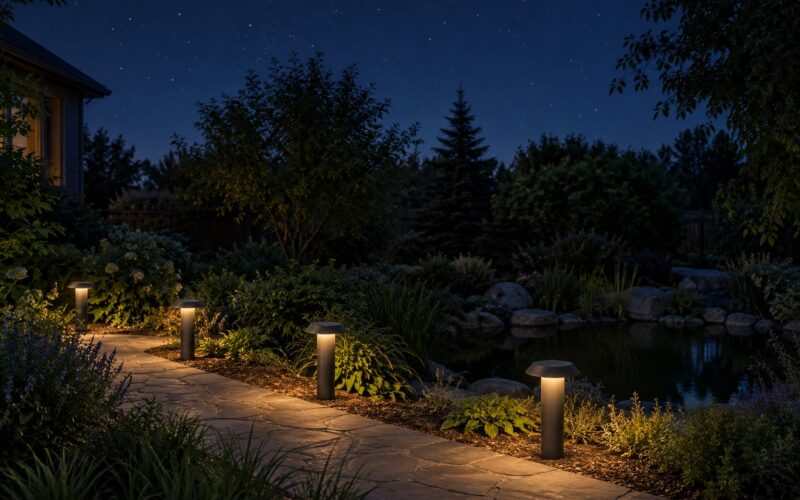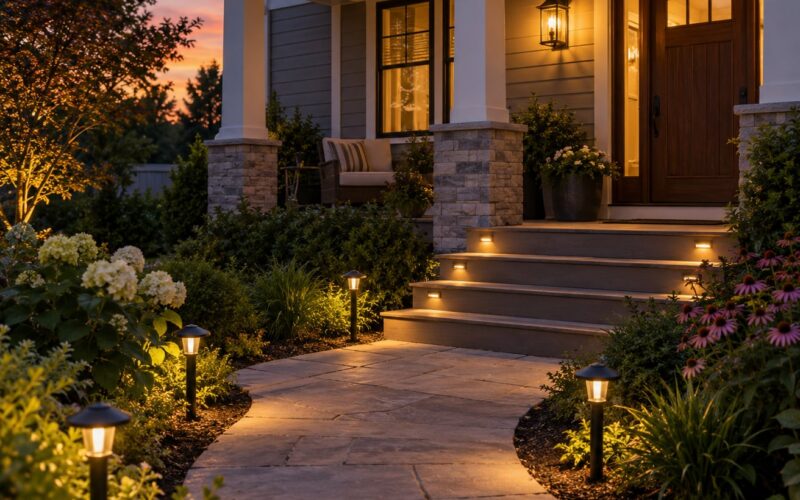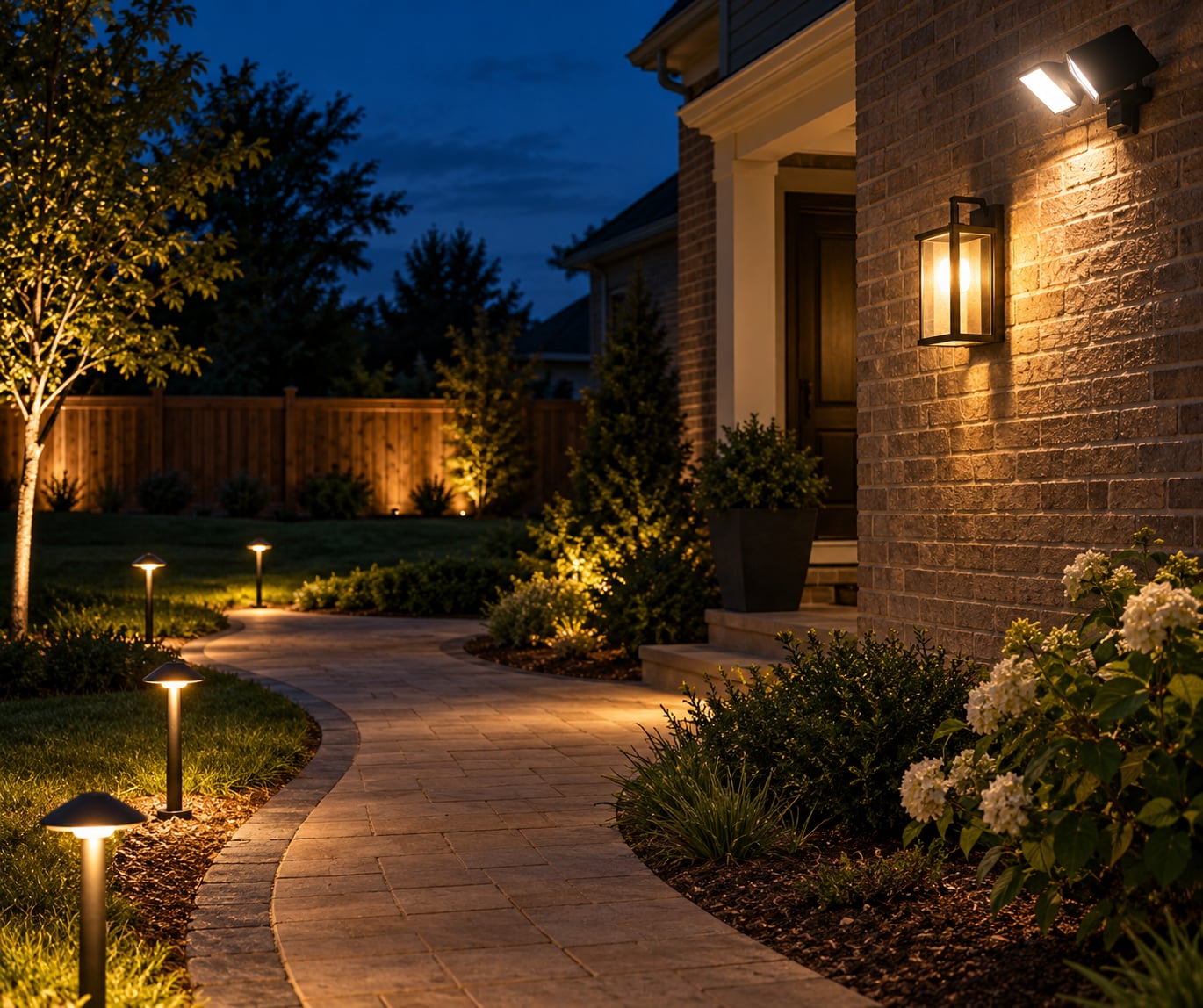
The fastest way to stop outdoor lights from bothering neighbors is to change where the light goes, not how bright it is. Reposition or aim fixtures downward, add an opaque hood or shield where the beam escapes, and cut brightness a step or two. Then move lights to a timer or motion sensor so they stop running all night. Most problems are solved in an evening of work with a screwdriver and a tape measure.
That matters more than it sounds. A modern LED floodlight can put out several times the light of the halogen bulb it replaced, and most people never re-aim it after the swap. The result is glare landing in a bedroom two houses over, and a conversation that gets worse every time you both pretend it is fine.
Here is the order I would work in. Start with observation, fix the aim, add shielding, lower the output, change the schedule, and only then talk to your neighbor if something still needs adjusting. Doing it in that sequence means you usually arrive at the conversation with a solution instead of a complaint.
Table of Contents
- What You Need
- Step-by-Step: Reduce Light Spill Without Losing Security
- How to Stop Outdoor Lights From Bothering Neighbors: Start With a Darkness Test
- 1. Identify the Fixtures Causing the Problem
- 2. Check the Direction and Beam Spread
- 3. Reposition or Shield the Light
- 4. Use Lower Brightness and Better-Designed Fixtures
- 5. Change the Operating Schedule
- 6. Talk With the Neighbor and Verify the Result
- Common Mistakes
- Frequently Asked Questions
- How do I block light from a neighbor’s yard?
- Are motion sensor lights better than timers for neighbors?
- Why are my solar garden lights on all night?
- Can I legally make my neighbor turn down their lights?
- How bright is too bright for an outdoor light near a neighbor?
- Conclusion
What You Need
You do not need much, and you probably already own most of it.
- A flashlight. A bright beam makes the edge of a beam visible in a dark yard and shows you exactly where the light lands.
- A stable step stool. Many sconces and floodlights tilt. You need to see their face, not stand on a wobbly bucket.
- A tape measure. Note the height of the fixture and the distance to your property line. A light 12 feet up throws its beam a long way over a 6-foot fence.
- Your phone camera. Take a photo from the same spot the neighbor would be standing. It doubles as a before-and-after record later.
- Access to controls. Know where the timer, photocell, dimmer or smart-plug settings live before you start changing aim, so you can test the whole setup in one go.
- The fixture manual. Some outdoor fixtures have a fixed cutoff you cannot adjust, which tells you right away that shielding or replacement is the only route.
- Breaker access. If you touch wiring, switch off at the breaker and test the fixture before you touch it. Anything past swapping a bulb belongs to a licensed electrician.
Step-by-Step: Reduce Light Spill Without Losing Security
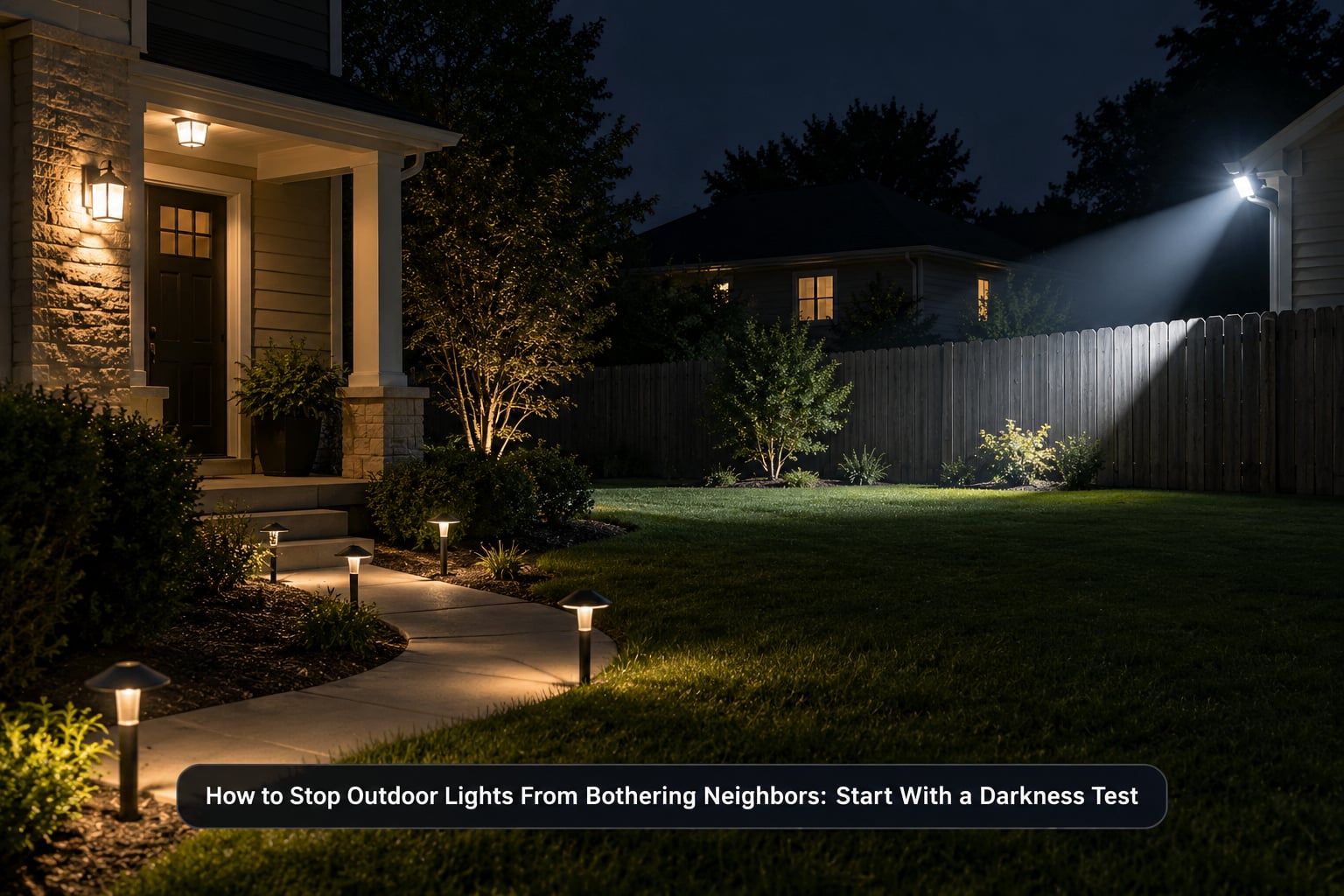
How to Stop Outdoor Lights From Bothering Neighbors: Start With a Darkness Test
Turn everything off, then go back through the process of a normal evening. Wait about 20 minutes after sunset for your eyes to adapt, then walk to the spots that matter: the bedroom window, the back deck, the neighbor’s side of your fence line.
Stand where a neighbor would stand. If you can look straight into the bulb, that is glare, and glare is the single thing people complain about most. If the light is washing out a whole room, that is spill. If the light is simply on too long, that is a schedule problem, and no amount of shielding will fix it.
Note the time each fixture comes on. A dusk-to-dawn sensor in a shaded spot can fire at 8 pm and stay lit until sunrise, which is often more disruptive than a properly aimed floodlight that runs for two minutes at a time.
1. Identify the Fixtures Causing the Problem
Most complaints trace back to one or two fixtures, and they are rarely the ones people think. Walk your property and list every light source: wall sconces, porch lights, path lights, uplights on trees or shrubs, the garage, the driveway floodlight, and any solar garden lamps.
Then check each one against the neighbors. Can it be seen from their windows, their deck, their bedroom? Does it cross your property line at all, or does it stop a foot short?
Pay attention to the solar garden lamps, which get overlooked constantly. Many cheap models use a dusk sensor that never fully switches off, so they glow all night. A neighbor with a sensitive sleep gets a repeated low-level glow instead of one bright moment, and that tends to grate more.
2. Check the Direction and Beam Spread
Light spills sideways and up far more than people expect. Look at where the fixture is pointing after dark, not during the day, because fixtures get knocked or shifted and the aim drifts. Most people who want to learn how to stop outdoor lights from bothering neighbors begin right here, and that is the right instinct.
Three things give it away. A visible glow above the fixture means light is escaping upward or the hood is missing. A bright patch on your fence or the neighbor’s fence means the beam is crossing the boundary. Direct view of the bulb from a neighboring window means there is no cutoff at all.
Most adjustable sconces and floodlights loosen with a simple twist or a set screw, so you can tilt them down while you watch the beam. Aim the center of the beam at the ground or the surface you actually want lit, not at eye level across the yard. Repositioning a fixture on the wall, moving it to a different side of a post, or lowering it by a foot often solves more than anything else on this list.
3. Reposition or Shield the Light
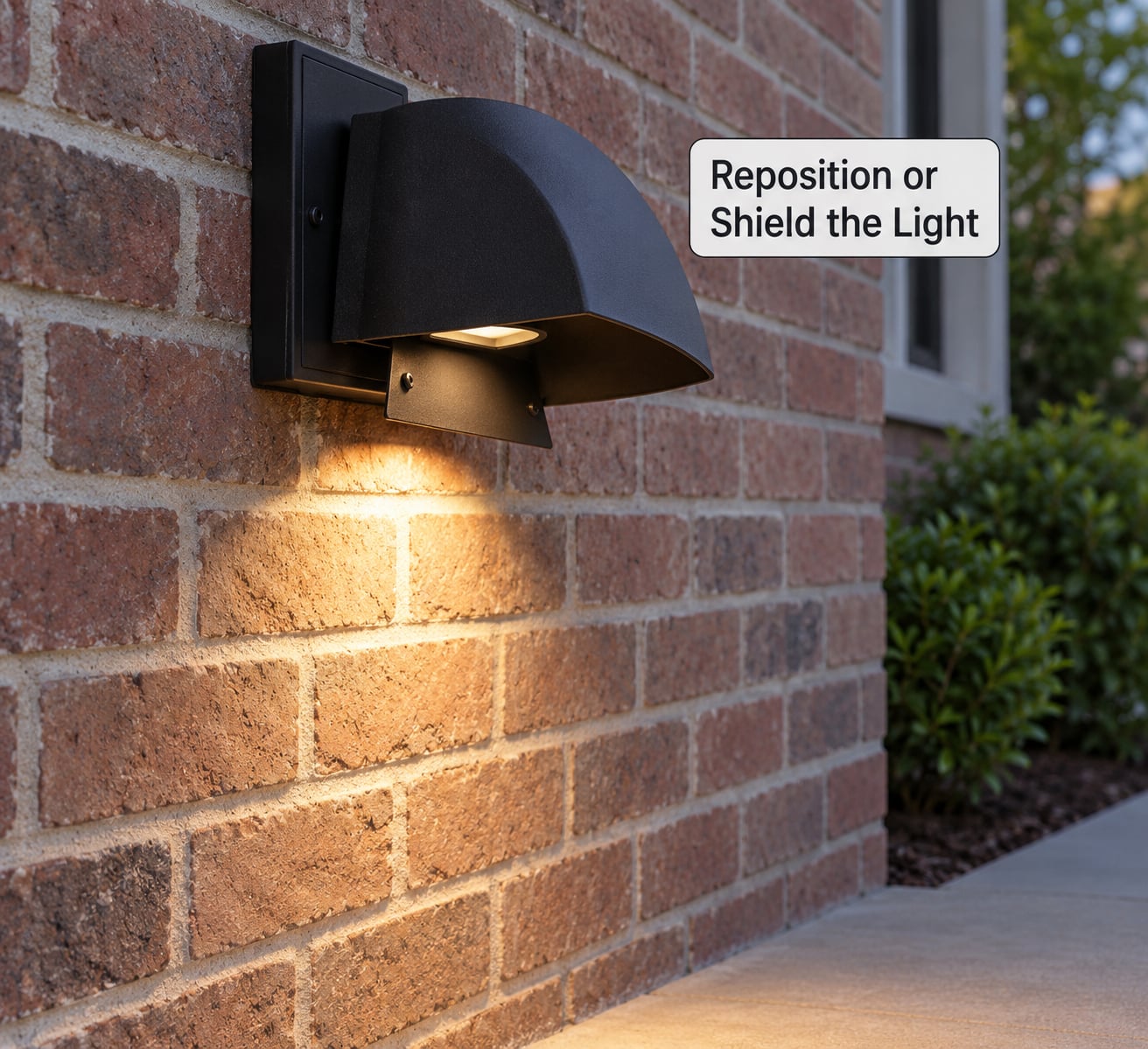
Once the aim is right, block whatever still escapes. An opaque shield, hood or baffle costs very little and works on the fixture you already have, which is why it comes up so often on home forums.
The options run from a purpose-built full-cutoff replacement to something you make yourself. A sheet of opaque material or a small plate of sheet metal bent into a downward lip will block the direct line of sight while still letting light spill onto the ground underneath.
If you are attaching anything to a neighbor’s fixture, get permission first. Homeowners report that offering to help pay for a shielded fixture or a motion sensor solves the problem faster than almost any other approach.
Where a fixture cannot be moved at all, a taller barrier works. A solid fence, a dense evergreen hedge, or a privacy screen between the two properties blocks low-angle light. Be honest about the limits here: landscaping only helps once it is established, and it does nothing to light coming from high above the fence line.
4. Use Lower Brightness and Better-Designed Fixtures
Brightness is the easiest thing to fix and the last thing you should reach for. Many people install a brighter bulb trying to solve a glare problem, which does the opposite of what they want. Lower the output first, then adjust aim, then consider shielding.
You have more room than you think. A fixture that produced a bright pool of light on a halogen bulb will usually look nearly identical with a modern LED at lower output, because the eye reads contrast against the dark yard more than raw brightness.
Switching from cool white to warm white helps too, and not just aesthetically. Cool light feels harsher from across a property line and at 2 am, and warm output is simply easier on the person looking out of a dark bedroom.
Also count your fixtures. Ten small path lights at low output usually read better than one huge floodlight doing the same job, because the eye adapts to the overall level instead of being hit by a single bright source. And fixtures with a downward throw or an asymmetrical beam are worth the swap if you ever replace one, since they solve the aim problem permanently.
5. Change the Operating Schedule
Schedule is where you get the biggest win for the least effort, and it is the step people skip.
A timer turns everything off at a set hour. It is the simplest option and it completely eliminates late-night disruption, at the cost of leaving you in the dark when you get home after midnight.
A motion sensor is usually the best compromise. It gives you light when someone actually approaches, and nothing at all when nobody is there. The common complaint is that sensors get triggered by animals, insects and passing cars at 2 am. Most of that is sensitivity setting: turn the range down, aim the sensor lower so it covers the approach rather than the whole street, and check whether it has a dusk or timeout mode you can set to a shorter delay.
A photocell or dusk-to-dawn sensor keeps a light on whenever it is dark, which on a shaded yard can mean all night. If you have one, give it a schedule or dim it after a certain hour instead.
Smart bulbs and smart plugs add scheduling and dimming, though check that whatever you buy is rated for outdoor use before you put it outside.
6. Talk With the Neighbor and Verify the Result
If something still bothers you, talk to them. Go over, ideally in daylight, and keep it short. The most useful framing is that you are asking about their fixture specifically, not accusing them of anything.
Something like: we noticed your back light is shining into our bedroom after midnight. I think it is just aimed a little too low. If you want, I am happy to help you swap it for a motion sensor, or cover part of the cost.
That last sentence matters more than people expect. Homeowners on homeowner forums report repeatedly that most neighbors never realized their fixture was misaimed, and that offering to help with the fix ends the problem before it becomes a dispute.
Agree on what will change and by when, then follow up a week later at night. If you take before-and-after photos from the same angle, you have a clear record either way. Check that your own yard still has light where you need it to walk safely. If it does not, you have traded a neighbor complaint for a safety gap, and the fix is more coverage on the ground at lower output rather than more brightness thrown sideways.
Common Mistakes
Adding a brighter bulb. It makes the complaint worse, because more output means more spill in every direction. Lower the setting first and fix the aim.
Pointing a floodlight across the yard at head height. Aim it at the ground or at whatever surface you need lit. Horizontal beams travel the farthest and are the hardest to shield after the fact.
Covering a bulb with opaque tape or a black bag. It traps heat, and on a hot fixture it can crack the lens or the bulb. If you want a shield, use a proper hood or an external baffle that doesn’t touch the bulb.
Leaving a motion sensor stuck on. If the sensor is continuously triggered, the light effectively runs all night. Adjust the range and sensitivity, or add a timeout mode.
Ignoring local rules and HOA covenants. Many municipalities and associations have rules about light aimed at adjacent property. Check yours before you modify anything, so you are not the one in violation.
Rewiring a fixture yourself. Changing aim and adding a shield is fine with the power off. Anything involving new wiring, a new circuit, or a fixture in a wet location is licensed-electrician work.
Putting up a barrier before talking to anyone. A tall fence or a hedge may block the light, but it also builds a wall between two people. Try the fixture first.
Frequently Asked Questions
How do I block light from a neighbor’s yard?
The strongest fix is on their side, not yours. Ask for a motion sensor or a lower-output, better-aimed fixture, and offer to help pay for it. On your own property, blackout curtains help with spill through a window but do nothing about edge bleed around the frame, and a solid fence or dense hedge only blocks low-angle light. For light coming from high up, ask them to tilt the fixture down or add a hood.
Are motion sensor lights better than timers for neighbors?
Usually yes. A timer cuts light off at a fixed hour but leaves your yard dark the rest of the night. A motion sensor gives light only when someone approaches and nothing the rest of the time, which most neighbors prefer. Set the range to cover the approach path rather than the whole street, and use the shortest delay setting that still works, so animals and passing cars do not trigger it all night.
Why are my solar garden lights on all night?
Many solar lamps have a dusk sensor that never fully switches off, so they glow faintly from sunset to sunrise. A weak or shaded panel makes this worse because the lamp never charges enough to run a full-cutoff output. Replace the battery, wipe the panel clean, and make sure it gets direct sun during the day. If it still glows all night, the lamp has no real cutoff and replacing it with a shielded or motion-activated model is the practical move.
Can I legally make my neighbor turn down their lights?
Rules vary by city, state and HOA, so check your local code before doing anything. Many municipalities regulate light aimed at adjacent property, and homeowners associations often have their own covenants. Start by talking to your neighbor and keeping a record of dates and photos. Only escalate to your code enforcement office or HOA once you have documented attempts, since that process is slow and can damage the relationship faster than the light ever did.
How bright is too bright for an outdoor light near a neighbor?
There is no single universal number, which is why aiming matters so much more than output. What consistently annoys people is direct glare, meaning the bulb itself is visible from a neighboring window, and light landing inside a room rather than on the ground. Lower the output, aim the beam down, and block the line of sight. If the neighbor is still bothered after that, document the times and consider whether your local code sets a measurable limit at the property line.
Conclusion
If you do nothing else, do these three things: walk the property line after dark and see exactly which fixture is the problem, tilt that fixture so the beam lands on the ground rather than across the yard, and turn the brightness down a step. Most of the time that ends it before any conversation is needed.
Change one thing at a time and check the result the same night, because a yard looks completely different after ten minutes of dark adaptation. If a neighbor is still bothered after that, the conversation gets a lot easier when you arrive with a motion sensor in mind and a willingness to help pay for it.