CRI, the color rendering index, is a 0 to 100 score that rates how faithfully a light source shows the true colors of objects compared with a standard reference illuminant. A score of 100 is a perfect match to that reference. The closer a light gets to 100, the more natural its colors look.
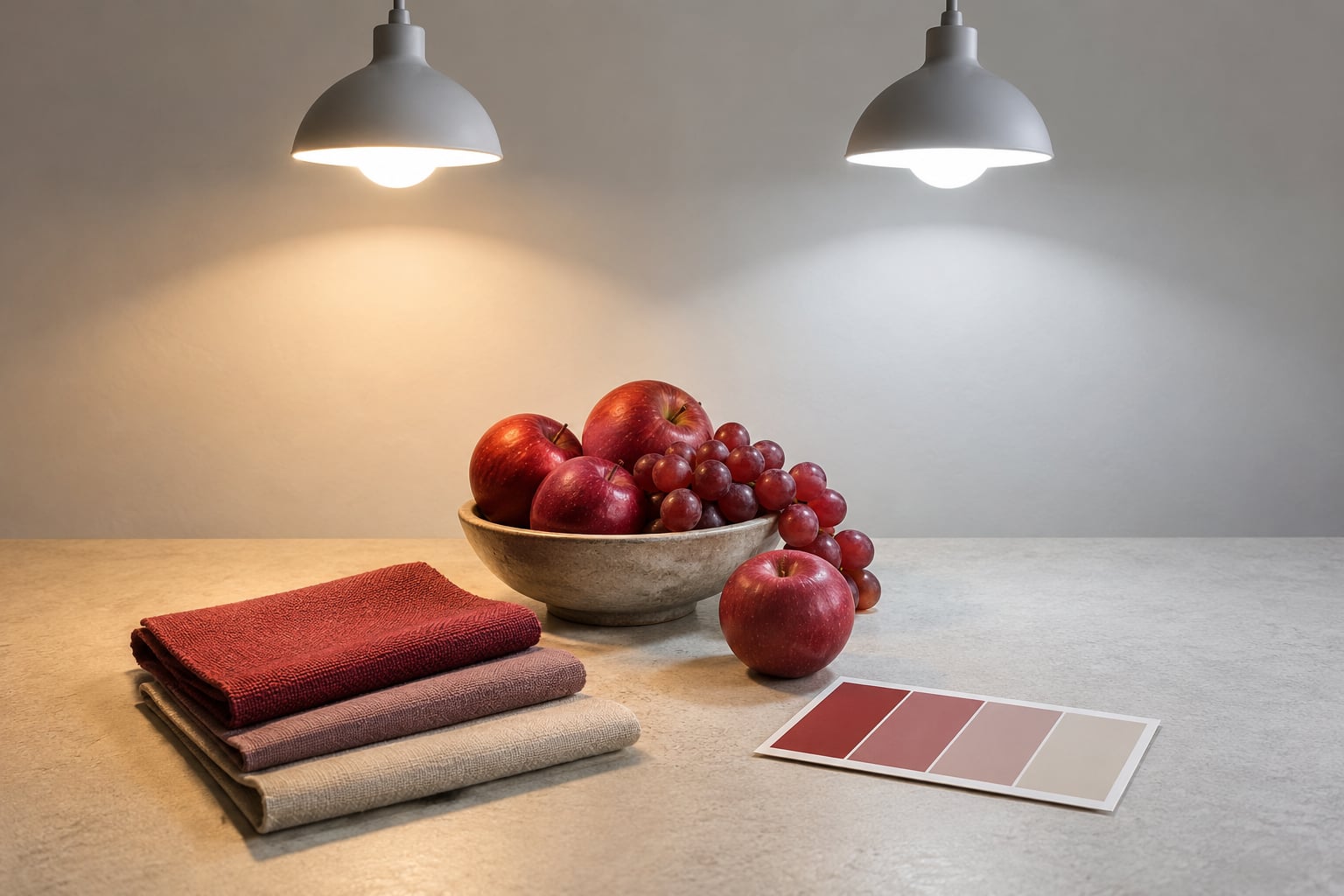
That is the whole answer to what is CRI in lighting and why it matters. It matters because two lamps with identical brightness and identical color temperature can still make the same red chair, green hedge or piece of fruit look completely different. CRI is the number that predicts which one will be truer.
Most people only meet CRI when they read a spec sheet or a product listing, and on cheap fixtures it usually isn’t listed at all. That is why this question comes up so often on lighting forums: a new garden light goes in, everything looks dull, and nobody can say why from the listing.
Last updated October 2026. Definitions follow the CIE 13.3 standard; the outdoor guidance is practical advice, not a substitute for the manufacturer’s instructions.
Table of Contents
- What CRI measures
- What Is CRI in Lighting and Why Does It Matter?
- How CRI ratings are calculated
- What the score bands mean in practice
- Typical CRI by light source
- How CRI differs from color temperature
- Which CRI level is best for different spaces?
- Why CRI matters for solar garden and outdoor lighting
- Which CRI and Kelvin combinations work outdoors
- Low-power solar fixtures and why CRI is worth checking
- How to evaluate CRI before buying a light
- What CRI cannot tell you
- Frequently Asked Questions
- What is the best CRI for home lighting?
- Is CRI 90 worth the extra cost?
- Is CRI more important than brightness?
- Does warm white or daylight white light have better color rendering?
- Does CRI matter for solar garden lights?
- Conclusion: Start with CRI, then check the whole specification
What CRI measures
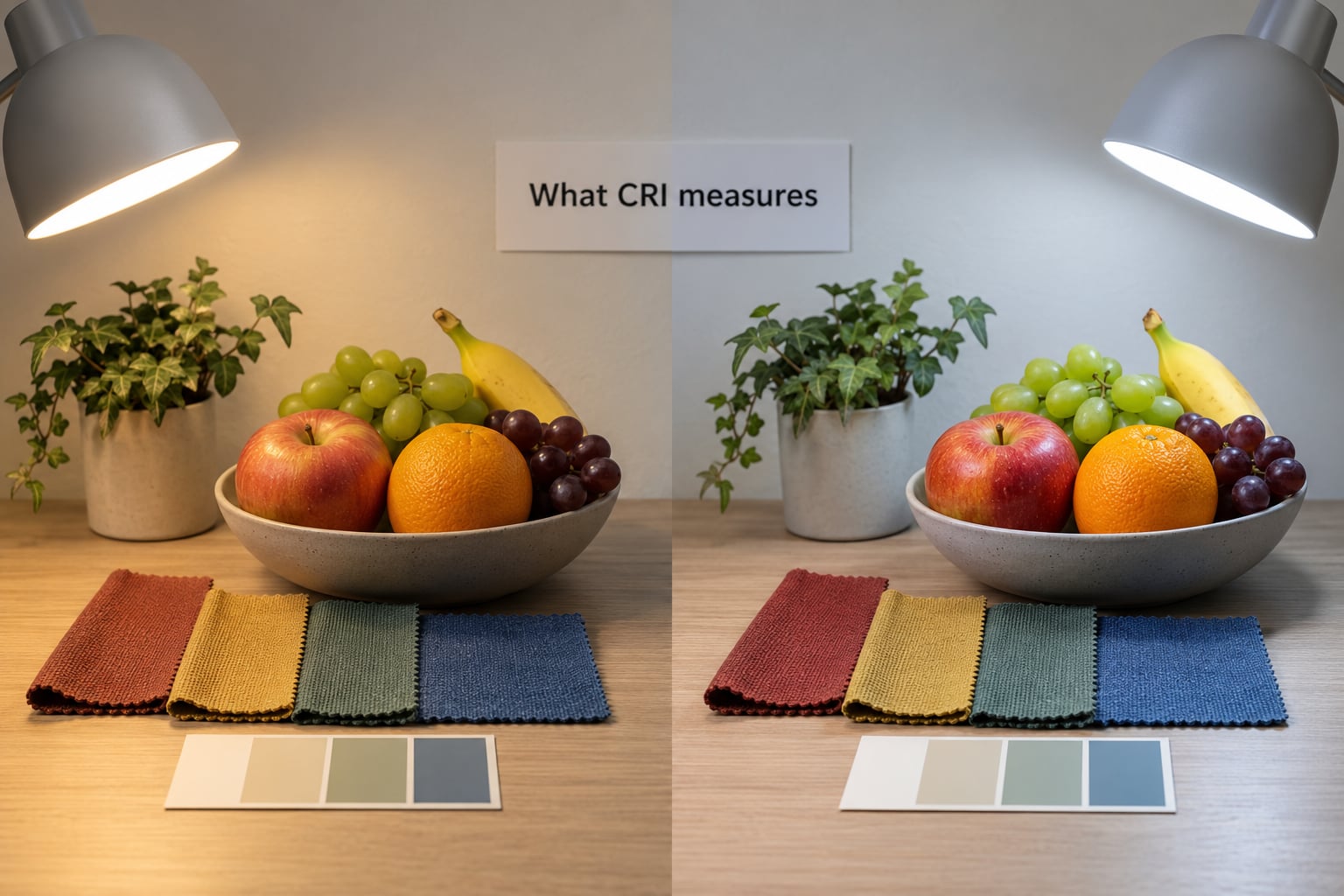
CRI measures color accuracy, not brightness and not color temperature. It answers one narrow question: under this light, does a red apple look red, and does it look like the same red you would see in daylight?
To score that, a spectrophotometer measures the light reflected from a set of standardized color patches and compares each one with the same patch lit by a reference illuminant. If the lamp reproduces the colors faithfully, it scores high. If it distorts them, it scores low.
What Is CRI in Lighting and Why Does It Matter?
The significance of CRI shows up in the objects around you, not in the number itself. A tomato on a patio table under a low-CRI lamp can look pinkish and dull rather than deep red. Red outdoor cushions, a painted door or a brick wall go muddy in a way that is hard to describe but easy to notice once you have seen the same thing under daylight.
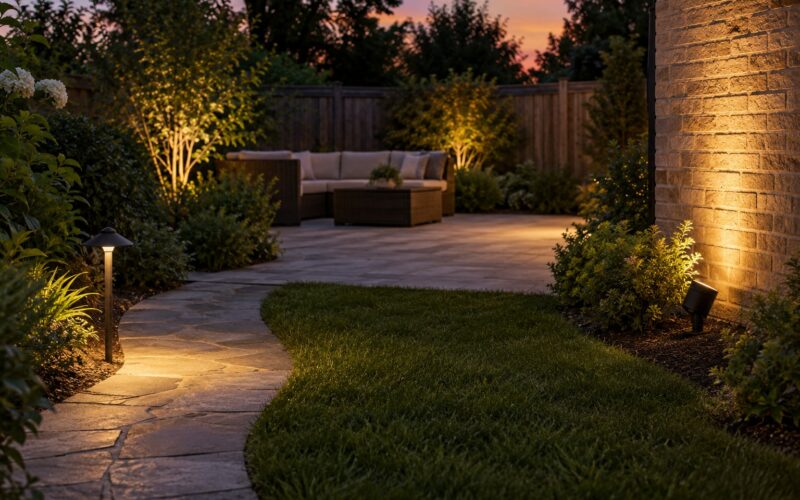
On a path or a step, the same distortion works against you in a different way. Low-CRI light flattens the differences between a pale stone riser, a dark mat and a strip of wet decking, so edges and contrast get harder to pick out. For outdoor spaces, color accuracy matters as much as raw brightness because the eye uses color contrast to separate one surface from the next.
So the practical reason what is CRI in lighting and why it matters keeps coming up is simple: it is the cheapest way to tell whether two lamps are producing the same color quality, and it is the only spec that predicts whether your garden, kitchen counter or showroom will look the way you imagined.
How CRI ratings are calculated
The system comes from the CIE, the International Commission on Illumination, and has been in use since the 1970s. The familiar figure on a datasheet is Ra, the general colour rendering index, and it is an average.
Under test, the lamp shines on a set of eight standardized reference colors. Each patch receives its own individual score by comparing how it looks under the lamp with how it looks under the reference illuminant. Ra is the average of those eight scores, rounded to a whole number. Ra of 100 means the average patch matches the reference exactly.
Because Ra is an average, it can hide weak areas. R9, the score for the deep red patch, is not included in that average and is the one most worth asking about separately. More on that below.
What the score bands mean in practice
| CRI score (Ra) | Rating | What it is good for |
|---|---|---|
| 91 to 100 | Excellent | Retail display, art, makeup, food styling, colour-critical work |
| 81 to 90 | Very good | Kitchens, living rooms, offices, dining areas, most outdoor fixtures |
| 71 to 80 | Good | General ambient light, hallways, utility rooms, garages |
| 41 to 70 | Fair | Utility and outdoor security lighting where colour is incidental |
| 0 to 40 | Poor | Street lighting and boundary fixtures where visibility matters more than colour |
The short version most people need: CRI 80 and above is generally acceptable for everyday lighting, 90 and above is excellent, and 95 and above is where you go for retail, art and design work.
Typical CRI by light source
| Light source | Typical CRI |
|---|---|
| Incandescent | 100 |
| Halogen | 100 |
| Daylight and sunlight | 100 |
| Good quality LED | 80 to 99 |
| Budget LED | 60 to 75 |
| Fluorescent | 70 to 85 |
| High-pressure sodium (street) | Roughly 20 to 80 |
| Low-pressure sodium | Negative, meaning colours look worse than the reference |
Incandescent and halogen sit at the top of that list because a heated filament is a broad-spectrum source, which is also why they run hot and use more power. LEDs get the colour they have from engineered phosphors, which is why the figure varies so much between a cheap bulb and a good one.
How CRI differs from color temperature
Color temperature, measured in Kelvin, describes the colour of the light itself: warm amber at around 2200 to 2700K, neutral white near 4000K, cool daylight white at 5000 to 6500K. CRI describes how accurately that light shows the colours of objects.
These are independent. A 2200K bulb can have a CRI of 70 or a CRI of 95, and both will look equally warm. Warmth tells you the mood of the scene; CRI tells you whether the wine in the glass is actually red.
| Specification | What it tells you | The question it answers |
|---|---|---|
| CRI (Ra) | How faithfully object colours are reproduced | Will my colours look true? |
| Color temperature (Kelvin) | The warm or cool appearance of the light | How will this room feel? |
| Brightness (lumens) | Total light output | Is it bright enough here? |
| Efficacy (lumens per watt) | Output per unit of power | What will it cost to run? |
Consumers regularly swap these around, and it leads to bad purchases. A bright bulb can still make everything look washed out. A high-CRI bulb can be too dim to light the space. Check all three before you decide.
Which CRI level is best for different spaces?
| Space | Recommended CRI | Why |
|---|---|---|
| Paths, steps, driveways | 70 to 80 | Brightness and contrast matter more than accurate colour |
| Garden beds and foliage | 85 to 95 | Leaf and flower colour is the whole point |
| Patio and deck | 85 to 90 | Decking, cushions and skin tones all show |
| Exterior doors and façades | 85 to 95 | Paint and brick colour read true at night |
| Kitchen and food prep | 90 and above | Food colour drives freshness judgements |
| Living room | 90 and above | Textiles, wood and skin tones dominate |
| Home office with design work | 90 and above | Colour decisions depend on the screen showing truth |
| Retail display | 95 and above | Product colour is the product |
| Art and gallery | 95 and above | Pigments shift dramatically at low CRI |
There is a version of this argument that gets overstated. High CRI does not mean a light looks more white or brighter. It means objects under it look more like they do in daylight. On a walkway where the only job is to see the step edge, spending on CRI past about 80 buys you very little.
Why CRI matters for solar garden and outdoor lighting
Outdoor lighting gets judged harder than indoor lighting because there is no ambient daylight to fill in. Every colour you see at night is the colour the fixture produced, so any distortion has nowhere to hide.
For gardens specifically, CRI drives the results people notice first. Foliage under a low-CRI lamp reads as flat olive rather than layered green, and flowering shrubs lose the colour that made you plant them. On decking and stone, low CRI flattens the grain and the texture, which is why a well-rendered path light can look expensive at a fraction of the cost.
Skin tone matters more outdoors than most people expect. People gather outside after dark, and a lamp that renders skin poorly makes everyone look unwell in photographs taken on the patio.
Which CRI and Kelvin combinations work outdoors
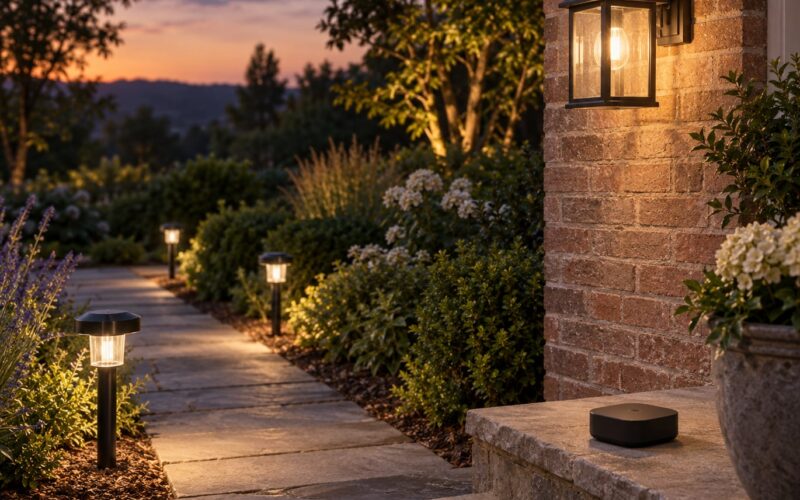
Pair them by function. Path and step lights look best in a warm 2200 to 2700K, which flatters foliage and feels less harsh. Decks, entertaining areas and dining lights work well at 2700 to 3000K. Security floods and driveways usually sit at 4000 to 5000K, where the cooler white improves contrast and makes movement easier to pick out.
Higher color temperature does not mean better CRI, and raising Kelvin past about 5000K on a garden feature is a common way to make a space look harsh. Warm light with a CRI of 90 beats cool light with a CRI of 70 for almost every residential outdoor application.
Low-power solar fixtures and why CRI is worth checking
Solar lights run from a small panel and a small battery, so the LED is chosen for output and endurance. That budget pressure often goes into lumens rather than phosphor quality, which is exactly why low CRI is so common in this category.
Buyers in solar garden lighting forums consistently report two separate problems. Durability comes up first: fixtures being replaced every few seasons. The second, less discussed, is colour. Low CRI is frequently named as the reason a scene looks lifeless once it is installed, and listings rarely publish the figure.
That combination makes CRI a useful screening tool. If a listing gives you a CRI of 80 or better alongside a lumen output and an IP rating, you are probably looking at a fixture that was engineered rather than assembled from whatever was available.
How to evaluate CRI before buying a light
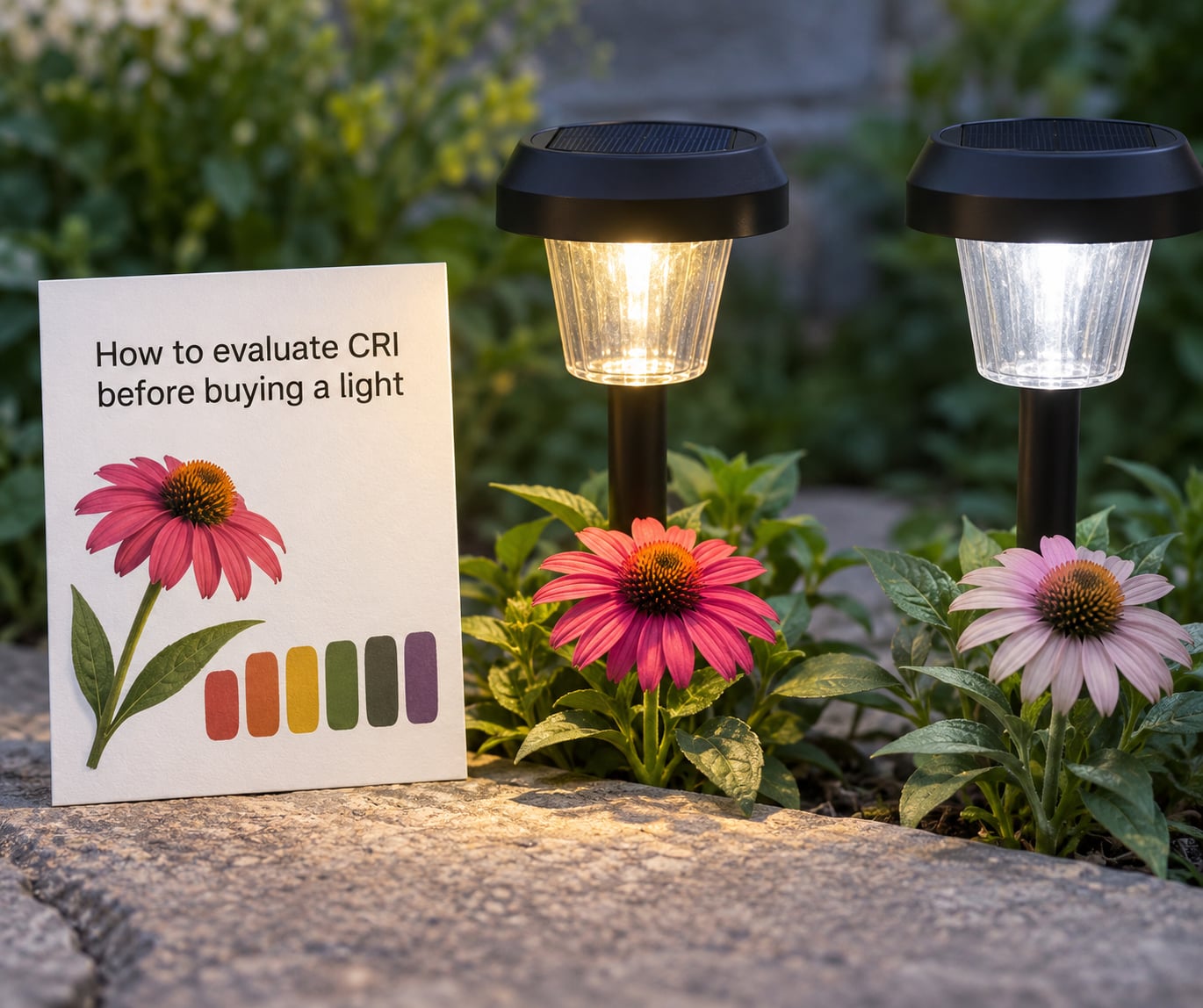
Most listings never mention CRI, so the work falls to you. This is the order I would use.
- Read the CRI or Ra figure on the datasheet. If a manufacturer publishes it at all, that is a decent sign. Look for Ra rather than a bare CRI number.
- Ask for R9 as well. A fixture with Ra of 85 and R9 of 30 renders reds badly, and reds are everywhere outdoors: brick, bark, cushions, terracotta pots.
- Check the test basis. A rating measured at full output can drop when the lamp is dimmed or when the battery is low. Low-power solar lights often run well below their rated output after a few hours of darkness, which matters more than it does for mains lighting.
- Look at the other two specs alongside it. Lumen output and beam angle decide whether the fixture does its job at all. A CRI of 95 in a light that puts 40 lumens on the ground helps nobody.
- Do not judge by color temperature. A 3000K label tells you nothing about colour accuracy, which is why listings use it as a stand-in for quality.
If a seller cannot supply a CRI figure, treat it as unknown rather than acceptable. If you need the data for a bigger project, request the photometric file and the spectral power distribution, which is the measurement behind the CRI claim.
For anything wired into your home, follow the manufacturer’s instructions and your local electrical requirements, and use a qualified electrician. CRI has nothing to do with safety; installation does.
What CRI cannot tell you
CRI is useful and it is also blunt. Knowing what it misses helps you avoid over-trusting a single number.
| Metric | What it measures | Why it matters |
|---|---|---|
| Ra (CRI) | Average of the first eight reference colours | The familiar 0 to 100 figure, easy to read, easy to oversimplify |
| R9 | The deep red reference patch | Often poor even when Ra looks respectable; catches brick, bark, cushions, skin |
| TM-30 Rf | Fidelity against a reference set of 99 colours, 0 to 100 | Averages over far more samples, so fewer surprises |
| TM-30 Rg | Gamut area against the reference | 100 is neutral, above 100 means more saturated, below 100 means duller |
TM-30, published by IES as TM-30-15, is the modern metric and it solves some of Ra’s problems. But it sits behind a paywall in most tools, so for consumer purchases Ra plus R9 is the practical combination.
Dimming is another blind spot. A lamp that scores well at full output can lose accuracy as it fades, and the drop is often worse for red. On a solar fixture the battery drives the same effect without anyone touching a dimmer.
Bin consistency is the quiet one. Two fixtures from the same production run can sit at opposite ends of the CRI band, which is why an outdoor set with eight path lights can look uneven. Ordering from a single batch is the only real fix.
Glare and weathering are not CRI problems either. A CRI 95 fixture that puts a hard beam into your eyes still needs a shield, and a colour-accurate LED still darkens after a few seasons of UV exposure if the polycarbonate yellows.
One myth worth clearing up: CRI does not predict plant growth. Grow lights are chosen on spectrum, the specific wavelengths a plant uses, not on colour rendering. A high-CRI garden light will make leaves look better. It will not feed them.
Frequently Asked Questions
What is the best CRI for home lighting?
For most rooms, CRI 90 or above is the sweet spot: colours in a kitchen, living room or bathroom look natural without costing much more. CRI 80 is fine for hallways, garages and utility spaces where colour is incidental. Push to 95 and above for art, retail, makeup and any space where you judge colour while making a decision.
Is CRI 90 worth the extra cost?
Usually, in the rooms where colour matters. The jump from 80 to 90 is where noticeably muted tones start to resolve, especially on wood, textiles, food and skin. In a corridor or a utility room it buys you nothing visible. Check whether the price difference also comes with a better driver, which affects flicker and how the lamp behaves when dimmed.
Is CRI more important than brightness?
Brightness first, always. A lamp that is too dim never gets the chance to show accurate colour, and a very high-CRI fixture pointed at nothing is wasted money. Get the lumen output and beam angle right for the space first, then use CRI as the tiebreaker between fixtures that meet that brightness.
Does warm white or daylight white light have better color rendering?
Neither, automatically. Color temperature in Kelvin describes the light itself, while CRI describes how it renders objects, and the two are independent. A 2700K warm bulb can score 70 or 95. Choose the Kelvin for the mood you want and judge colour accuracy separately by looking for the CRI and R9 figures on the datasheet.
Does CRI matter for solar garden lights?
It matters more here than in most categories, because at night there is no daylight filling in the gaps and every colour is the lamp’s own. Garden lights with CRI 80 or better show foliage, brick, terracotta and decking far more faithfully. Listings often omit the figure, so treat a missing specification as unknown and look for brands that publish it.
Conclusion: Start with CRI, then check the whole specification
CRI is the specification that tells you whether colours will look true, and nothing else on the datasheet does that job. Aiming for Ra of 80 or above as a baseline, 90 for kitchens and living spaces, and 95 for anything where colour is the point will keep you on the right side of most decisions.
Do this next, in order: pick a color temperature that suits the mood, confirm the lumen output and beam angle suit the location, then look for the CRI and R9 figures on the manufacturer’s datasheet. If a listing gives you none of those, ask. A seller who cannot tell you how their light renders colour is telling you something.