Snow affects solar panel output in two separate ways: a covered panel gets almost no sunlight and produces close to nothing, while a clear panel in cold weather actually converts light slightly more efficiently than the same panel on a hot summer afternoon. Measured studies put the annual snow loss at roughly 2% to 5%, not the 20% to 30% figure repeated on plenty of blogs.
The confusion starts because people measure a two-week stretch in January and assume it represents the year. It doesn’t. This guide breaks down what snow physically does to a panel, how much output different snow depths cost you, how fast production returns, and when clearing snow is worth the trouble versus when it is just a bad afternoon on a slippery roof.
Table of Contents
- Why Does Snow Reduce Solar Panel Output?
- How Much Can Snow Reduce Solar Panel Output?
- How Snow Affects Solar Panel Output in Different Weather
- Can Solar Panels Generate Power Under Snow?
- How Quickly Does Solar Output Recover After Snow Melts?
- How to Clear Snow From Solar Panels Safely
- Is Low Winter Output a Snow Problem or an Equipment Problem?
- Frequently Asked Questions
- Do solar panels work when covered in snow?
- Will a thin layer of snow stop my solar panels from working?
- Should I remove snow from my solar panels?
- Why do my solar panels produce less power on snowy days?
- How long do solar panels take to recover after snow melts?
- Conclusion
Why Does Snow Reduce Solar Panel Output?
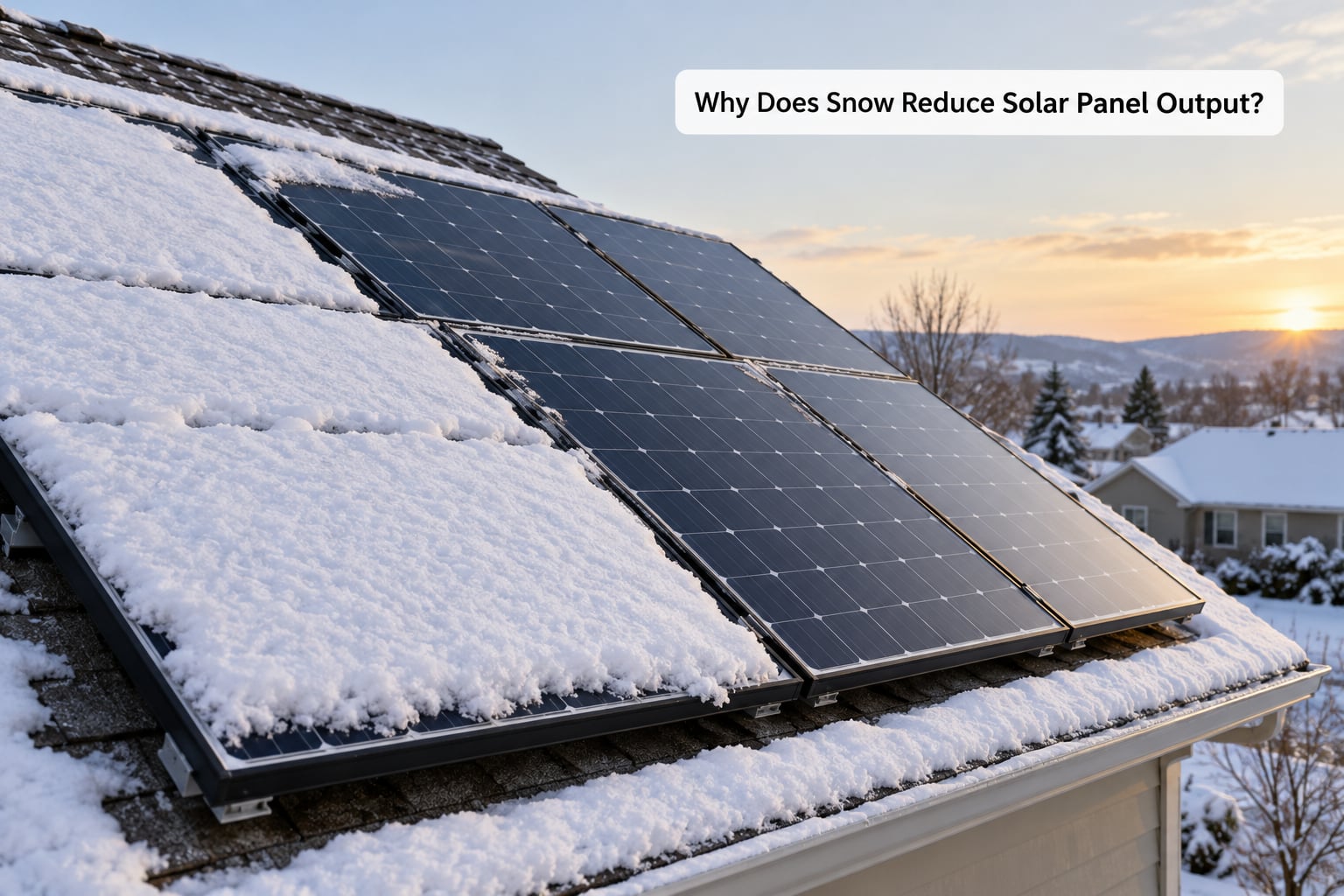
Snow reduces output because a photovoltaic module has no heat to give. It converts photons into electricity, so anything sitting on the glass is a straight loss. A fully covered panel sees only the faint light filtering through snow crystals and produces close to zero.
Thin cover is different from thick cover. Fresh snow is full of ice crystals that scatter and diffuse incoming light, so a light dusting softens direct sun into diffuse light. Diffuse light still works, just less efficiently than a clean beam, which is why a thin layer costs far less than its depth suggests.
Panel temperature runs in the other direction. Modules lose roughly 0.3% to 0.5% of output for every 1°C above their rated temperature, and a clear winter panel sits well below that rating. Cold helps. The snow sitting on top of it does not.
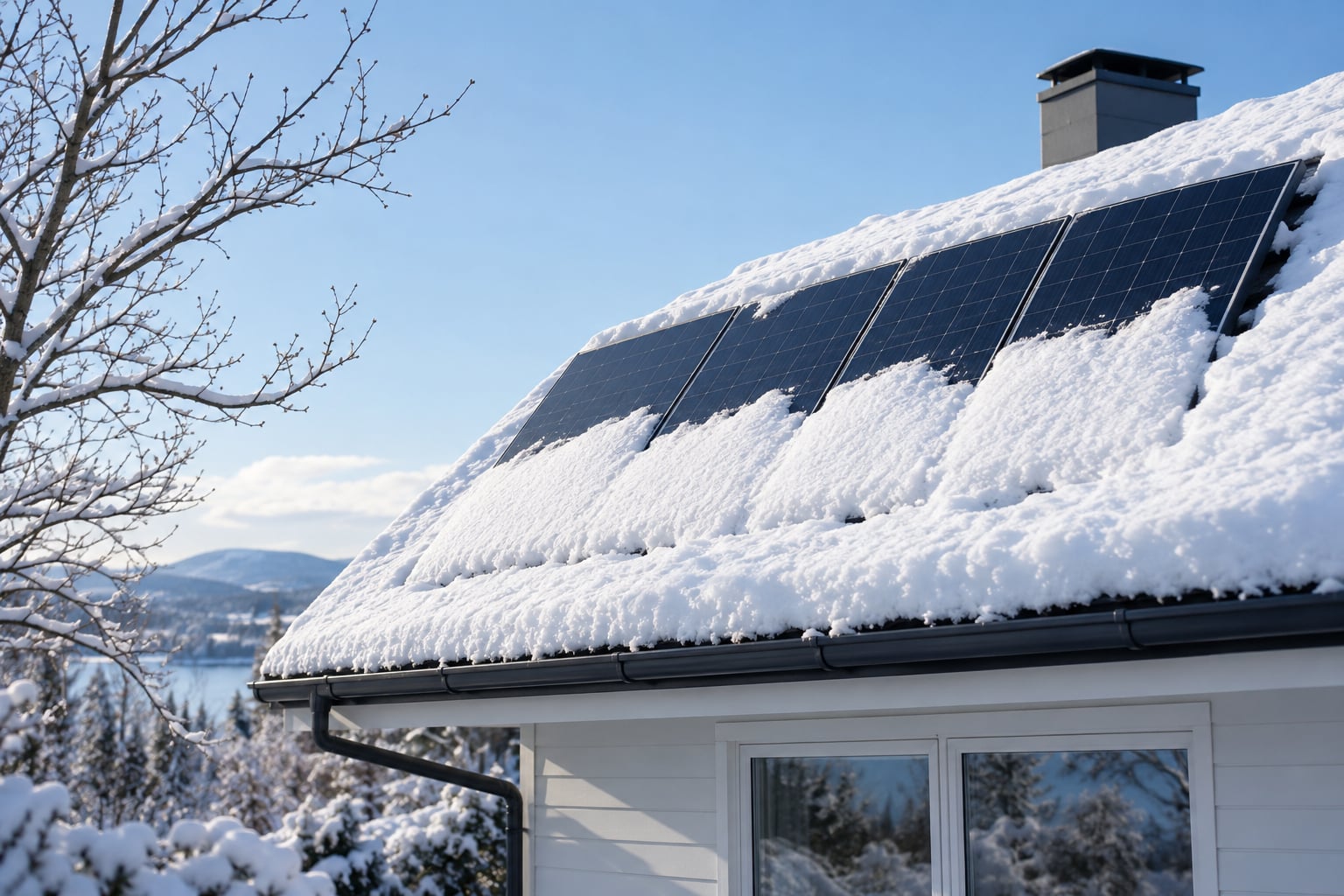
Two more things matter beyond coverage. Melting snow and meltwater can leave a film of grime and residual ice on the glass, which cuts output even after the panel looks mostly clean. And when snow slides off unevenly, it often leaves a ridge along the lower rail and the frame gap that stays put through several sunny days.
How Much Can Snow Reduce Solar Panel Output?
There is no fixed percentage, because the result depends on snow density, panel tilt, sun angle and how long the cover sits. The table below is a realistic range of what each condition tends to do on a typical residential array.
| Condition | Typical depth | Effect on output |
|---|---|---|
| Clear and cold | None | Full production, and slightly better conversion efficiency per panel than a hot summer day |
| Light dusting | Under half an inch | Small loss, often single-digit percent for a few hours |
| Moderate snow | Around 2 inches | Large drop. One diysolarforum owner reported roughly 75% less output from 2 inches of very fluffy snow on a 400W array |
| Heavy wet snow | 6 inches and up | Effectively zero output while it sits, and the weight loads the mounting hardware |
| Partially melted | Varies | Patchy output. Clear areas generate while the strip along the lower edge and frame stays dark |
| Snow sliding off on a sunny day | Varies | Output climbs in steps through the day as sections clear, rather than jumping to normal all at once |
How Snow Affects Solar Panel Output in Different Weather
Sunny cold days are the best case for snow shedding. Dark glass absorbs sunlight, the surface warms above freezing, and a meltwater film forms that loosens the snow’s grip. This is also the scenario where snow’s reflectivity works in your favor.
Cloudy winter days are the worst. Overcast light delivers far less energy to begin with, and it does very little to melt anything. A panel buried on an overcast day can stay buried for days, which is the scenario forum owners worry about most on battery-backed systems.
Melting conditions sit in between. A freeze-thaw cycle often lets heavy wet snow slump off in chunks, but the same cycle refreezes leftover moisture into ice, which is far harder to shed than fresh powder.
Rapidly accumulating storms are the hardest case of all because the snowfall often outpaces melt. North of the forty-fifth parallel this happens routinely, and it is the main reason the annual loss figure differs so much between a mild winter and a harsh one.
Can Solar Panels Generate Power Under Snow?
Covered panels generate little or nothing, and a fully buried panel generates nothing measurable. A thin or translucent layer is different. Visible light and some infrared radiation pass through snow, which is why a lightly dusted panel still shows a small output on a monitoring app rather than dropping to a hard zero.
The useful way to judge this is a production graph across a few weeks, not a single moment. One bad January week tells you almost nothing. A month-long view shows whether your winter shape matches your neighbours’, and that comparison is what actually separates a snow problem from a real fault.
Homeowners on monitoring platforms often see a production-limited notice the morning after a storm. That message means the system is throttling or reporting low input, not that anything has broken. It clears on its own once the array generates enough to operate normally.
How Quickly Does Solar Output Recover After Snow Melts?
Recovery follows the glass, not the calendar. Once the surface is clear, output returns to its normal level for that day within the same monitoring interval, usually the next data point your app refreshes.
What slows recovery down is residue. A film of dirt, a strip of ice along the rail, or a hard-packed ridge at the frame gap can hold output below normal for days after the snow is gone. Refreezing nights make this worse, because each one re-glues whatever was left behind.
Early-morning shading matters too. A low winter sun means a chimney, a tree or a neighbouring ridge can clip output right when days are already short. If your afternoon numbers recover fine but your morning numbers do not, that is shading rather than snow.
How to Clear Snow From Solar Panels Safely
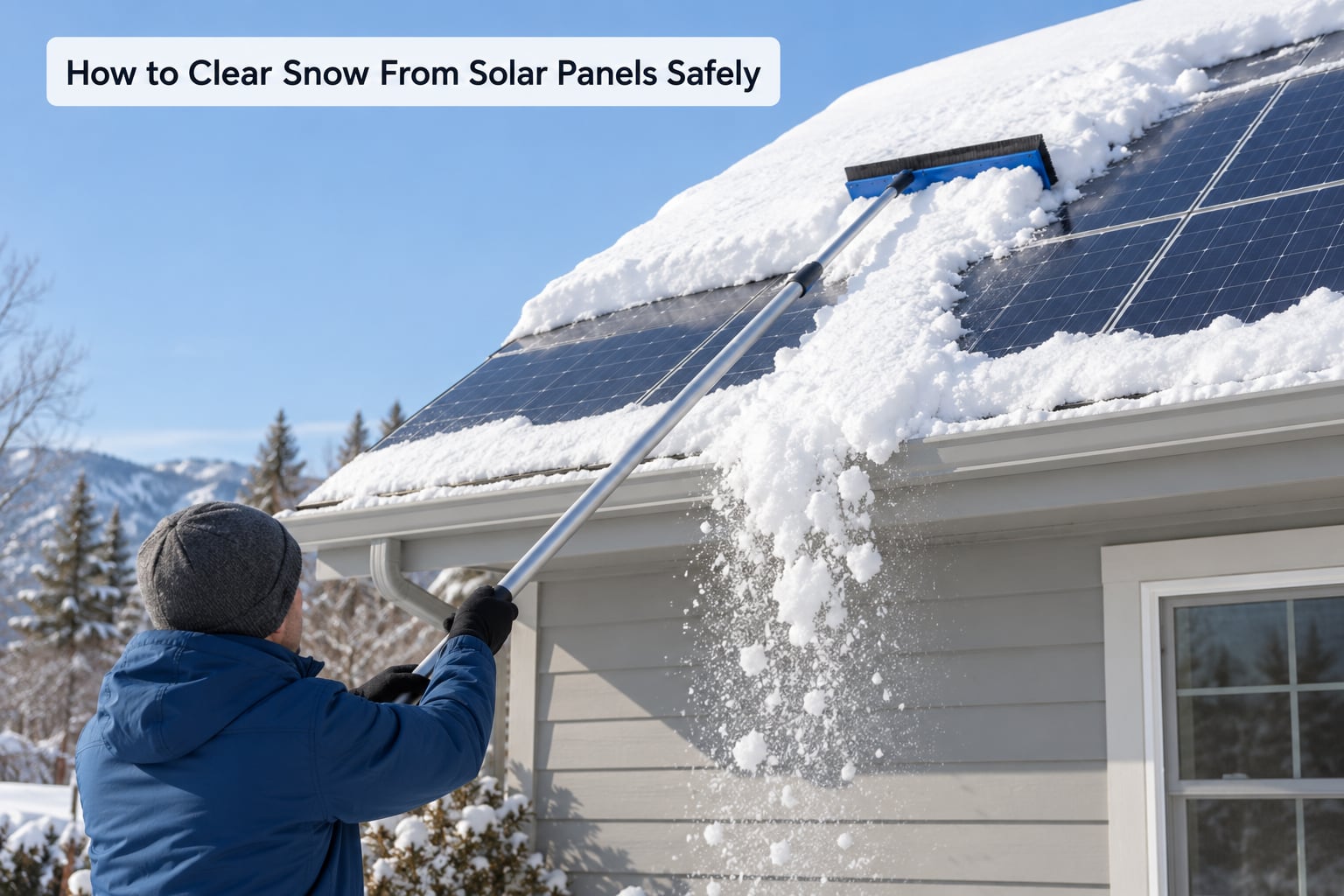
Clearing snow is worth doing only from the ground, and only with the right tool. Nobody should climb onto a snowy or icy roof to brush a panel. Most owners accept that the gain is not worth a fall, and they are right.
- Check your monitoring app first and note the current output. That number is your baseline for judging the result.
- Identify which panels are reachable from the ground without leaning a ladder on a snow-covered roof edge.
- Use a long-handled roof rake, soft roof rake or a ground-based brush with a non-abrasive head. Work from the lawn or a safe walkway.
- Pull gently along the lower edge. Let the tool do the work rather than forcing it, and avoid contact with mounting rails and cables.
- Recheck the app within an hour. Output should climb as sections clear.
- If the inverter shows a fault rather than a low number, stop and contact your installer instead of investigating further.
Never scrape the glass with a metal shovel, plastic blade or wire brush. Never pour hot water, which can crack the laminate through thermal shock, and never spread salt or de-icer, which corrodes the frame and the mounting hardware. Avoid salt on any metal roof near the array for the same reason.
Is Low Winter Output a Snow Problem or an Equipment Problem?
Work through this checklist before assuming anything is broken. Most winter low readings are weather, and a healthy system returns to its expected curve within a few clear days.
- Snow-related: output tracks the weather closely, clears after the snow does, and matches a shaded or overcast forecast. The inverter reports no fault.
- Reduced daylight: lower output happens on every winter day, clear or cloudy, and your monthly total still tracks the seasonal curve.
- Shading: one part of the array reads noticeably higher than the rest, or output dips at the same time each morning.
- Dirt and grime: output creeps down over months rather than overnight and never quite returns to the original level after rain.
- Equipment: the inverter logs an error code, production drops to near zero on a clear day, or the monitoring app shows the system offline.
- Damaged cells or cables: a visible crack, a hot spot visible as a warm patch in infrared images, or a connector that looks corroded.
Leave all electrical checks to a licensed installer. Opening an enclosure, testing a connector or working near exposed wiring carries real shock and fire risk, and a homeowner with a monitoring app has enough information to raise a useful ticket.
Contact the installer when output stays low after several clear days, when an error code appears, or when a panel has visible physical damage. If it is purely snow and the glass is clear, it is not a fault.
Frequently Asked Questions
Do solar panels work when covered in snow?
A fully covered panel produces almost nothing, because the cells receive no direct sunlight. A thin or translucent layer lets some visible and infrared light through, so output drops rather than disappearing. One diysolarforum owner reported about 75% less output from 2 inches of very fluffy snow on a 400W array. Judge performance on a production graph over several weeks, not on a single covered morning.
Will a thin layer of snow stop my solar panels from working?
No, a light dusting rarely stops them. Snow scatters rather than blocks light completely, so a thin layer usually costs single-digit percent of output for a few hours. It becomes significant around 2 inches, where owner measurements show losses near 75%. The energy also depends on the sun angle: low winter sun means light reaches the glass at a shallow angle and produces less in general.
Should I remove snow from my solar panels?
Only if you can do it from the ground with a long-handled roof rake or soft brush. Most owners decide the lost production is not worth climbing onto a snowy or icy roof. Clear early in the day if you do it at all, so panels have the remaining sunlight to melt the residue. Never scrape the glass, pour hot water, or use salt, which corrodes frames and mounting hardware.
Why do my solar panels produce less power on snowy days?
Two effects stack together. Snow blocks the light your cells need, and winter days are simply shorter with a lower sun angle, so there is less energy to collect in the first place. Cold does the opposite, since a clear panel converts light slightly more efficiently than a hot one. Persistent low output on a clear day points to shading, dirt or equipment rather than snow.
How long do solar panels take to recover after snow melts?
Once the glass is clear, output returns to normal within the next interval your monitoring system refreshes. Real recovery can take longer when a strip of ice along the lower rail or a packed ridge at the frame gap survives the melt, which keeps part of the array shaded for days. Overcast weather slows the whole thing down because there is little energy to melt what is left.
Conclusion
Snow costs you production for a few days at a time, not a quarter of your year. Measured studies put annual snow loss in the low single digits, and a five-year Canadian study on panel snow cover found the same, while winter-month losses of 16% for bifacial and 33% for monofacial arrays describe one season rather than a whole year.
Start by looking at your monitoring data across several clear days rather than one storm morning. Clear snow only from a safe position with a ground-level rake, and never scrape, heat or salt the glass. If output stays low once the panels are clear, or the inverter is logging an error, call your installer.