Yes, you can light a gazebo without wiring. Solar string lights and solar lanterns charge in the sun during the day and switch on at dusk, rechargeable battery lanterns and battery string lights run off stored power, and a portable power station will run low-voltage strip lighting or standard string lights all evening. No outlet, no trenching, no electrician.
The whole setup takes an afternoon for a 10×10 or 12×12 structure, and most of that time is spent deciding where the lights go rather than mounting them. If you measure the gazebo, check where the sun actually falls, and pick one lighting type, you can hang everything before you lose the light.
The way I plan it is in three layers. A base layer of lanterns or string lights covers the floor and the table, an accent layer of small solar lights marks the posts and the steps, and a task layer, usually a brighter lantern or a light aimed at the counter, sits where you actually need to see food and faces. Skip the task layer and you get a nice photo but a dark table.
Table of Contents
- What You Need
- Step-by-Step: How to Light a Gazebo Without Wiring
- Choose the Right Solar Lighting Layout
- Install and Test the Lights
- Common Mistakes
- Maintain year-round gazebo lighting
- Frequently Asked Questions
- Do solar gazebo lights work on cloudy days?
- Can I use battery operated LED string lights outdoors?
- What is the best way to hang string lights on a gazebo without drilling?
- Do solar lights work in winter?
- How bright should gazebo lights be?
- Conclusion
What You Need
Gather these before you climb anything. Most of it is household stuff, and none of it requires opening a wall or running a line back to the house.
Lighting options
- Solar string lights with a built-in panel, for the rafters or the perimeter
- Solar lanterns or solar pendant lights, for tables, ledges and post tops
- Rechargeable battery string lights with a USB port or built-in cells
- Battery-operated LED strip on a small battery pack, for the underside of a beam
- Flameless LED candles, for tables where wind or rules rule out open flame
- Optional: a portable power station if you want to run several strands at once
Basic tools
- Tape measure and a step ladder that fits under the roof height
- Drill-free hooks: screw-in eye hooks, rafter clips, cord clips, or weighted hanging straps
- Cable ties for tacking a cord to a frame member, and gaffer tape for a non-slip wrap
- A soft brush and a garden hose for panel cleaning
- A second phone or a hand lantern for checking the setup after dark
Placement measurements
- The gazebo footprint and the post spacing, corner to corner
- The height of the lowest rafter and any beams that hang below it
- The table length and where people will walk
- The sun path: note where shadows from the house, fence and trees fall between 10am and 4pm
Safety checks
- Nothing plugged into mains is being installed. Anything that needs 120V power is a job for a licensed electrician, not this project
- No cord crosses a walkway. Extension cords stapled along a frame or run over a threshold are the main trip hazard people create
- Open flame sits in a stable holder, away from the fabric roof and any overhanging foliage, and local fire rules are respected
- Every fixture is rated for outdoor use, and you check the IP rating rather than trusting the word waterproof
- Nothing heavy is hung from a soft-top or vinyl gazebo roof
Step-by-Step: How to Light a Gazebo Without Wiring
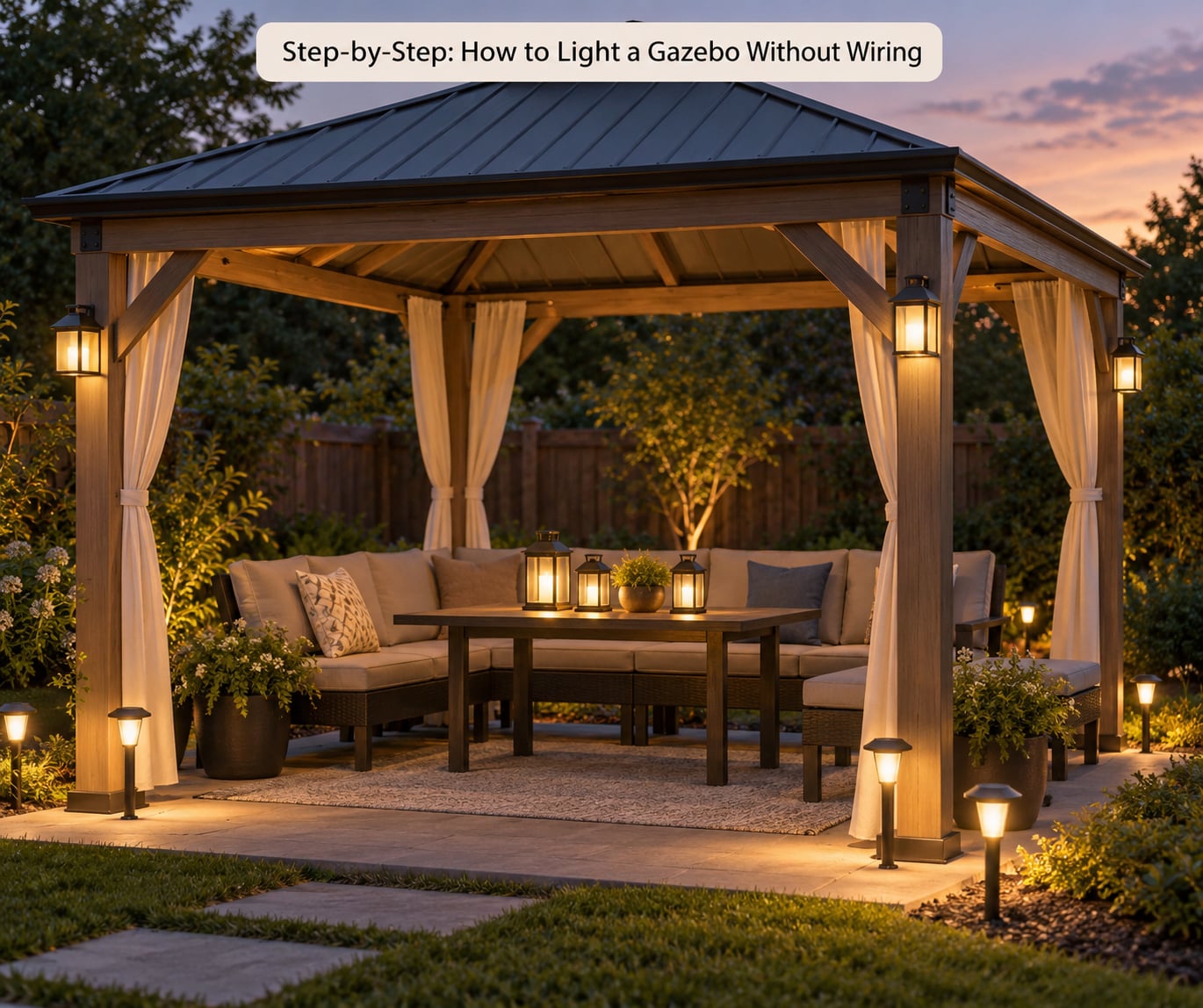
The process has four parts: choose a layout, place the lights where the sun and the structure allow, hang them without drilling, then test at night and adjust. Each step below covers one of those, and each one is short.
Choose the Right Solar Lighting Layout
Start by matching the light type to the job it has to do. Coverage, wind exposure, appearance and runtime matter far more than the number of lumens on the box.
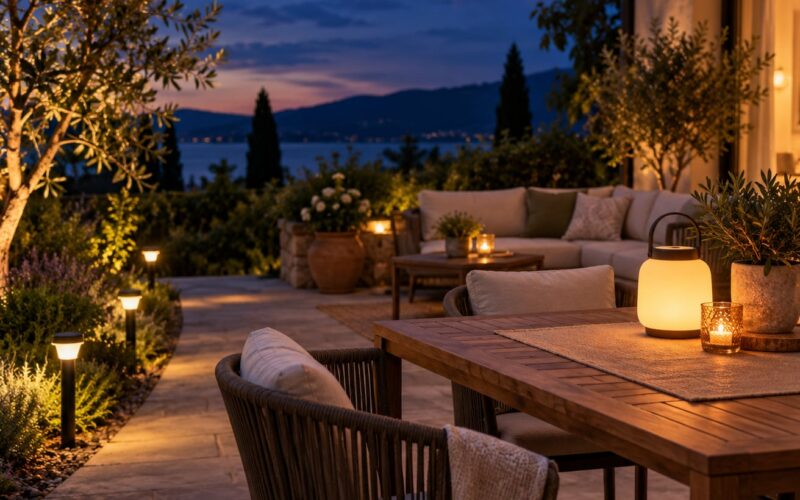
Portable lanterns are the flexible option. Move them wherever people are sitting, they survive a gust that would empty a hanging strand, and they are the only realistic choice on a soft-top gazebo where nothing can be screwed to the frame. A rechargeable lantern with a dim setting is often better than a brighter one you have to leave at full output all evening.
Clip-on and hook-on solar lights suit a frame you can attach to without drilling. Screw-in eye hooks on the posts, rafter clips that bite the beam, and straps that wrap the member all work, and they let you take the whole thing down when the season changes. Check the wind rating on anything high up; a strand that sways in a gust is annoying and it swings light onto your neighbour’s fence.
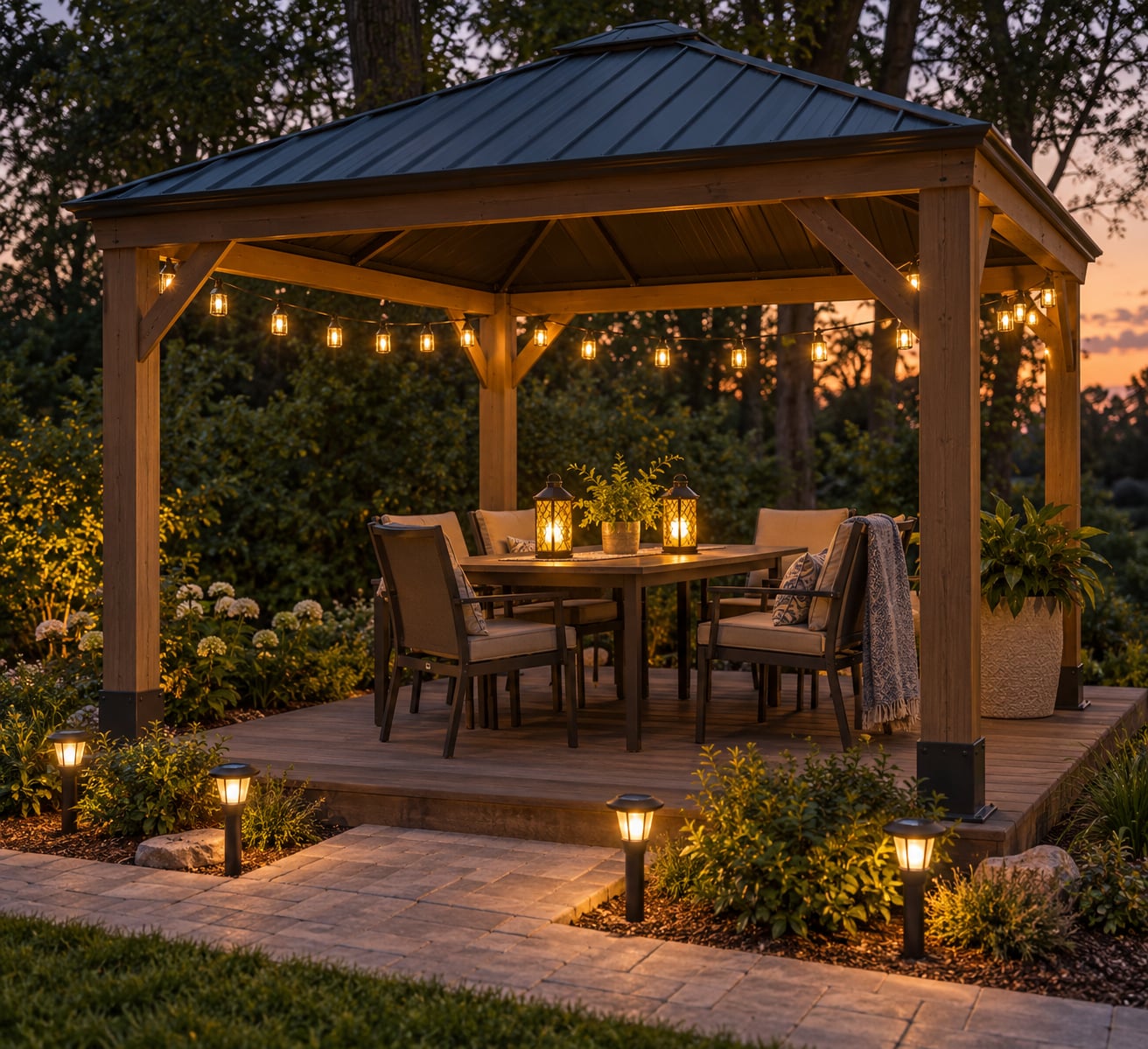
Solar string lights give the biggest jump in atmosphere for the least fuss. For a 10×10 or 12×12 gazebo, one strand around the perimeter reads as ambient only. Two or three strands look better: run them from each corner up to a central hook to make a shallow ceiling grid, which spreads the light over the table instead of concentrating it at the edges. Keep the sag shallow, because a drooping cord catches the eye faster than a dim bulb.
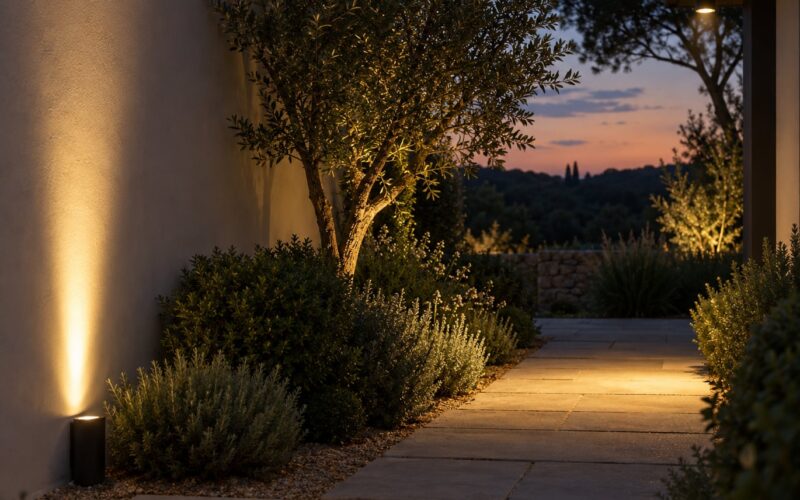
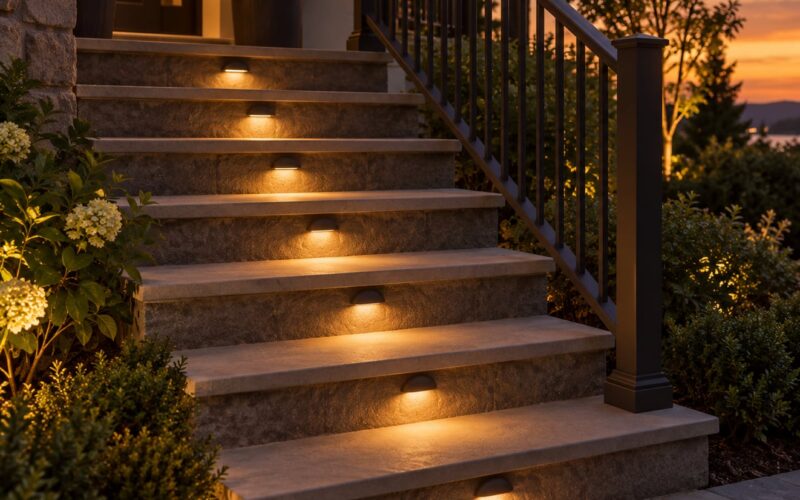
Solar post, wall and path lights do the accent work. They mark the corners, throw light up a post, or outline the step, and because they charge all day without a cord they can sit at the far edge of the yard where wiring would have been awkward.
A rough sizing rule helps. Plan about one lantern per two seated guests, space lanterns 6 to 8 feet apart around a perimeter, and treat anything over 12×12 as two separate areas rather than one bright room. If you light a dining surface, put a dedicated light above it, not just around it.
Install and Test the Lights
1. Set the panels in the sun first. Place each solar panel where it gets direct sun for most of the day and never under the gazebo roof, since the roof shades the panel at exactly the wrong time. A panel in the shadow of the house can charge so poorly that the light is still dim at midnight. Angle it toward the open sky rather than the horizon.
2. Turn everything on once, in daylight. Most solar lights ship with a small tab or a switch in the off position. Switch them on, pull the tab, and leave them to charge a full day before judging anything.
3. Hang without drilling. On wood or aluminum frames, screw eye hooks into a post or rafter and clip or tie the cord. On vinyl and soft-top roofs, hang from a single weighted strap or a rafter clip that grips the beam, or use a freestanding frame beside the gazebo. Never bore into a fabric canopy and never hang a lantern from the fabric itself.
4. Secure the cords. Run them along a frame member with cable ties or gaffer tape and leave a little slack at each end. Guide wire across a wide span keeps a long strand from sagging into the middle of the walkway.
5. Check the sun path once more. If a tree or fence throws shade on a panel at 2pm, move the light rather than the panel where you can, or accept a shorter runtime and add a rechargeable lantern as backup.
6. Test at night, twice. Look at the setup after an hour, then again after three. Early on, everything looks bright because your eyes are adjusting. The three-hour check is the honest one, and it tells you whether you need a second lantern over the table or whether one of the solar strings is running out early.
Common Mistakes
The panel is in the shade. This is the most common failure by far, and it is usually invisible in daylight because the fixture still looks fine. Move the panel out from under the roof and away from the house shadow, and expect runtime to improve noticeably.
Batteries that have gone flat. A string light left uncharged through a wet winter will give you two hours instead of six. Rechargeable cells recover slowly after several cloudy days. If a strand is dim after a full sunny day, the cells are usually the problem, not the bulbs.
Uneven spacing. Lights bunched near a door and none over the far end of the table leaves half the seating area in the dark. Measure the span, divide it evenly, and place fixtures at the resulting points rather than wherever was convenient to reach.
Fixtures that are not really outdoor rated. Splash-resistant is not the same as weatherproof. Look for an IP44 or IP65 rating, and treat anything without a rating as indoor-only.
Over-bright bulbs. Daylight-white LEDs at full output under a gazebo feel like a parking lot. Warm white around 2700K on a dimmer or low setting reads as intentional, and mixed color temperatures across strands are the single most common complaint people have about finished setups.
Cords across walkways. Even a well-made cord at ankle height is a trip hazard every time somebody steps over it in the dark. Route along the frame and down the posts instead.
Maintain year-round gazebo lighting
Solar lighting is low maintenance, but it is not no maintenance. A few minutes a couple of times a year keeps it working.
Clean the panels. Dust, pollen and a layer of green algae cut output noticeably. Wipe with a damp cloth and rinse at ground level, not with a hose sprayed onto the fixture.
Charge deliberately. Keep lights switched on during daylight so they charge, even in bad weather. Switching them off overnight on a dim string can leave you with nothing for the next evening.
Know which batteries you have. Rechargeable models with built-in cells need no maintenance but eventually lose capacity and are rarely replaceable. Fixtures that take AA or AAA cells let you swap in fresh ones in seconds. Check which type you bought before a long winter.
Protect and store. Take removable lanterns inside during prolonged severe weather, especially if your area freezes and thaws repeatedly. Leave fixed solar post lights where they are; they are built for it.
Adjust with the seasons. The sun sits lower in winter, so panels that charged well all summer get a shorter charging window. Before the first frost, bring in the battery lanterns and add a string light closer to the table so the same level of brightness lands where you need it.
One more job worth doing once a year: walk the cords with your hands. Sun and weather make plastic brittle, and a cracked cord is the one failure that matters.
Frequently Asked Questions
Do solar gazebo lights work on cloudy days?
Partly. Solar lights still charge on cloudy days, just more slowly, so runtime drops rather than stops. A panel given six hours of direct sun typically runs a string for five to eight hours; after a fully overcast week that can fall to a couple of hours. If you need dependable light through a wet season, keep one rechargeable lantern as backup rather than relying on solar alone.
Can I use battery operated LED string lights outdoors?
Only if they are rated for it. Check for an IP44 or IP65 rating on the light itself, not just the packaging, and confirm the bulbs are shatterproof if anyone walks under them. Most battery string lights with a USB port can be recharged indoors and then run outside all evening, which is what makes them so common on covered patios.
What is the best way to hang string lights on a gazebo without drilling?
On wood or aluminum frames, screw eye hooks into a post or rafter and clip the cord to them, leaving a little slack at each end. On vinyl or soft-top roofs, use a rafter clip that grips the beam, a strap that wraps the member, or hang the lights from a freestanding frame beside the gazebo. Cable ties along a frame member keep the cord tidy, and a little guide wire stops long spans sagging.
Do solar lights work in winter?
They do, with less output. Winter sun sits lower, so panels charge for fewer hours and cold nights drain the stored charge faster. Angling a panel toward the open southern sky rather than the horizon helps. Bring removable battery lanterns inside between uses to protect them from repeated freezing, and plan on adding a light near the table, since the darker evenings need more of it.
How bright should gazebo lights be?
Enough to see food, faces and the floor, but no more. For dining or a game table, aim for roughly 30 to 50 lumens of usable light per square foot directly overhead, which in practice means a lantern or two above the table rather than relying on perimeter lights alone. Ambient mood lighting only needs a fraction of that. Warm white around 2700K on a low setting suits most gazebos better than full-output daylight white.
Conclusion
Start with one decision: put a single solar panel where it gets full sun, away from the roof shadow, and see how long it lasts. That test tells you more than any spec on a box.
For a 10×10 or 12×12 gazebo, the setup that works most reliably is a couple of solar lanterns for the table, one or two solar strands run corner to corner for atmosphere, and small solar post lights marking the corners. On a soft-top or vinyl structure, keep everything portable and hang nothing from the fabric. Layer it that way and how to light a gazebo without wiring stops being a compromise and starts looking like a plan.