A solar light turns on during the day because its photocell, the small light sensor that decides day from night, is not reading daylight. Usually that means the sensor lens or panel is dirty, shaded or wet, the switch is sitting in ON mode instead of MOTION, or a flat battery has left the control circuit latched in night mode. All three are fixable in about ten minutes.
Last updated October 2026.
A light stuck on through a sunny afternoon drains the battery it spent all morning filling, which is why a light that glows at noon often goes dark at 9pm. Fix the daytime behaviour and the night behaviour usually comes back on its own.
Table of Contents
- How Do Solar Lights Know It Is Daytime?
- The Most Common Reasons Solar Lights Turn On During the Day
- 1. Grime on the sensor or the panel
- 2. Shade, including the light shading itself
- 3. The switch is in ON mode
- 4. A flat or dead battery latching the circuit on
- 5. Moisture inside the housing
- 6. Assembly faults
- How to Fix a Solar Light That Stays On in Daylight
- Clean the sensor and panel
- Reset the light
- Fix a solar light that turns on during the day in four checks
- Check the switch, the cell and the seal
- Do Solar Lights Need Direct Sun to Work Properly?
- When Should You Replace a Solar Light?
- Frequently Asked Questions
- How do I reset a solar light?
- Is there an on-off switch on solar lights?
- Do solar lights need to be turned off during the day?
- Why is my solar light on during the day and off at night?
- Can I adjust the dusk-to-dawn photocell on a solar light?
How Do Solar Lights Know It Is Daytime?
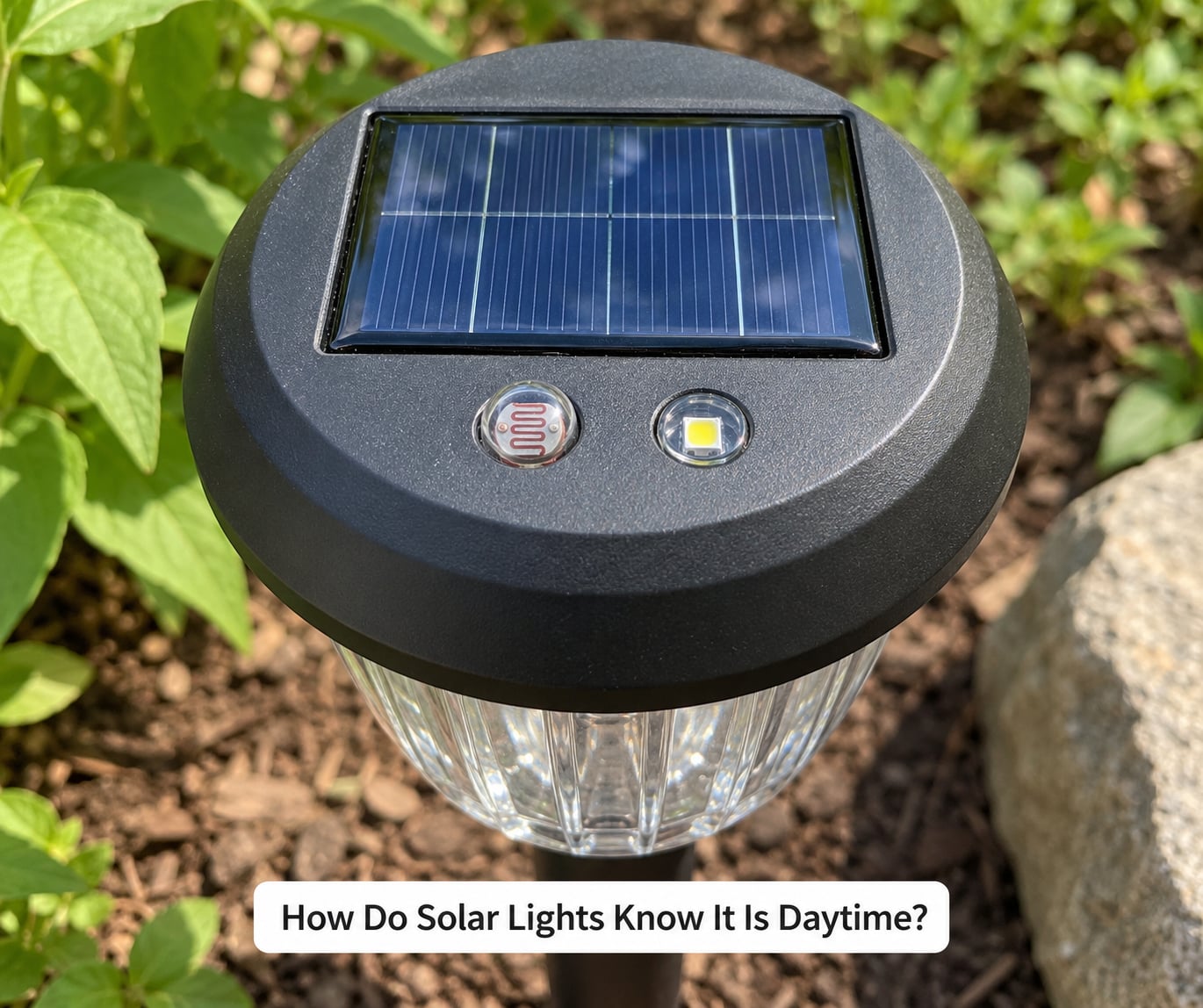
The photocell is the whole mechanism, and it is usually a one-centimetre dome or flat lens somewhere near the top of the light. On many models it sits a few millimetres from the solar panel, sometimes on the same flat face, sometimes on the opposite side under a separate cap.
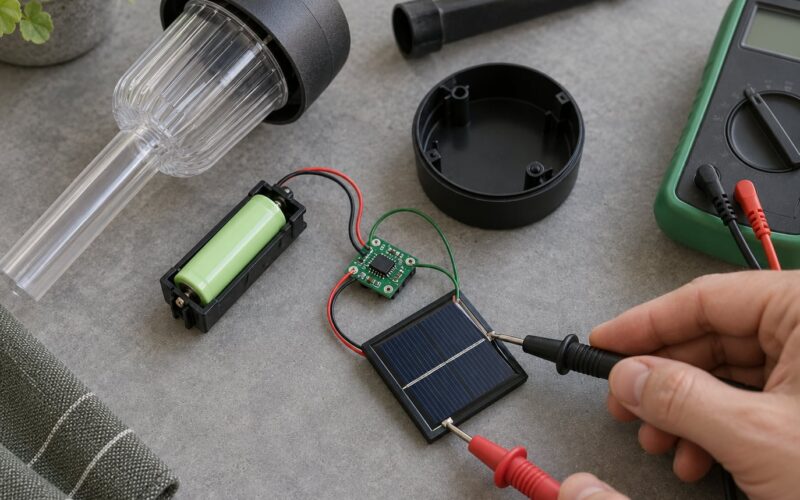
Inside is a light-dependent resistor, an LDR. Its resistance falls sharply when light hits it. As the sun goes down, two things happen at once: the LDR’s resistance climbs, and the solar panel’s output voltage drops as it stops generating. The control circuit watches both signals and, once they cross a set threshold, concludes it is night and switches the LED on.
That threshold is the weak point. A sensor that receives less light than it expects reads dark, and a light in shadow under a tree or a porch roof sits close to that reading for hours.
Clean the panel as well as the sensor, because a film of grime on the panel cuts output enough to mimic dusk to some circuits.
The Most Common Reasons Solar Lights Turn On During the Day
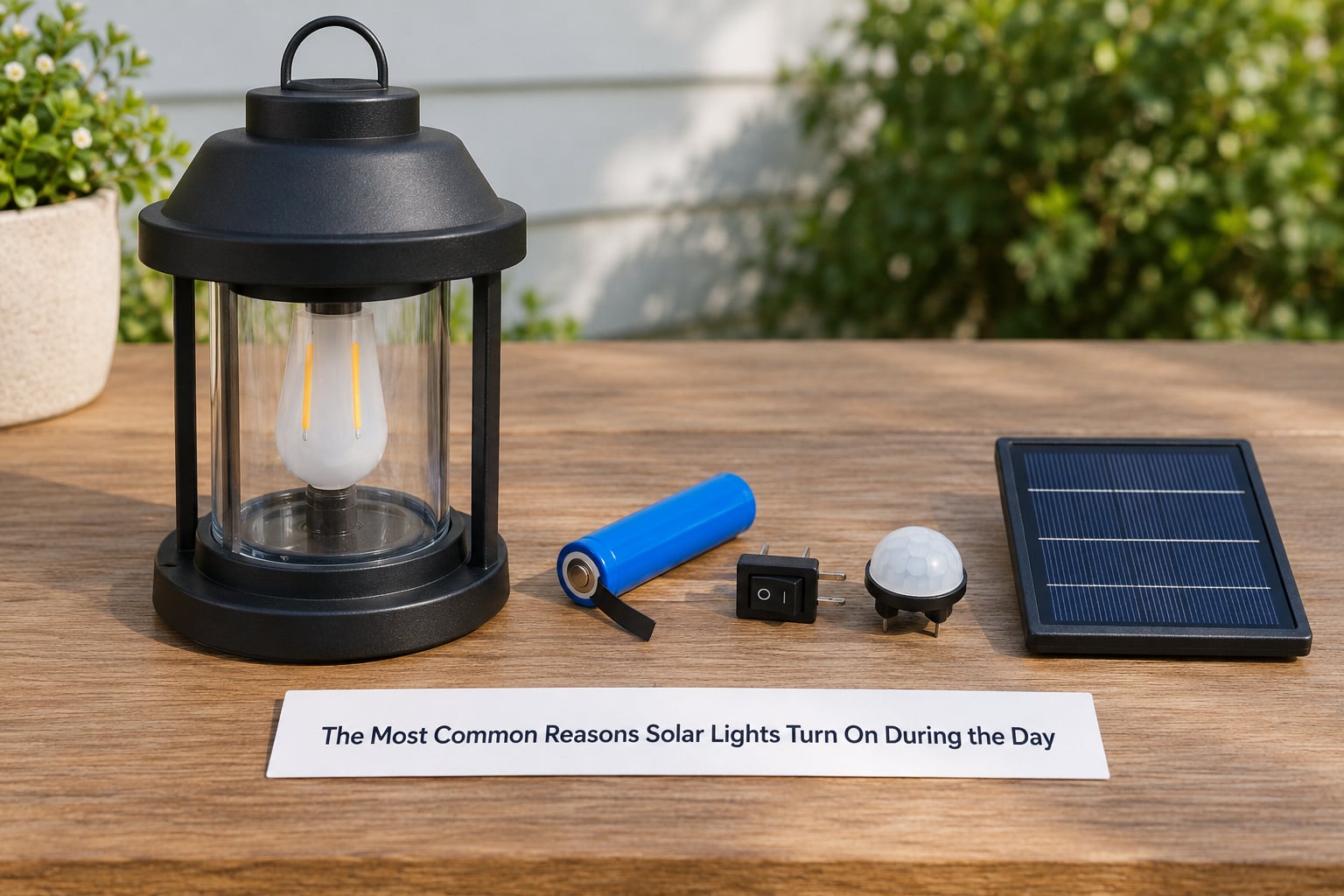
Work down this list in order, because the frequency of the cause falls roughly as you read.
1. Grime on the sensor or the panel
Spider webs, a leaf, moss, pollen, bird droppings or a hard-water film across the lens. Pollen and spider silk are nearly invisible but enough to keep an LDR below its threshold. This is the most common cause and the easiest to confirm.
2. Shade, including the light shading itself
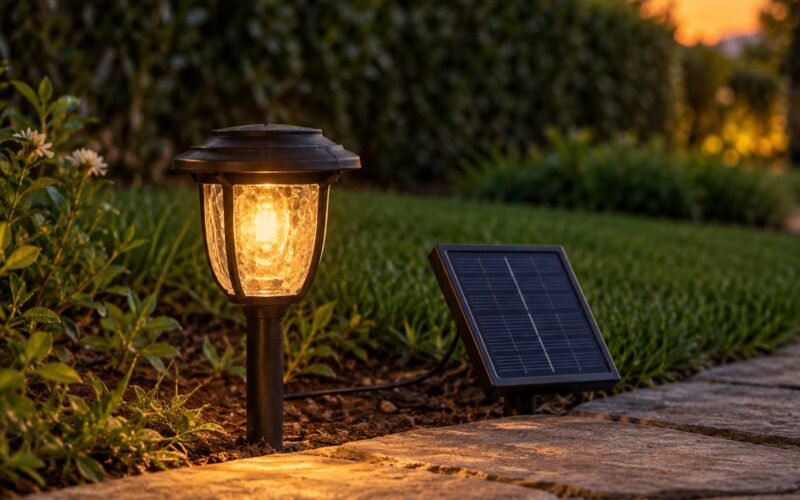
A tree canopy that grew since installation, a new awning, a neighbouring fence, or the decorative cap on a solar post lamp casting its own shadow over the sensor for part of the day. Lights mounted under a porch canopy or tucked into an alcove often never see full daylight at all.
3. The switch is in ON mode
Most solar lights carry a three-position switch: ON, MOTION and OFF. In ON mode the light is meant to burn continuously, day and night, because the switch bypasses the sensor entirely. Plenty of people discover this weeks after installing a row of path lights and assume the whole batch is faulty.
4. A flat or dead battery latching the circuit on
This is the least reported cause and the most confusing one. When the battery voltage collapses, some controllers read the dead cell as an unchargeable fault and hold the LED on continuously. A user on doityourself.com saw exactly this: the light burned during the day, and charging the battery from a wall charger restored correct dusk behaviour.
5. Moisture inside the housing
Condensation or rainwater behind the clear cover fogs the sensor and can bridge the contacts. The clue is a light that behaved fine until autumn, or one with visible clouding or corrosion inside the lens.
6. Assembly faults
A battery tab or pull strip never removed, a battery pushed in without the contact spring behind it, or a film of plastic left across the cell. All three leave the light running on nothing, which looks identical to daytime activation.
| Symptom | Likely cause | Fix | Difficulty |
|---|---|---|---|
| On in daylight, dims at dusk | Dirty or shaded sensor | Clean lens and panel, then reposition | Easy |
| Bright all day, dead by midnight | Switch in ON mode | Move switch to MOTION | Easy |
| On constantly, brand new | Battery tab not removed | Remove tab, reseat cell | Easy |
| On constantly, battery is old | Flat battery latched on | Reset, then fit a new cell | Easy |
| On constantly, lens is fogged | Moisture inside housing | Dry 48 hours, reseal with silicone | Moderate |
| Tape test does nothing | Sensor or board failed | Replace the light | None |
How to Fix a Solar Light That Stays On in Daylight
Follow this order. Each step is cheap, and the first three solve most cases without opening anything.
Clean the sensor and panel
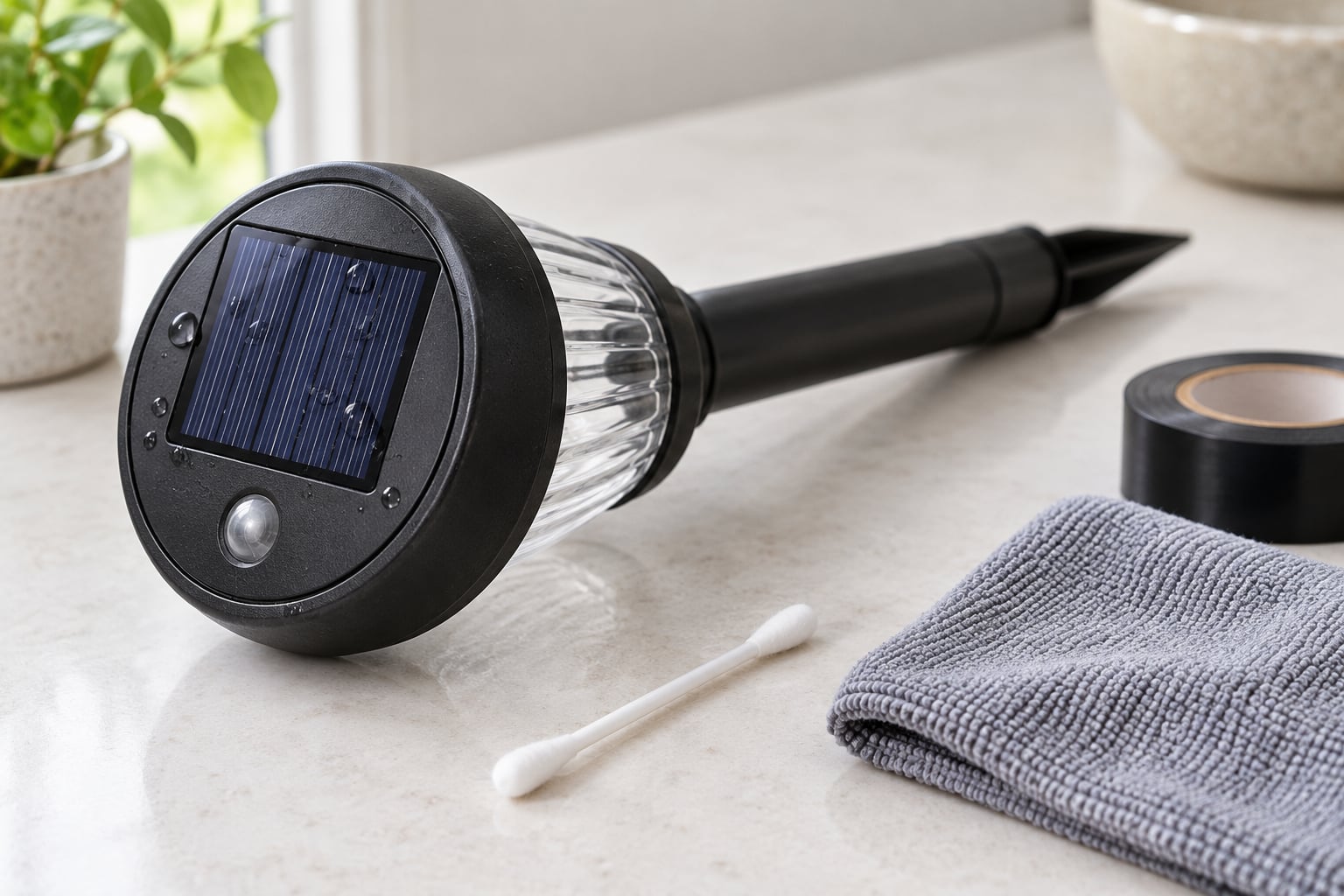
Wipe the panel glass first with a damp microfibre cloth, then the sensor lens with a cotton swab barely dampened with isopropyl alcohol. Skip detergent, since the film it leaves behind blocks light more than the dirt you removed.
While you are there, check that nothing is stuck to the sensor: a spider web, a dead leaf, a cobweb stretched from the housing across the lens.
Reset the light
Switch to OFF. Open the battery compartment, remove the cells and leave them out for about 30 seconds, then reinsert them and return the switch to MOTION. This clears a latched controller and recalibrates the sensor against the current light level.
A user on gardening-forums.com chased the same symptom through three fixes: a new battery, switching the unit off during the day to re-set the sensor, and rubbing alcohol on the sensor. That sequence worked, and it matches what works for most people.
Fix a solar light that turns on during the day in four checks
Test the sensor before you take anything apart. Cover the sensor completely with opaque electrical tape, or hold a dark cloth over it, and wait 30 to 60 seconds.
If the light comes on while the sensor is covered, the sensor works and the problem is light or shadow reaching it, so clean and reposition. If nothing happens with the sensor fully covered, the sensor or its board is dead and cleaning will not help.
Check the switch, the cell and the seal
Confirm the switch position matches what you expect, then check the cell. Swap in a new rechargeable cell of the type the light takes, usually NiMH or the proprietary lithium pack, and never a disposable alkaline cell, which will not recharge and can swell in the housing.
For moisture, unscrew the housing, let it dry for 48 hours in a warm dry spot, then run a bead of clear silicone sealant around the seam before reassembling.
Do Solar Lights Need Direct Sun to Work Properly?
Yes for any useful runtime. Manufacturers typically specify six to eight hours of direct sunlight a day, and garden lighting guides suggest giving a new light two full days of charging before you judge it.
A shaded spot produces a different symptom from a faulty one. In shade the battery tops out early, so the light runs dim, comes on later at dusk and dies early in the morning, but it still switches off when it gets bright.
Shade alone rarely causes a light to stay on all day. When daylight activation and short runtime happen together, suspect a dirty panel or a dying battery rather than the location.
Winter exaggerates everything. Shorter days, thinner cloud and low sun angles mean less charge, and the cheapest controllers start misreading the threshold, which shows up as false daytime triggers on short winter days.
When Should You Replace a Solar Light?
Stop and replace the unit when the tape test produces no light, when the sensor or its board is cracked, or when corrosion has crept across the battery contacts as white powder that a swab will not lift.
A battery swap fixes most units for a few years, and rechargeable cells last roughly two to five years depending on climate and how often the light runs itself flat. Past that, if a new cell costs close to a new light, replacement wins.
Take old rechargeable cells to a household battery collection point or a recycling centre rather than the bin, and never burn or crush a lithium pack.
These lights run on low voltage and most are sealed units, so there is very little to gain from opening one. If yours is hardwired to mains or has a damaged cable, follow the manufacturer’s instructions or have a qualified electrician look at it instead of improvising.
Frequently Asked Questions
How do I reset a solar light?
Flip the switch to OFF, remove the batteries or the battery pack and wait about 30 seconds, then put them back in and set the switch to MOTION. That power break clears a controller that has latched into night mode and forces it to re-read the light level. Leave the light in full sun for a day afterwards so the cell recovers before you judge the result.
Is there an on-off switch on solar lights?
Most solar lights have a small three-position switch on the back or underside: ON, MOTION and OFF. ON bypasses the sensor and burns continuously, day and night. MOTION holds a dim standby light and goes full brightness when something passes. OFF shuts the light down completely. A light stuck in ON mode is behaving exactly as designed, not as a fault.
Do solar lights need to be turned off during the day?
No. Leaving them on all day in sunlight is how they are meant to work, and the panel charges while the lamp burns. The only reason to switch one off is to protect a battery that has stopped holding a charge, since a flat battery left in the housing can swell. During long stretches of bad weather, OFF is a reasonable precaution.
Why is my solar light on during the day and off at night?
That combination points at the switch or the mode setting rather than the sensor. Check that it is on MOTION rather than ON, and that a battery tab or insulating strip was removed before first use. A cell that never made contact leaves no charge to run the LED after dusk, so the light glows from whatever residual voltage is present and dies quickly at night.
Can I adjust the dusk-to-dawn photocell on a solar light?
Consumer solar lights have no adjustment. The threshold is set in the controller board and cannot be reached without opening the housing and risking the seal. What you can do is change how much light reaches the sensor: clean the lens and panel, remove anything shading them, and move the light away from deep cover where a tree or awning blocks the sky.
Start with the tape test and the switch position, because those two checks rule out roughly half the cases in a minute. Clean the sensor and panel next, reset the light, and only then consider the battery or a replacement. Most lights that turn on during the day are not broken, just misread, shaded or latched, and a ten-minute session on the back patio sorts it.