The best way to clean rooftop solar panels is plain lukewarm water and a soft-bristle brush on a telescoping pole, worked from the ground in the early morning or on an overcast day. Rinse with a garden hose, never a pressure washer, and let the glass air-dry. For a typical residential array it is about an hour of work with nobody on the roof.
Dirt is not cosmetic. A film of dust, pollen or dried bird droppings cuts the light reaching the cells, and solar owners report output gains often in the 10% to 20% range after a first clean on a neglected array. Leave buildup in place for years and it traps moisture against the frame, encourages corrosion at the mounting hardware and can create hot spots that shorten module life. It also makes every inspection your installer does harder, because nobody wants to put hands near a panel they can’t see the condition of.
Rain is not a cleaning service. Light drizzle pushes dirt downward and often redeposits it as a film along the bottom edge, and where the water is hard it leaves mineral spots that get a little harder to shift each season.
Here is the short version, grouped the way installers group it:
- Timing: early morning or overcast, when the glass is cool and there is no wind. Never midday in full sun.
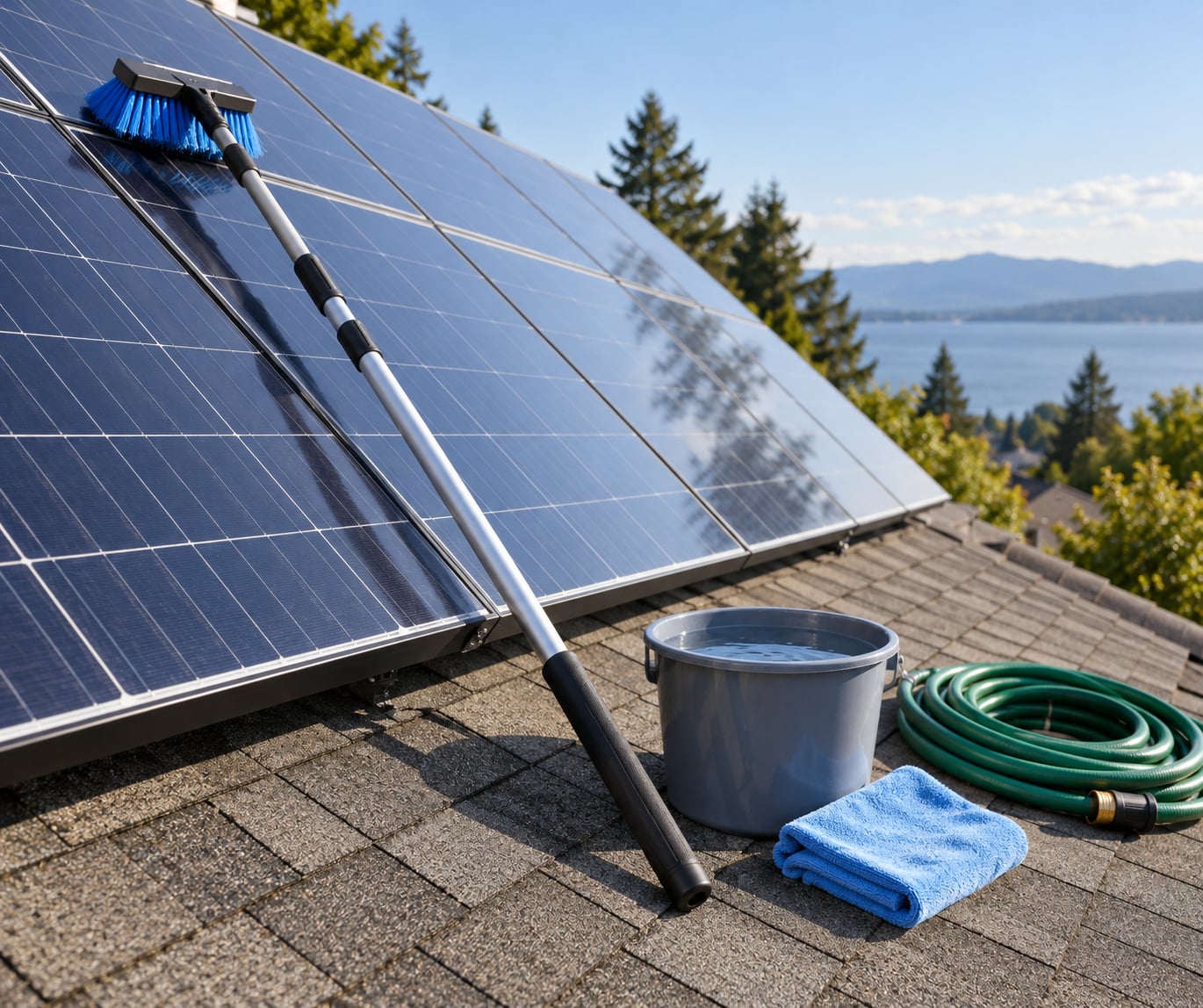
- Tools: soft-bristle flow-through brush on a telescoping pole, garden hose on its lowest spray setting, microfiber cloth, squeegee.
- Cleaner: lukewarm water with a drop or two of mild dish soap. Never pour soap directly onto the panel.
- Safety: work from the ground, stay off steep or high roofs, and hire a bonded, insured cleaner when access is awkward.
Table of Contents
- What You Need
- Step-by-Step: Cleaning Panels Yourself From the Ground
- How to Tell the Panels Are Clean
- Common Mistakes That Damage Panels
- Frequently Asked Questions
- How often should rooftop solar panels be cleaned?
- Does rain clean solar panels automatically?
- Can I use a pressure washer on rooftop solar panels?
- What is the safest way to clean panels on a steep or high roof?
- How do I remove bird droppings without damaging the panels?
- Should I hire a professional to clean rooftop solar panels?
- The Best Place to Start
What You Need
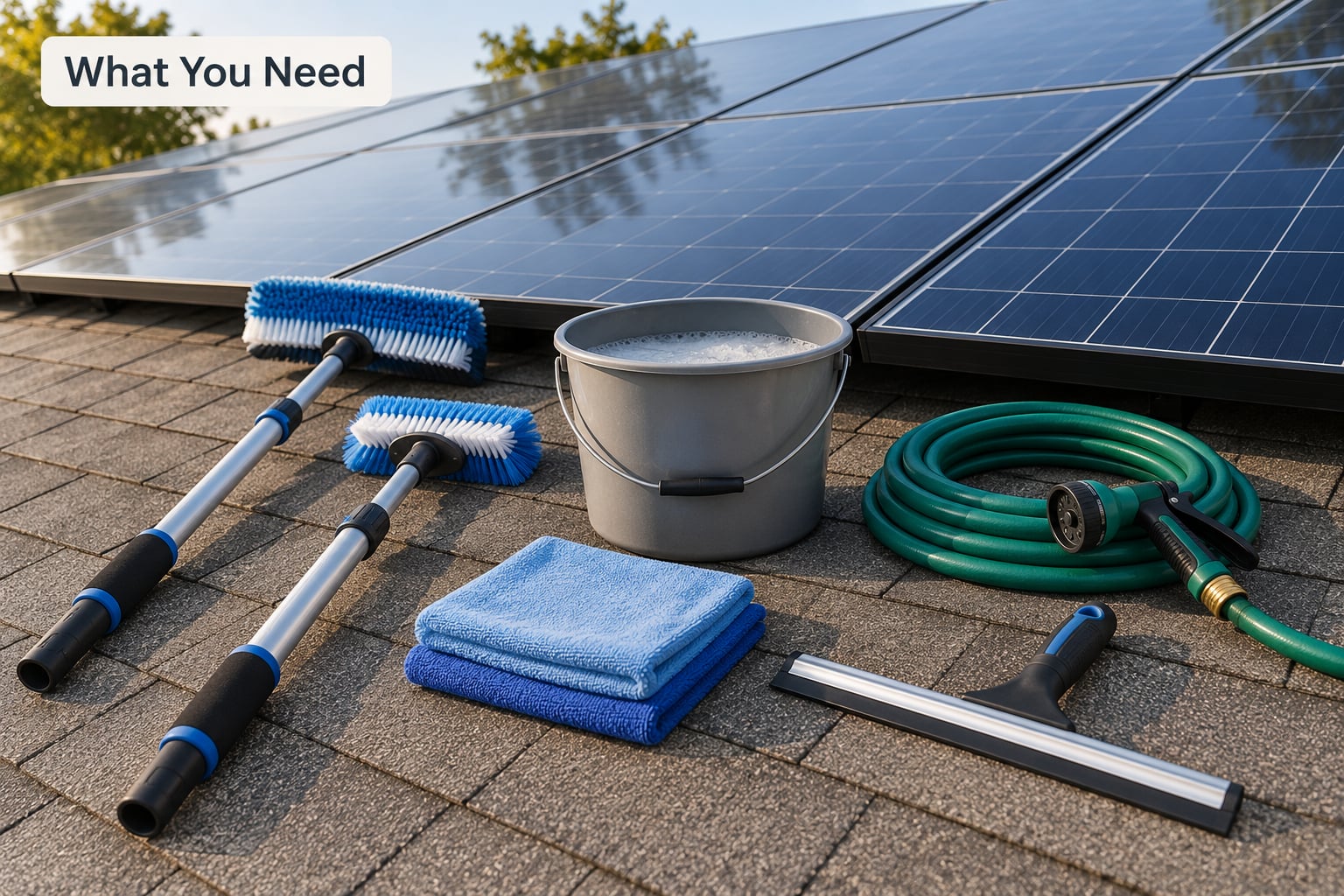
None of this needs power, and almost none of it needs a ladder. Keep the kit on the ground beside you and the whole job works from a deck or a flat lawn.
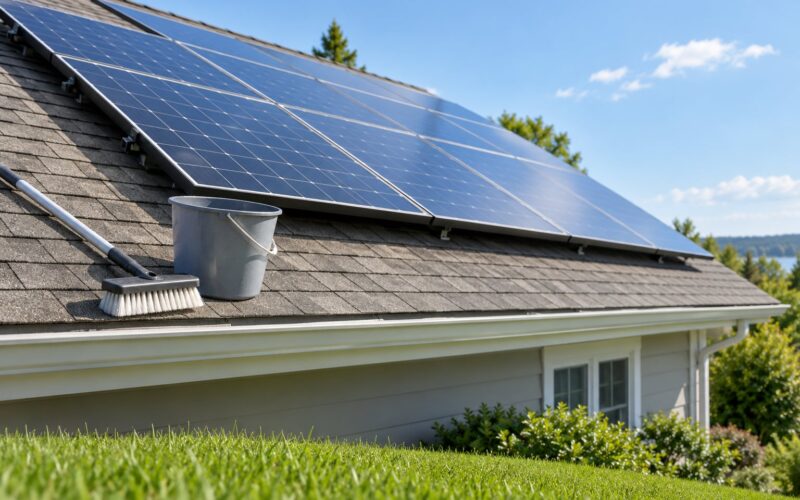
- A soft-bristle brush with a flow-through head on a telescoping pole. A pole between roughly 10 and 16 feet reaches a single-storey array without anyone touching tiles. Window cleaners who do this daily pair a hose-fed brush with a pole handle so they never climb at all.
- A garden hose with a nozzle that sprays, not blasts. Set it to its lowest pressure and test the stream on a shingle first. You want a rinse, not a cut.
- Lukewarm water and a mild cleaner. A drop or two of plain dish soap per bucket is plenty, and Simple Green is the other option solar owners mention most. Lukewarm means comfortably warm, not hot — see the mistakes section for why.
- Microfiber cloths and a soft-bristle mop for panels just above head height on a deck or patio, where a pole is awkward.
- A squeegee. Pulling water off the glass before it evaporates is the difference between a clear panel and one covered in grey rings.
- Gloves with grip, non-slip footwear, and a bucket for the dirty water so you are not tipping grit over the roof edge onto the panels below.
- A soft ladder for gutter-height panels only, set on level ground with a second person steadying the base. Anything steeper is not a ladder job.
- Your installer’s or the module manufacturer’s cleaning instructions. Some manufacturers name their own approved cleaner, and following those instructions is what keeps a warranty claim clean if glass ever gets damaged.
Skip all of it and call a professional when the pitch is steep, the array sits above a garage roof or a second storey, the roof is slate or clay tile, or you can see cracked glass, cloudy delamination at a panel edge or a frame that has shifted. Those are not cleaning problems. Professionals quote per panel with a roof-access charge on top, so ask for the per-panel rate and proof of bonding and insurance in writing before anyone sets a ladder.
Step-by-Step: Cleaning Panels Yourself From the Ground
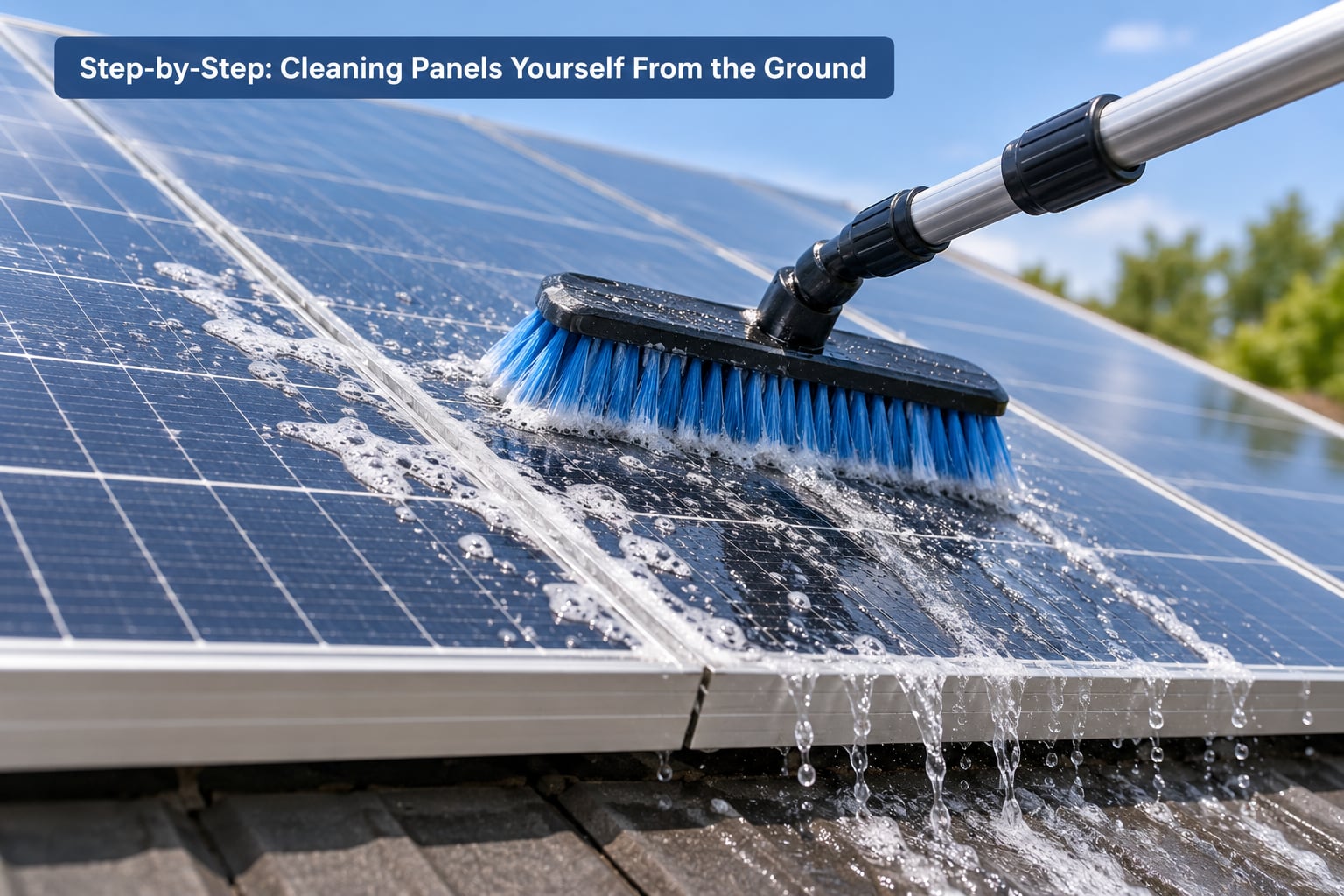
Eight steps, in this order. The sequence matters more than the products you use.
- Read the instructions and look at the array first. Cracks, white cloudy patches along a panel edge, or a frame that has shifted mean you stop and call the installer. Cleaning around damage can turn a small problem into a ground fault.
- Pick a cool, still moment. Early morning on an overcast day is ideal. Water hitting hot glass can thermal-shock tempered modules and leaves mineral rings as it evaporates, and midday wind dries streaks before you finish rinsing them.
- Wet the panels before you touch them. Rinse from the top edge down with the hose on its lowest setting so grit runs off the glass instead of getting scrubbed across it. Grit under a brush is how microcracks happen.
- Mix your solution in a bucket. Lukewarm water, a drop or two of mild dish soap, nothing else. Pouring soap straight onto a panel concentrates it and dries into a visible chemical mark, which is the single most common DIY mistake.
- Work the brush in light, overlapping strokes. Follow the frame lines and the row gaps. No pressure, no circular scrubbing, and keep the brush head wet so it does not drag across dry glass.
- Rinse top to bottom, then pull the water off. A second rinse followed by a squeegee or a dry microfiber pass removes the film that makes clean panels look dirty in hard afternoon light.
- Clear the hardware, not just the glass. Dust and leaves packed into the mounting rails trap heat and block drainage, and a leaf sitting on a rail can scorch the back of a module on a hot day. Check that cable runs and connectors look exactly as they did.
- Let it dry, then check output. Panels air-dry in about an hour. Note your inverter or monitoring app on a clear day, clean, then compare the next clear day. The difference is the honest return on an hour of your time.
How often you repeat the cycle depends on where you live, and it is worth putting a rough interval on the calendar:
- Dusty or desert areas: every four to six weeks in the dry season, because a light film builds faster than most owners notice.
- Coastal homes: every two to three months, since salt spray plus grit turns into a stubborn film that hose water alone will not shift.
- Tree-lined properties: twice a year at minimum, plus one pass after leaf fall, because sap and pollen in shade are the worst kind of stuck-on dirt.
- Snowy regions: after each major storm where panels are reachable from the ground, and once in spring to get rid of grit the melt leaves behind.
- Urban and flat-roof arrays: every three to four months, and more often if debris collects in the rails, which flat-mounted panels tend to do.
How to Tell the Panels Are Clean
Stand a few metres back with the sun low behind you and look at the array with your eyes half-squinted. Light film and streaks show up clearly at that angle, which is why they often surprise people who were standing on the roof an hour earlier.
- Water beads evenly and runs off in sheets instead of clinging in patches.
- No white haze, no drip lines, no dirt tracks collecting along the bottom frame.
- Rails and rungs clear of grit, leaves and moss.
- Glass looks even from panel to panel, with no one panel obviously duller than the rest.
Clean glass is not the same thing as good production, though. Two things throw people off. Shaded panels look dusty and are performing fine, and a single soiled panel in a series drags the output of the whole string down — a mismatch like that shows up in the monitoring app even when every panel looks clean. Read the numbers before you schedule the next clean.
Common Mistakes That Damage Panels
Almost every panel I would replace unnecessarily got there the same way: pressure, chemistry or heat. Each of these has a simple fix.
- Pressure washing. High-pressure water can crack tempered glass, force moisture past the seals into the junction box, and strip the anti-reflective coating. Fix: a garden hose on its lowest spray, with the brush doing the work.
- Pouring cleaner straight onto the panel. It concentrates in one spot and dries into a film that needs a second cleaning to remove. Fix: mix in the bucket, apply with the brush.
- Harsh chemicals and abrasive powders. Bleach, ammonia window cleaners, degreasers, oven cleaner and scouring powders etch the coating and can leave a haze that never fully comes off. Fix: mild dish soap, nothing stronger.
- Hard-bristle brushes, razor blades and scrapers. Steel wool and blades scratch tempered glass, and those scratches cut output permanently. Fix: soft bristles and microfiber, always wet.
- Cleaning in full sun on hot glass. Thermal shock and evaporation rings are both real, and hot panels also mean working with a soapy solution that heats on your hands. Fix: early morning or overcast.
- Walking on the modules. Panels are not walkways. One foot near a corner can microcrack cells and it may not show up for months. Fix: stay off the array entirely; walk on the mounting rails only if the manufacturer explicitly says so.
- Working around live wiring with wet hands and wet connectors. PV DC voltage stays live whenever the sun is up, and it cannot be switched off at a panel. Fix: keep the hose and cloth away from junction boxes and cable runs, and dry your hands before touching any connector.
- Cleaning without checking the manufacturer’s guidance. Some modules specify an approved cleaner, and skipping that step is the easiest way to lose a warranty argument later. Fix: read the install documents first, every time.
Two smaller habits prevent most repeat problems. Wash panels from the top down so you are never rinsing dirty water back over finished glass, and use deionized or filtered water on hard-water properties if mineral spotting keeps coming back. And after any work on the roof, glance at the array from the ground in daylight — a hot spot or a string that has dropped output is a call to the installer, not another cleaning.
Frequently Asked Questions
How often should rooftop solar panels be cleaned?
Twice a year for most homes, once after winter and once before summer, plus an extra pass whenever something obvious lands on the glass. Dusty, coastal or tree-lined properties need it far more often, sometimes monthly. Check your inverter monitoring app after a dusty spell, because a flat production line on a clear day usually means dirt rather than clouds.
Does rain clean solar panels automatically?
Only partly. Light rain moves dirt down the glass and often redeposits it as a film near the bottom edge, and where the water is hard it leaves mineral spots behind. In dusty or coastal areas, solar groups report visible grime staying on panels through whole seasons of rain. A hose rinse with plain water is still the cheapest way to clear fresh rain residue.
Can I use a pressure washer on rooftop solar panels?
No. High-pressure water can crack tempered glass, force moisture past the seals and into the junction box, and strip the anti-reflective coating that panel manufacturers rely on. It is also the fastest route to a declined warranty claim for the resulting damage. If you want pressure for one stubborn spot, use a garden hose on its lowest spray setting and let a soft brush do the work.
What is the safest way to clean panels on a steep or high roof?
Stay off it. Use a telescoping pole and a hose from the ground, or hire a cleaning service that brings its own fall protection. Falling from a ladder is a far bigger risk than a dirty panel, and a pole long enough to reach from the deck removes that risk entirely. Never climb onto tiles or slate to reach a single panel.
How do I remove bird droppings without damaging the panels?
Soak them first with lukewarm water, let them soften for a few minutes, then lift them away with a soft cloth while clean water flows underneath. Droppings are acidic and will etch the anti-reflective coating if they sit, so treat them as urgent rather than as part of the annual clean. Never scrape dried droppings off with a blade or a hard brush.
Should I hire a professional to clean rooftop solar panels?
Yes if the roof is steep, more than one storey high, tiled or slate, or if any panel shows cracked glass, cloudy delamination or a loose frame. Professionals price per panel with a roof-access charge on top, and the work is usually faster than doing it yourself. Ask for proof of bonding and insurance, and get the per-panel rate in writing before anyone sets a ladder.
The Best Place to Start
Open your installer’s documentation and check what the panel manufacturer says about cleaning. That one page settles the cleaner question, tells you whether your warranty has conditions attached, and usually names an approved product.
Then pick the method, not the equipment: gentle, low-pressure cleaning with lukewarm water, a soft brush and a hose, worked from the ground on a cool morning. That is the best way to clean rooftop solar panels, and it is deliberately unexciting. Skip the pressure washer, skip the soap bottle, and skip the roof if it is steep.
If the roof access is awkward, that is the moment to call a bonded and insured cleaner rather than to improvise with a ladder. An hour of professional work costs less than a fall.