Home solar panels for beginners come down to three things: what the system does, whether your roof and your electricity use suit it, and what a fair quote actually looks like. A rooftop array turns sunlight into electricity for roughly 25 years at no fuel cost, most properly sized systems in the US pay for themselves somewhere between 8 and 15 years, and nothing on your roof touches your daily routine once it is running. This guide walks through all of it in plain language, with no vendor promoted.
I have watched a lot of people get their first solar quotes with no framework at all, and almost every bad outcome traces back to the same three gaps: nobody sized the system against real usage, nobody explained how the savings get calculated, and nobody checked the installer’s warranty process. Fix those three things and the rest is ordinary shopping.
Table of Contents
- What Are Home Solar Panels?
- How Do Home Solar Panels Work?
- kW and kWh are not the same thing
- String inverter or microinverters?
- How Much Electricity Can Home Solar Panels Generate?
- How to size home solar panels for beginners
- How Much Do Home Solar Panels Cost?
- What moves the price
- What Do Beginners Need Before Installing Solar Panels?
- What the 33% and 20% rules actually mean
- How Do Solar Panels Behave in Different Weather?
- What happens to your power during an outage
- What Type of Home Solar Panel Is Best for Beginners?
- How Do You Choose the Right Solar Panel System?
- How Are Home Solar Panels Installed?
- How Do You Maintain Home Solar Panels?
- Frequently Asked Questions
- Do home solar panels work on cloudy days?
- How long do home solar panels last?
- Can I install solar panels if I rent my home?
- Do solar panels need to be cleaned regularly?
- What is the difference between buying and leasing solar panels?
- Can I install solar panels myself?
- Conclusion
What Are Home Solar Panels?
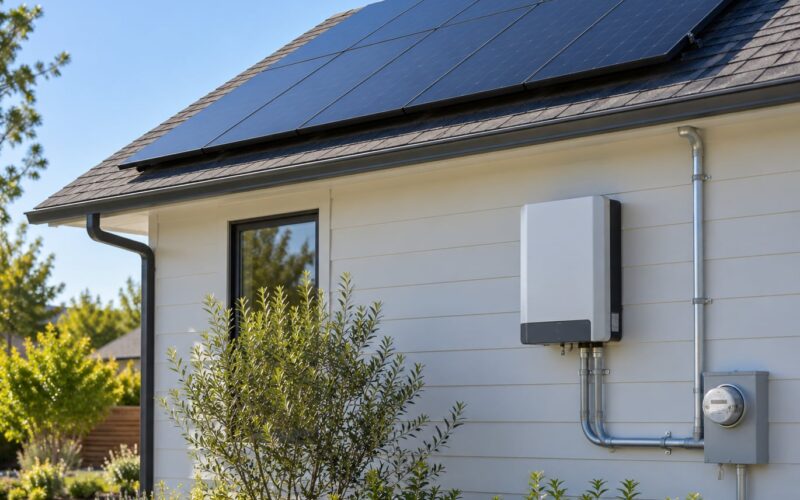
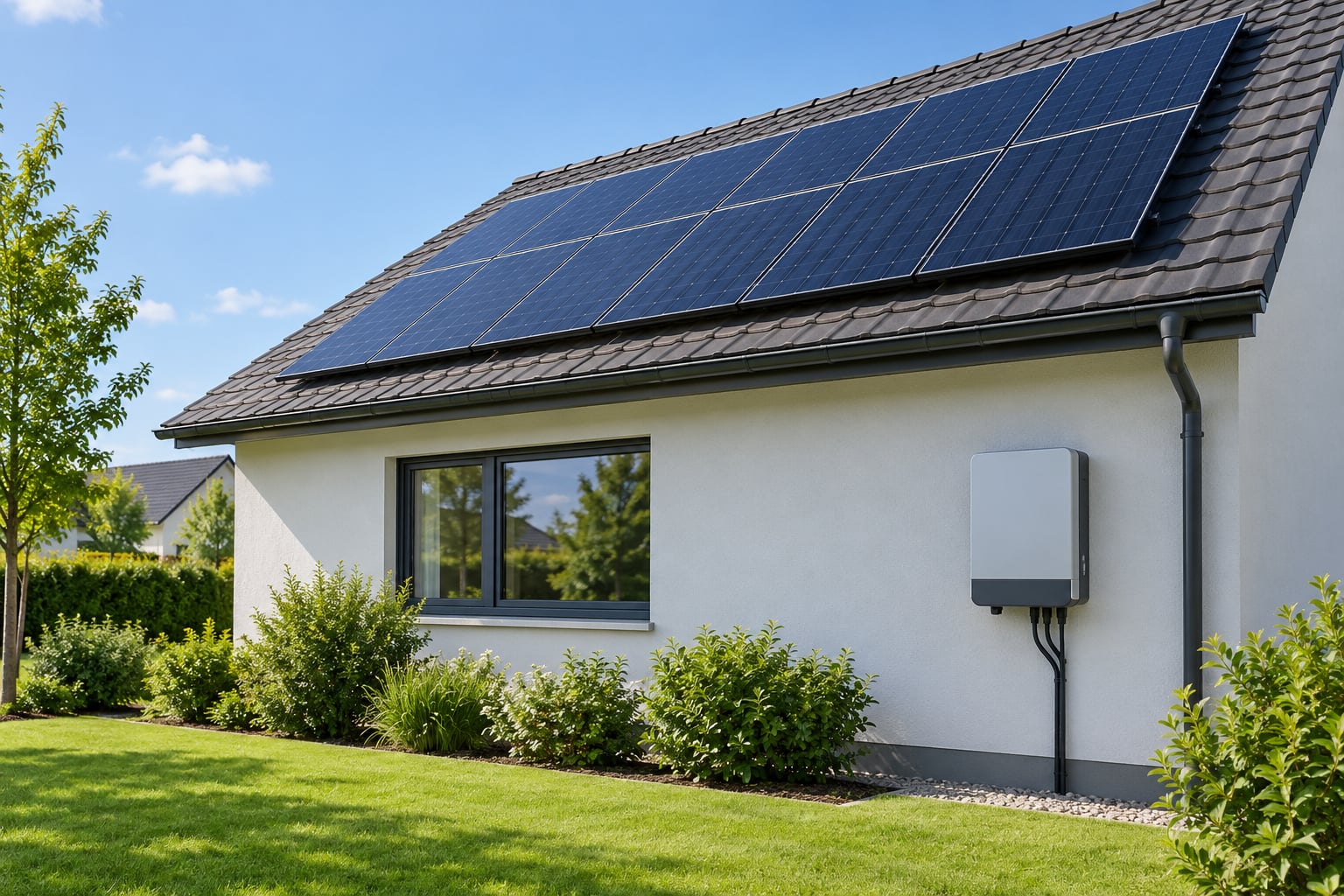
Home solar panels are flat photovoltaic modules that convert sunlight directly into electricity. Sunlight striking the cells knocks electrons loose, producing direct current, and an inverter converts that into the alternating current your household appliances run on. Mounted on a roof, an array feeds your breaker panel, and anything you do not use flows out to the grid.
That is the whole concept. Everything else is sizing, wiring, paperwork and arithmetic.
It is worth separating a real residential system from the small solar products that share the name, because beginners regularly conflate them. A solar garden light is a few tiny cells, a rechargeable battery and an LED that switches on at dusk. A portable solar generator is a modest panel with a battery and a couple of outlets, useful for a tailgate or a power cut. A 12V kit is the same idea at slightly larger scale, powering tools or a small fridge off a battery bank. None of those connect to your breaker panel, none of them offsets your utility bill, and none of them need a permit.
A residential grid-tied array is a different animal: hundreds or thousands of watts of panel on your roof, an inverter mounted on a wall, a permit, a utility interconnection agreement, and permission to operate before a single electron reaches your outlets.
How Do Home Solar Panels Work?
Sunlight lands on a panel, the photovoltaic cells release electrons, and you get direct current flowing along wires toward an inverter. The inverter changes that direct current into grid-compatible alternating current, which travels to your breaker panel and powers your lights, refrigerator and outlets directly. Whatever the house does not consume flows out through the utility meter, and under net metering your utility credits you for it.
That flow is worth drawing in your head, because almost every misunderstanding later in the process comes from skipping it: panel, inverter, breaker panel, utility meter, grid.
kW and kWh are not the same thing
Kilowatt (kW) is how much a system can produce at a moment in time. Kilowatt-hour (kWh) is how much energy it produced over an hour, a month or a year. Your utility bills you for kWh. Panel labels and sales sheets quote kW. When an installer tells you a system is 8 kW, they mean peak capacity, and you will still need to know how many kWh that translates to in your particular climate.
String inverter or microinverters?
A string inverter handles every panel at once, usually mounted in a garage or on an exterior wall. Microinverters sit behind each individual panel and convert its output separately, which costs more upfront but keeps production steadier when one panel sits in shade. For most beginners on a clean, unshaded roof, a string inverter is the cheaper choice.
How Much Electricity Can Home Solar Panels Generate?
A realistic residential array in the US produces somewhere between 1,000 and 2,000 kWh per installed kilowatt per year, depending on where you live and how the roof faces. A 6 kW system in a sunny state might land near 11,000 kWh in a year; the same 6 kW further north, or on a shaded roof, might manage 7,500.
Four things move that number: the panel count and their rated watts, how much sunlight your roof actually gets, how the roof is angled and which way it points, and how much of the output you use at home versus export.
How to size home solar panels for beginners
Start with your utility bill rather than with a sales pitch. Most bills show your usage in kWh for the month, and you want twelve months, because a summer number alone will size you wrong by a factor of two.
- Add up twelve months of usage. A household using 900 kWh in July and 1,300 kWh in January might total 13,000 kWh a year. That total is your annual target.
- Divide by about 1,500. That gives a rough annual kWh per kilowatt figure, which works reasonably for the sunny southern and western states. In cloudy northern states, use closer to 1,000.
- For our example: 13,000 divided by 1,500 is roughly 8.7 kW, so about nine kilowatts of panels.
- Adjust for the roof. If your roof is shaded by a big tree or a neighbouring chimney in the afternoon, subtract 10 to 20 percent, or ask the installer to model it.
At around 400 watts per modern panel, nine kilowatts works out to roughly 22 panels. That is a real array and it needs real roof area, which is why the answer to “how many panels does my house need” is always a number with a caveat attached.
How Much Do Home Solar Panels Cost?
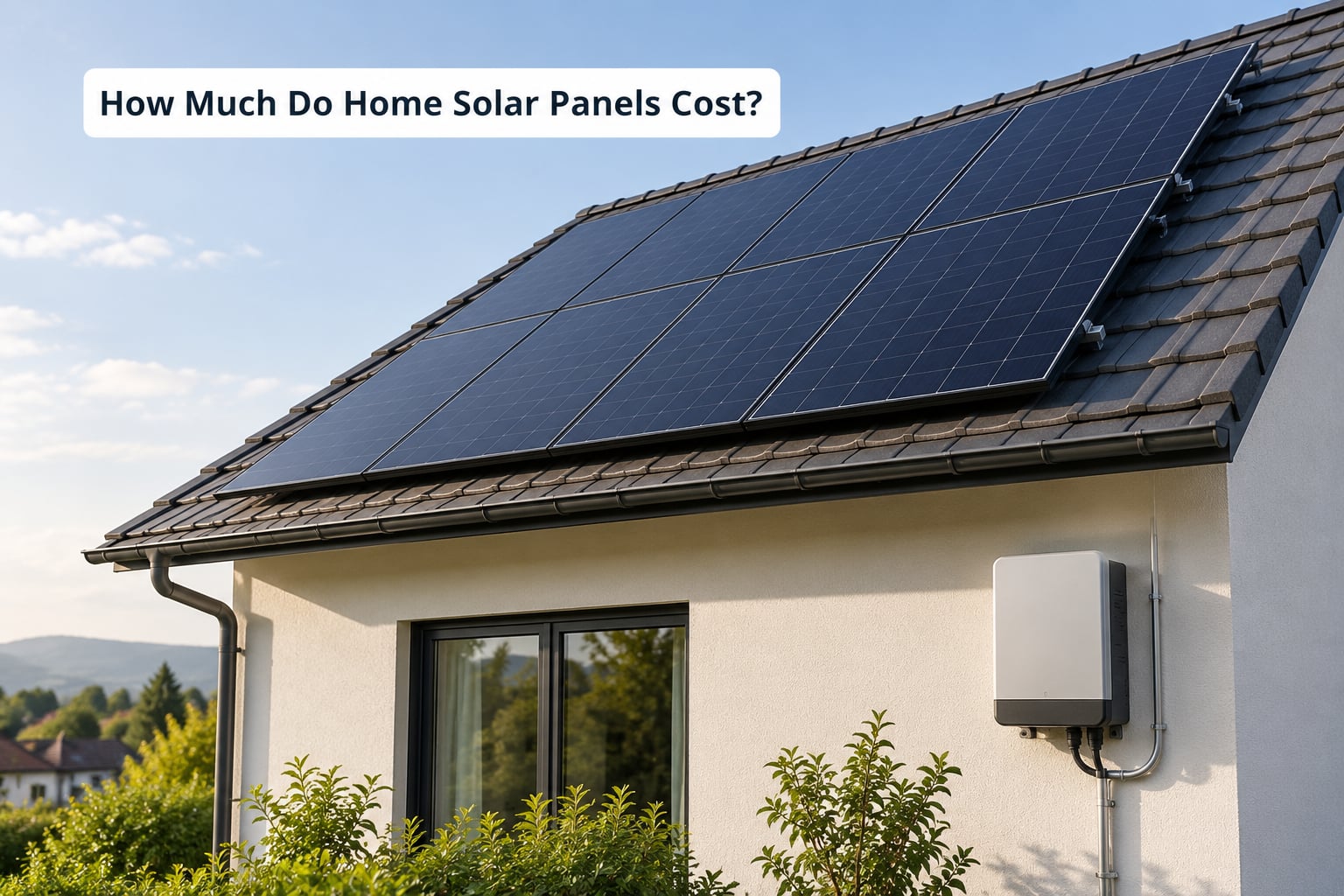
Three tiers exist, and beginners who compare a small kit against a fully installed system get understandably confused. A small DIY kit for powering a few devices runs a few hundred dollars. A portable solar generator plus a modest panel runs into the low thousands. A full installed grid-tied array for an average American home has historically landed between roughly 15,000 and 25,000 dollars before incentives, and that is the number most planning tools quote for 2026.
These are typical US ranges. They vary by region, roof complexity and local permitting rules, and they move over time as panel prices and labour costs change, so treat them as planning anchors rather than quotes.
| Tier | Typical range (USD) | What it powers | What it cannot do |
|---|---|---|---|
| Small DIY kit | 200 to 600 | Lights, phone charging, small tools, a 12V fridge | Nothing connected to your breaker panel |
| Portable generator plus panel | 1,500 to 4,000 | Backup for a few essentials, some daytime charging | No bill offset, limited capacity |
| Full installed grid-tie array | 15,000 to 25,000 before incentives | A meaningful share of your whole home’s usage | Nothing during an outage without a battery |
A community benchmark worth knowing: roughly 2.50 dollars per watt is considered fair for a turnkey installed system in the US. If a quote comes back at 1.20 dollars per watt, ask hard questions about what is included, because full-cost figures from about 1.80 to 3.00 per watt is where most real projects sit.
What moves the price
Panel count and brand tier set the equipment baseline. A steep, complicated or multi-plane roof adds labour hours. A main service panel that needs upgrading to hold a backfeed breaker adds electrical work. Removing and replacing panels later costs more if the original installer used a layout that left no room to expand.
What Do Beginners Need Before Installing Solar Panels?
Before you request a quote, walk through this list yourself. It takes an afternoon and it saves you from a system that fits badly.
- Roof age and condition. Panels last around 25 years. If your roof needs replacement in the next ten years, re-roof first.
- Shading. Note every tree, chimney and neighbouring structure that crosses your roof through the day.
- Orientation. South-facing is ideal in the northern hemisphere, but the loss from east or west is only around 10 to 15 percent, which surprises most beginners.
- Roof space and structure. Measure the clear area, and confirm the framing can carry added weight.
- Electrical service. Note your main panel rating and whether there is room for the required disconnect and breaker.
- Utility rules. Net metering terms, rate plans and interconnection timelines differ by state and utility.
- Ownership. If you rent, everything stops here. Your landlord would need to own the system.
What the 33% and 20% rules actually mean
The 33% rule is a sanity check on panel density. Divide the rated watts of a proposed array by the square footage it covers. If the result falls well under roughly one third of a watt per square foot, the panels are undersized for the roof or too few were specified. Ask the installer to walk through that arithmetic with you before you sign anything.
The 20% rule is a performance check after install. On a clear, bright midday, a healthy array should be producing a meaningful share of its nameplate rating. Consistently less than about a fifth of rated output points to shading, heavy soiling, poor orientation or a failing component, and it is worth a call to the installer.
How Do Solar Panels Behave in Different Weather?
Panels produce less whenever there is less sunlight, and they keep operating safely the whole time. On a cloudy day you will typically get 20 to 40 percent of a clear-sky output rather than nothing at all, because clouds diffuse light across the whole panel surface.
Rain washes dust off and helps. Snow covering the array is the real winter problem, and panels are angled precisely so that snow slides off. Extreme heat actually costs a little: a panel rated at its test temperature loses a few percent of output on a hot still day.
What happens to your power during an outage
Standard grid-tied panels shut down during a blackout, and this is a safety feature rather than a fault. When the grid goes down, your house could send live current back onto a line that repair crews assume is dead. If you want power during an outage you need either a battery system or a panel paired with a transfer switch, and that is a separate purchase with a separate payback.
What Type of Home Solar Panel Is Best for Beginners?
For almost every homeowner starting out, monocrystalline panels are the right default. They cost more per watt than the older polycrystalline type but produce more power in the same roof area, and roof area is usually the constraint that decides your system size.
| Type | Efficiency | Cost per watt | Lifespan | Best for |
|---|---|---|---|---|
| Monocrystalline | Highest of the three | Highest | 25 years or more | Most residential rooftops, especially small or awkwardly shaped ones |
| Polycrystalline | Lower | Lower | 25 years or more | Large roofs with plenty of space and a tight budget |
| Thin-film | Lowest | Low | Varies by maker | Lightweight panels on certain structures, low-light or hot climates |
Panel type matters far less than the system arrangement around it. On the arrangement, you have three practical choices.
Grid-tied is the default for a beginner. Panels, inverter, no battery, and your utility relationship stays as it is. It is the cheapest route to meaningful bill savings.
Hybrid adds a battery so you can run some loads through an outage and shift consumption into cheaper tariff hours. Owners frequently report that time-of-use rate changes eat more savings than they expected, so check your tariff before buying storage.
Off-grid is a different project entirely. It needs large batteries, a generator or a very large array, and it exists for homes that genuinely have no grid connection.
How Do You Choose the Right Solar Panel System?
Work through the decisions in this order. Spending an evening on it costs nothing and every step removes a variable from the quote.
- Pull twelve months of usage from your utility portal and write down the total kWh.
- Size against that number using the division above, and decide whether you want to match current usage or cover more.
- Check the roof for area, angle, shade and remaining life.
- Decide about backup power. If you care about outages, price the battery now rather than later.
- Choose a financing route. Cash or a solar loan means you own the panels and can claim incentives. A lease or power purchase agreement means the provider owns them and you pay monthly, usually with less or no credit for incentives and no transfer when you sell the house.
- Get three or more itemized quotes and compare them line by line, not on total price alone.
That last step deserves more attention than most beginners give it. Ask every installer one specific question: have you ever processed a warranty claim, and how long did it take? An installer who has walked a damaged panel through a manufacturer gets a different answer than one who has never had to.
How Are Home Solar Panels Installed?
Most residential installations take one to three days on site, wrapped in several weeks of paperwork. Permits and utility interconnection are where schedules actually slip.
- Site consultation and shading analysis. A site visit, a roof measurement and a look at your electrical panel.
- System design. The installer produces a layout showing panel count, placement and the expected annual production in kWh.
- Permits and interconnection application. Your local building department approves the structural and electrical work; the utility reviews the grid connection.
- Mounting. Flashed, drilled and anchored racking, designed for your roof material and local wind loads.
- Wiring and inverter setup. Conduit, disconnects, the rapid shutdown devices required by current codes, and inverter commissioning.
- Inspection. A building official signs off on the work.
- Permission to operate. The utility energizes the system, and only now does solar start showing up on your meter.
Step five is licensed electrical work in essentially every jurisdiction, and the racking in step four has to carry both the panel weight and your region’s wind load. This is not a weekend job.
How Do You Maintain Home Solar Panels?
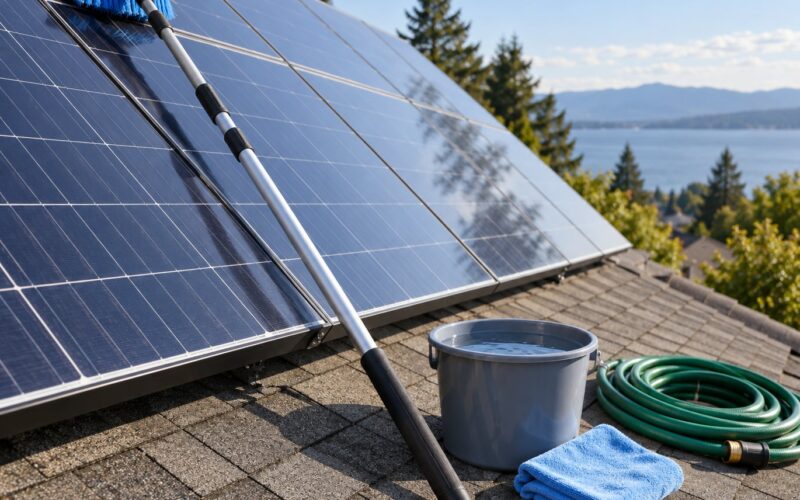
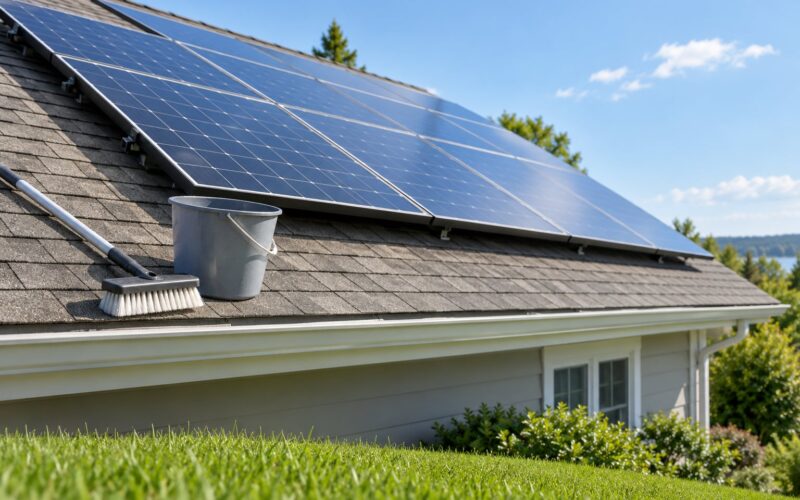
Residential solar needs very little. Panels are usually cleaned a couple of times a year, more often in dusty areas, and a garden hose does the job. The inverter is the part to watch, since it is the component most likely to need replacing once in a system’s life, and the monitoring app or your smart meter tells you when something is wrong.
Do a visual check from the ground for debris, loose flashing or a panel that looks discoloured. Leave the roof to a professional. Climbing onto a roof to brush leaves off a panel is how people end up in an emergency room, and opening electrical enclosures is how people end up with a different problem entirely.
Frequently Asked Questions
Do home solar panels work on cloudy days?
Yes, though at reduced output. On an overcast day a rooftop array typically produces somewhere between 20 and 40 percent of its clear-sky output, because clouds scatter light across the whole panel rather than blocking it entirely. Over a full year, cloudy days matter much less than they appear to. Annual production across a year is what determines your savings, so a cloudy region with bright summer days can still perform respectably. Check your expected annual kWh in the installer design rather than judging the system on one grey afternoon.
How long do home solar panels last?
Modern panels carry performance warranties of roughly 25 years, and most are still producing in the mid-80s to low-90s percent of their original output at that point. Panel output fades gradually rather than suddenly, at a rate commonly estimated between half a percent and one percent per year. The inverter usually has a shorter life, often 10 to 15 years, and is the component most likely to need replacing. Your installer should quote separate warranty durations for the panel product, panel performance, inverter and workmanship, so read all four.
Can I install solar panels if I rent my home?
Not without your landlord’s involvement. The panels have to be permanently attached to a structure you do not own, which requires the owner’s written consent, and the utility interconnection agreement has to be signed by whoever is the legal account holder. Renters occasionally explore community solar, where you buy a share of a larger array on someone else’s roof and get a credit on your utility bill, though availability varies widely by state. If you rent, start with that option rather than with a hardware store.
Do solar panels need to be cleaned regularly?
Only occasionally. Glued, frameless modules shed most rain and dust on their own, so many homeowners clean once a year or less. Cleaning matters more in dusty, arid or pollen-heavy areas, and after a few weeks without rain in dry weather. Use plain water and a soft, non-abrasive brush, ideally early morning when the panels are cool. Never climb onto the roof for it. If a company tries to sell you a yearly cleaning plan, ask what your measured production shows first, because soiling rarely moves the number.
What is the difference between buying and leasing solar panels?
Buying means you own the system outright or pay it off with a solar loan. You keep any incentives for which you qualify, you benefit from every future kilowatt-hour at no cost, and the system transfers to a buyer when you sell the house. Leasing and power purchase agreements install a system you do not own and pay a fixed monthly amount, often with no upfront cost but usually no incentive either. Leasing is simpler to start and simpler to exit, but you never benefit from falling panel prices.
Can I install solar panels myself?
A small 12V system powering tools, a shed or a backup outlet is a reasonable weekend project, and it is a genuine way to learn how solar behaves. A grid-tied residential array is not. It involves structural and electrical work, a permit, an interconnection agreement and live-grid connection work that requires a licensed electrician in most places. Even experienced roofers hand this to specialists. Start small for the education, and hire a licensed installer for anything that touches your breaker panel.
Conclusion
Home solar panels for beginners get simpler once three things happen. First, pull twelve months of electricity use from your utility portal and size against it. Second, look at your roof for age, angle and shade before anyone quotes you anything. Third, request three or more itemized quotes and compare them on system size and written assumptions rather than headline price.
Expect a realistic outcome, too. Owners commonly report cutting their bills by around 40 to 60 percent rather than the 80 to 90 percent a good salesman may quote, and payback usually lands somewhere between 8 and 15 years depending on your rates and your net metering rules. That is still a solid return on a system that keeps producing for a decade after the money is back.