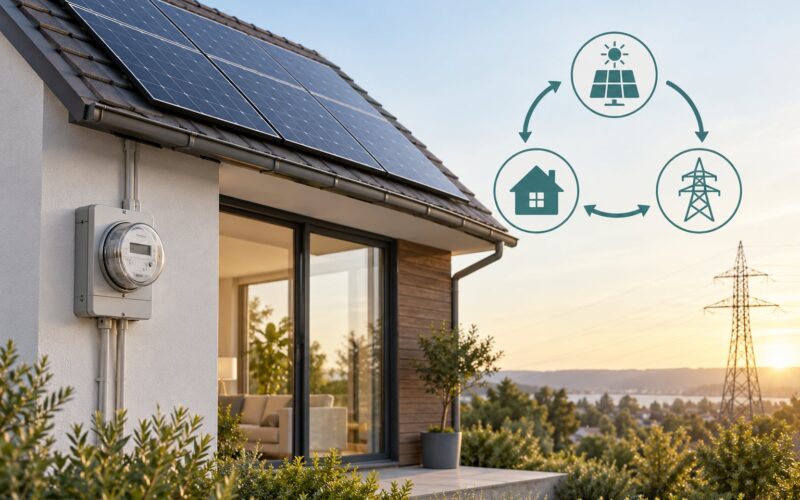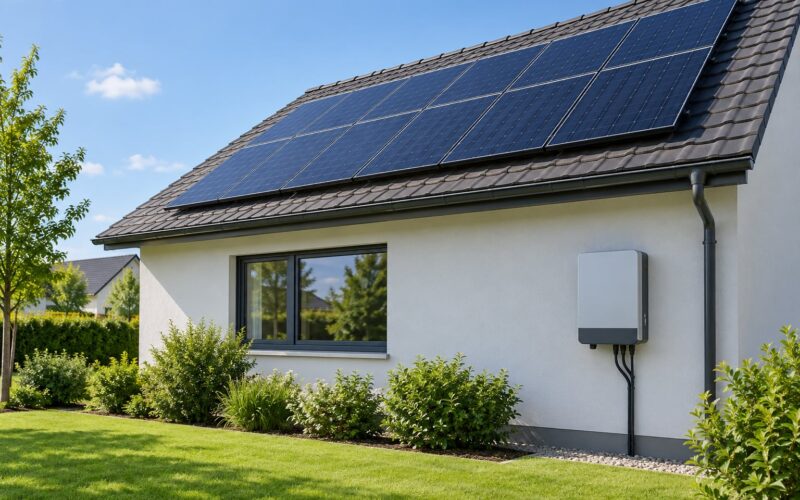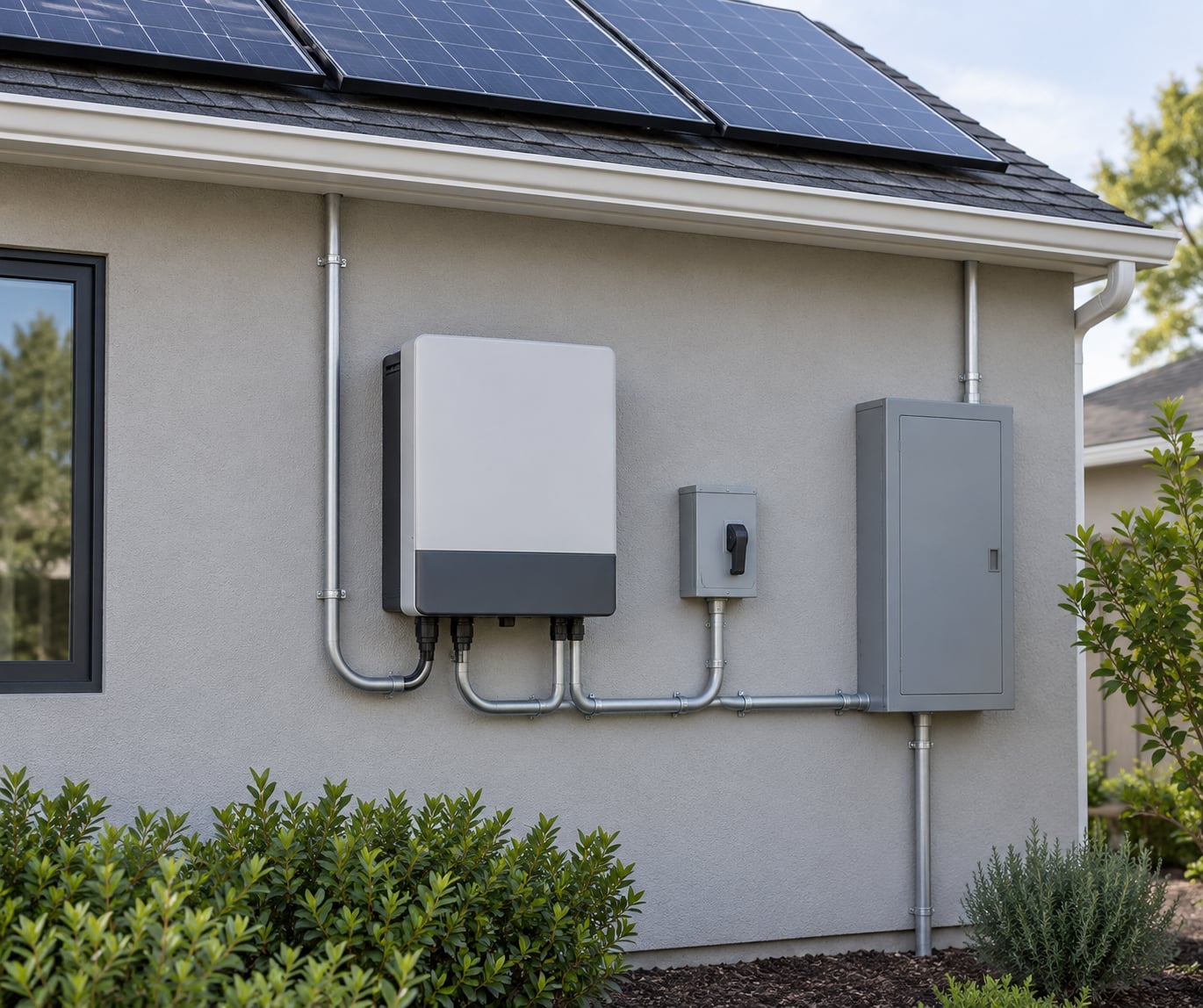
If you have ever wondered what happens to the electricity your panels collect, here is the short version. A solar inverter is the device in a solar power system that converts the direct current (DC) electricity produced by solar panels into alternating current (AC) power that homes, appliances, and the utility grid use. Without it, the electricity your roof captures would be unusable in your house.
I have read more solar spec sheets than I care to admit, and one detail trips up nearly everybody new to this: panels make DC, and almost nothing in your house runs on DC. The inverter is the translator in the middle. It also does several other jobs that quietly matter, and it comes in types that suit very different homes.
This guide explains how inverters work for anyone planning a rooftop array, a battery-backed system, or a small off-grid build, plus the sizing rules that decide whether an inverter runs your loads or just complains about them.
Table of Contents
- What Is a Solar Inverter and What Does It Do?
- What a solar inverter does not do
- How Does a Solar Inverter Work in a Solar Power System?
- What Are the Main Types of Solar Inverters?
- How Do You Choose the Right Solar Inverter for Your Home?
- Sizing rule of thumb
- The rest of the checklist
- What Is the Difference Between a Solar Inverter and a Battery?
- How Much Does a Solar Inverter Cost?
- What Maintenance and Safety Does a Solar Inverter Need?
- A short routine
- Frequently Asked Questions
- What are the three types of inverters?
- What are the key differences between microinverters and string inverters?
- What should you not plug into an inverter?
- How long will a solar inverter last?
- Does every solar panel need an inverter?
- What is the key difference between a hybrid and a regular solar inverter?
- Conclusion
What Is a Solar Inverter and What Does It Do?
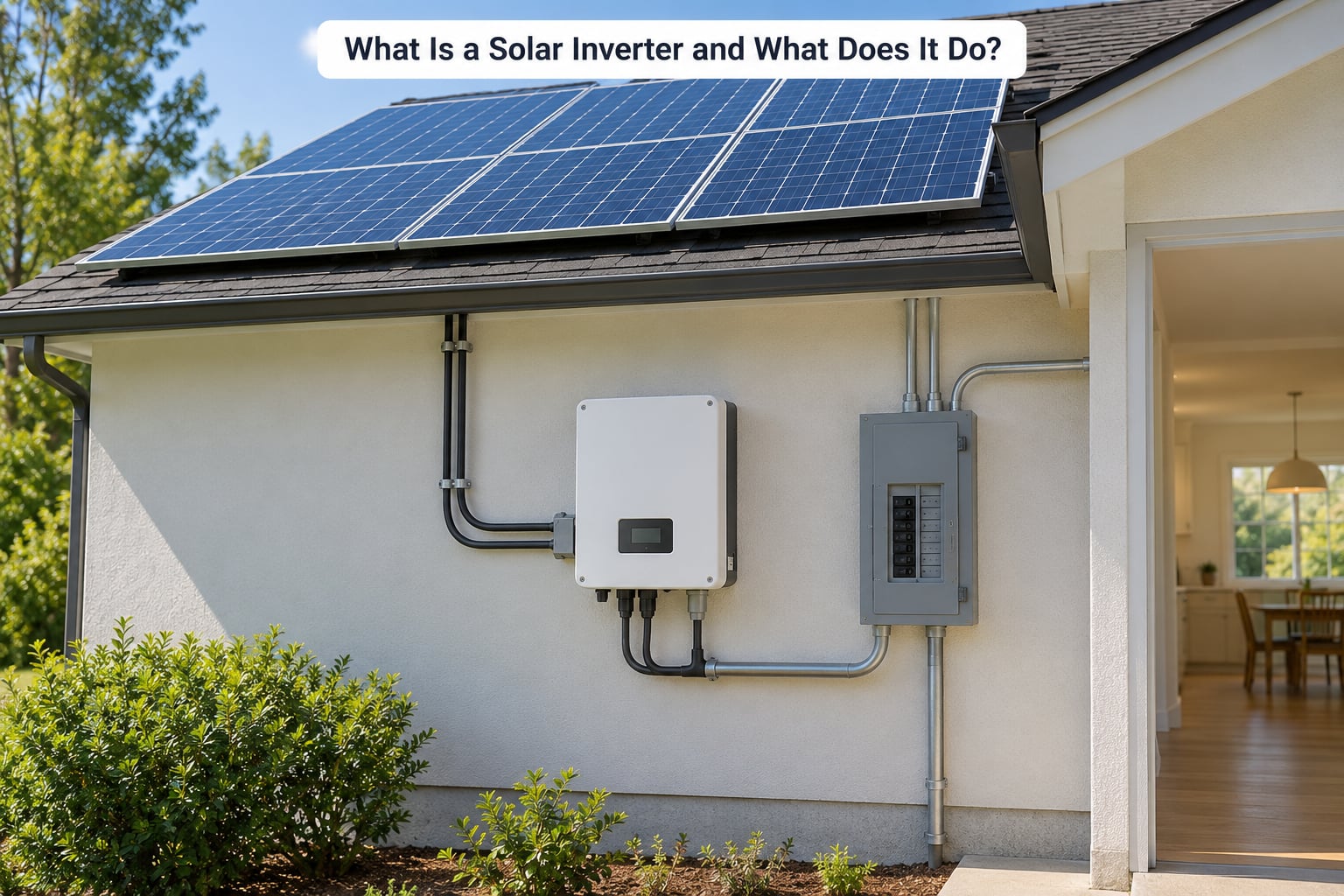
A solar inverter is the box that changes direct current into alternating current. Sunlight hits a panel, the panel pushes DC down a wire, and the inverter converts that into AC at the voltage and frequency your mains wiring expects. Then it feeds your circuits, charges a battery, or pushes the surplus out to the grid.
In short, the DC to AC conversion is the headline job. Alongside it, a good inverter does the rest of this list:
- Converts DC to AC using electronic switches, typically at a peak efficiency of around 97 percent on modern residential units.
- Tracks the panel array at its best output point through MPPT, which is maximum power point tracking, so you collect more energy on cold or hazy mornings.
- Regulates voltage and frequency so the output stays stable as clouds move across the array.
- Synchronises with the utility grid on grid-tied systems, which shuts the inverter down instantly if the grid goes down to protect line workers.
- Monitors and reports through a manufacturer app, often over Wi-Fi, so you can see daily yield and catch a fault early.
- Stops safely during faults, overloads, or an anti-islanding trip, which is a deliberate shutdown when the grid disappears.
It also makes no electricity, and it stores none. Output on a bad day is up to the panels anyway, since the inverter only converts what DC actually arrives. On a string inverter, panel-level control is missing too: a weak or shaded panel drags down every panel wired in with it, and the inverter cannot recover the loss.
What a solar inverter does not do
- It does not store power. Storage is the battery’s job, and wiring the two together is what makes a hybrid system.
- It does not create energy. It converts it, which is why inverter efficiency and panel performance are two separate numbers.
- It does not fix shading on a string design, and a single failing string can take the whole array offline.
- It does not provide backup on its own. Most grid-tied units cut out during an outage by design, so an outage means no solar power until the system is designed to island.
How Does a Solar Inverter Work in a Solar Power System?
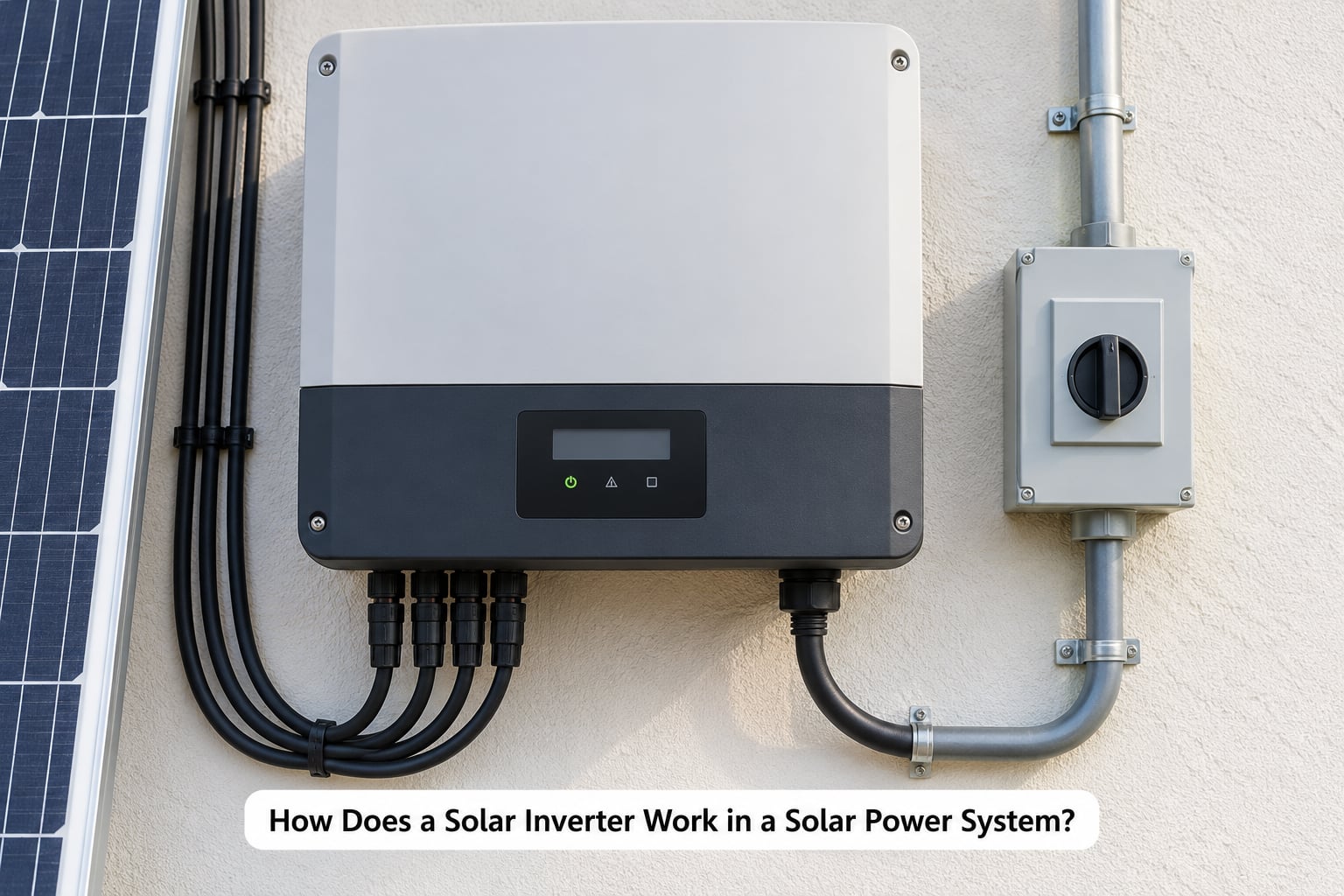
Light hits the cells in a panel, and the cells produce DC. That current is collected by a charge controller on off-grid systems, or runs straight to the inverter on grid-tied ones. The inverter then chops the DC into an AC waveform using transistors switching many hundreds or thousands of times per second, and that waveform leaves at 120 or 240 volts at 60 hertz in the United States.
The path in a simple grid-tied home looks like this:
Sunlight → solar panels (DC) → combiner and cabling → solar inverter (DC to AC) → main panel and branch circuits → home, with a bidirectional meter sending surplus back to the grid.
Add storage and the path grows a branch: panels → inverter → battery → inverter → home. A hybrid inverter is simply one box that handles both legs.
Why the conversion is unavoidable is easy to demonstrate. A refrigerator, a washing machine, and a lamp all expect the oscillating AC that the grid delivers. Panel DC is steady, one-directional flow, and feeding it into those appliances means they run hot, erratically, or not at all. Even a phone charger needs AC mains power because that is what the wall socket provides.
That is also why you cannot run a toaster straight off a panel. The energy is there, but the current type is wrong.
What Are the Main Types of Solar Inverters?
Solar inverter types are usually split by topology, which is simply how many devices sit between the panels and your walls. A string system uses one central box for a whole array. Microinverters put a small inverter behind every panel. Power optimizers split the difference: a small DC-DC converter sits on each panel, while one central inverter handles the AC conversion. Hybrid inverters add battery management to that job.
Understanding what a solar panel string is makes the differences obvious. A string is a series of panels wired end to end so their voltages add up, and they all feed the same inverter input. That is efficient on a clean, unshaded south-facing roof and expensive in lost output the moment a chimney casts a shadow across one panel.
| Type | Devices | Shade tolerance | Battery ready | Best for |
|---|---|---|---|---|
| String (central) | One per array | Low, one panel affects the string | Only hybrid models | Large unshaded roofs, lowest cost per watt |
| Microinverter | One per panel | High, each panel works alone | Needs an added unit | Split roofs, trees, complex layouts |
| Power optimizer | One per panel plus one inverter | High at panel level | Only hybrid models | String layouts with partial shade |
| Hybrid | One per system | Depends on design | Yes, built in | Homes adding storage or backup |
Solar hobbyists on r/solar make a fair point when they talk about mean time between failures: if a central string inverter dies, the whole array stops producing until it is replaced. Microinverters fail one panel at a time, and a technician swaps a single unit rather than a whole system.
On the other hand, string systems usually carry lower equipment cost for a given array size, and a single box is easier to wire and to service. For many homeowners with a straight, open roof, that is the whole argument.
How Do You Choose the Right Solar Inverter for Your Home?
Choosing an inverter is a matter of matching five things: your panel array, your loads, your battery plan, your location, and your utility rules. Start with the array, because a mismatch here is the most common reason a system clips or shuts down.
Sizing rule of thumb
Add up your panel watts, then divide by about one thousand. A 6,000-watt array pairs with a 6 kW inverter, and an 8,400-watt array with an 8 kW unit. Sizing slightly above the array is normal and often good, because it gives headroom and lets the unit run at its efficient point on a partly cloudy day. Undersizing causes clipping, where the inverter deliberately caps output because the panels are pushing more than it can accept.
Do the same arithmetic for your loads, then add startup surge headroom. Motors, pumps, compressors, and power tools can draw several times their running wattage for a second or two at start-up. A refrigerator compressor might run at 150 watts and pull 600 watts when it kicks on. If your inverter has no surge rating above its continuous output, that load will trip it every time.
The rest of the checklist
- Phase. Most homes use single-phase output. Three-phase only makes sense for larger properties or commercial loads.
- Battery compatibility. A solar-only inverter cannot charge a battery directly. Confirm the model is hybrid and that it supports your battery chemistry, whether lithium or lead-acid.
- Efficiency rating. Peak efficiency reads near 98 percent on good units. The weighted figures, European efficiency and CEC efficiency, account for real-world load levels and are more meaningful for annual yield.
- Enclosure rating. An IP54 unit suits most indoor or sheltered walls. An IP65 rating is needed where rain, dust, or wash-down exposure is likely, which matters for farm and van installations.
- Monitoring. Look for Wi-Fi or Ethernet monitoring with historical charts and email alerts. String-level monitoring on a central unit helps a technician find a weak string or a failing MPPT without going on the roof.
- Warranty. Check the terms carefully. Some ten-year warranties end early once a specified amount of energy has passed through the unit, which is common on models that cycle a battery daily.
- Utility requirements. Export limiting, zero export, and ride-through behaviour are set locally, and your interconnection approval may dictate specific grid support functions.
Buy the panel array and the inverter together where you can. A designer sizing them as a pair is far less likely to leave you with a system that clips in winter or struggles on the first cloudy week.
What Is the Difference Between a Solar Inverter and a Battery?
The difference is simple: the inverter converts, the battery stores. A lithium battery holds charged energy in chemical form and pushes it out as DC on demand. The inverter takes that DC, or the DC from your panels, and turns it into AC your house can use. One is a translator, the other is a cupboard with a plug.
Here is what happens in practice. With sun and no battery, panels power the house directly and surplus flows to the grid. At night, the inverter has nothing to convert, so the home runs on grid power, and a grid-tied inverter shuts down entirely during an outage. Add a battery and a hybrid inverter, and the same box now charges the battery from surplus solar, then discharges it at night to run the house.
| Type | Battery needed | Grid required | Backup during outage | Suits |
|---|---|---|---|---|
| Grid-tied | No | Yes, always | No, usually none | Lowest cost, net metering |
| Hybrid | Optional but the point | Yes, with islanding option | Yes, on selected circuits | Storage, time-of-use shifting |
| Off-grid | Yes, essential | No, isolated | Always, that is the job | Cabins, vans, remote pumps |
That third column is where buyers get confused, and the confusion has been running for years in DIY solar threads. A hybrid inverter with islanding can form its own small grid and keep a few essential circuits alive. A grid-tied inverter without that feature cannot, no matter how good the panels are. Ask specifically whether the model supports islanding or backup output, and which loads it can carry.
Hybrid inverters have their own trade-off. The battery adds cost, needs a space, and eventually needs replacing, and a single point of failure then sits between you and the stored energy. A battery is a separate component with its own warranty, which is why the inverter warranty terms matter more on hybrid units than on grid-tied ones.
How Much Does a Solar Inverter Cost?
The honest answer is that inverter cost depends almost entirely on system design, location, and current market conditions, so treat any figure you see as a snapshot rather than a quote. What matters more is which factors move the number, and there are only a few of them.
- Topology. One central unit for a large array usually costs far less per watt than equipping every panel with its own microinverter.
- Power rating and phase. A larger kW rating and three-phase output both push the price up.
- Battery capability. Hybrid models with charge control and islanding support cost more than solar-only units.
- Enclosure and cooling. Rugged ratings, fans, and sealed housings add cost, and so do the temperature derating limits that come with them.
- Monitoring and grid features. Smart metering, export limiting, and advanced grid support are not free.
- Warranty length. Longer terms, especially throughput-based ones, cost more up front.
Separate the equipment from the installation, because homeowners routinely compare the two and get confused. The inverter is one line on a quote. Permitting, mounting, conduit, the AC disconnect, panel upgrades, and the electrician’s labour are separate, and on a residential job the labour can rival the equipment. Ask for both figures in writing, itemised.
One thing worth doing before you shop: get your array design first, then price inverters against it. Comparing inverter prices without a fixed panel list and a load list is comparing random boxes.
What Maintenance and Safety Does a Solar Inverter Need?
Solar inverters are among the easier pieces of equipment to look after, and most of the work is really just watching. A monitoring app that sends an email when something changes catches more problems than any amount of cleaning.
A short routine
- Check the app weekly. Compare daily yield against a nearby system. A sudden drop usually means shade, soiling, or a tripped device rather than a failed unit.
- Read error codes as soon as they appear. Grid voltage warnings often come from utility events and clear on their own. Insulation or over-temperature faults do not, and they need attention.
- Keep airflow clear. Passive-cooled units need open space around the housing, and active-cooled units need clean filters or working fans.
- Keep it dry and out of direct sun. A sealed, shaded wall is kinder to the electronics than a sun-facing garage wall, and heat shortens component life.
- Look for physical signs. A dark blank display, a burnt smell, buzzing, or a status light that never settles all point to a unit that should be looked at.
- Follow the shutdown procedure in the manual before any inspection, and leave wiring, disconnects, and hazardous work to a licensed electrician.
On lifespan, most residential inverters are warranted for around ten years and many keep producing well past that, with a realistic working life somewhere in the ten to fifteen year range. Lithium batteries, by contrast, often need replacing in that window, and a daily-cycling hybrid warranty can expire before the inverter does.
Small off-grid builds need the same attention in a different place. A garden lighting or pump inverter mounted in a shed will still collect dust, spider webs, and the occasional wasp nest. Check it twice a year, and keep the ventilation path open.
One warning worth repeating from the forums: if your inverter keeps shutting off right after a pump or compressor starts, the fault is probably surge headroom, not a broken unit. Change the load order so the motor starts before the electronics, or pick an inverter rated for motor loads.
Frequently Asked Questions
What are the three types of inverters?
Most solar systems use one of three main inverter types. A string or central inverter handles a whole array at once and costs the least per watt. Microinverters mount behind individual panels, so each panel runs independently and tolerates partial shade. Hybrid inverters add battery charging and backup control to a central unit. Power optimizers are a fourth variation, pairing one small DC-DC device per panel with a single central inverter.
What are the key differences between microinverters and string inverters?
A string inverter serves many panels at once, so one shaded or faulty panel reduces output for the whole string, and a single failure stops the entire array. A microinverter serves one panel each, which recovers most of that lost energy, allows panel-level monitoring, and lets a technician swap one unit instead of the whole system. String designs usually cost less per watt and are simpler to install on an open, unshaded roof.
What should you not plug into an inverter?
Avoid modified sine wave inverters for sensitive electronics such as laptops, medical equipment, audio gear, and variable speed drives, and avoid plugging in loads above the inverter’s continuous rating. Be careful with motors, pumps, and compressors, whose start-up surge can exceed running wattage several times over. Check that the inverter is a pure sine wave unit before connecting expensive appliances, and confirm the surge rating covers your heaviest load.
How long will a solar inverter last?
A quality residential solar inverter typically runs somewhere between ten and fifteen years, and most come with a warranty of around ten years. Lifespan shortens when a unit runs hot, when airflow is blocked, or when it cycles a battery heavily every day. Batteries in a hybrid system often need replacing within that window, so plan for storage hardware as a separate future cost rather than part of the inverter’s life.
Does every solar panel need an inverter?
Every panel that powers ordinary household circuits does need a way to become AC electricity, but that device does not have to be one per panel. A string inverter converts the output of many panels at once, and microinverters convert each panel individually. A few specialist devices, such as a water pump controller or a lighting driver, convert DC to AC inside the appliance itself rather than using a separate inverter box.
What is the key difference between a hybrid and a regular solar inverter?
A regular or solar-only inverter converts panel DC to grid-compatible AC and does nothing else. A hybrid inverter adds a battery charge controller and a discharge path, so it can store surplus solar energy and send it to the house at night. Many hybrid models also support islanding, which lets selected circuits keep running during an outage. The trade-off is cost, plus a battery that will eventually need replacing.
Conclusion
A solar inverter is the bridge between what your panels collect and what your house consumes, and it decides how much of that energy you actually get to use. The first decision is not which model to buy, it is whether you need grid-tied, battery-backed, or fully off-grid behaviour, because that rules out whole categories of hardware.
Then match the inverter’s kW rating to your panel array and your heaviest load, confirm battery compatibility if you plan storage, and check the surge rating before a pump goes on the list. If you are unsure about the grid rules where you live, a licensed solar electrician can read the local interconnection requirements with you before any equipment is ordered.