To hang solar lanterns from a tree, wrap a wide, padded tree strap around a healthy branch, loop a carabiner or swivel hook through it, and clip the lantern on so it hangs free. Leave the solar panel in open sunlight and check the whole thing after dark. Most of the job is ten minutes; the part that needs care is protecting the bark.
Getting a lantern up into a canopy is where people stall. It usually comes down to hardware and lift method, so both are covered below along with the charging reality nobody mentions until the lights come on dim.
Table of Contents
- What You Need
- Step-by-Step: How to Hang Solar Lanterns from a Tree
- Choose a Healthy Branch to Hang Solar Lanterns From
- Install the Solar Lantern and Protect the Bark
- Position the Panel for Charging
- Test the Setup and Maintain the Hanging
- Common Mistakes
- Frequently Asked Questions
- Can you hang solar lanterns from a tree branch without damaging the tree?
- Do solar lights work under a tree canopy?
- How high can you hang solar lanterns from a tree?
- What can I use to hang lanterns from a tree?
- How many solar lanterns can I hang from one tree?
- What happens to solar lanterns in wind and storms?
- Conclusion
What You Need
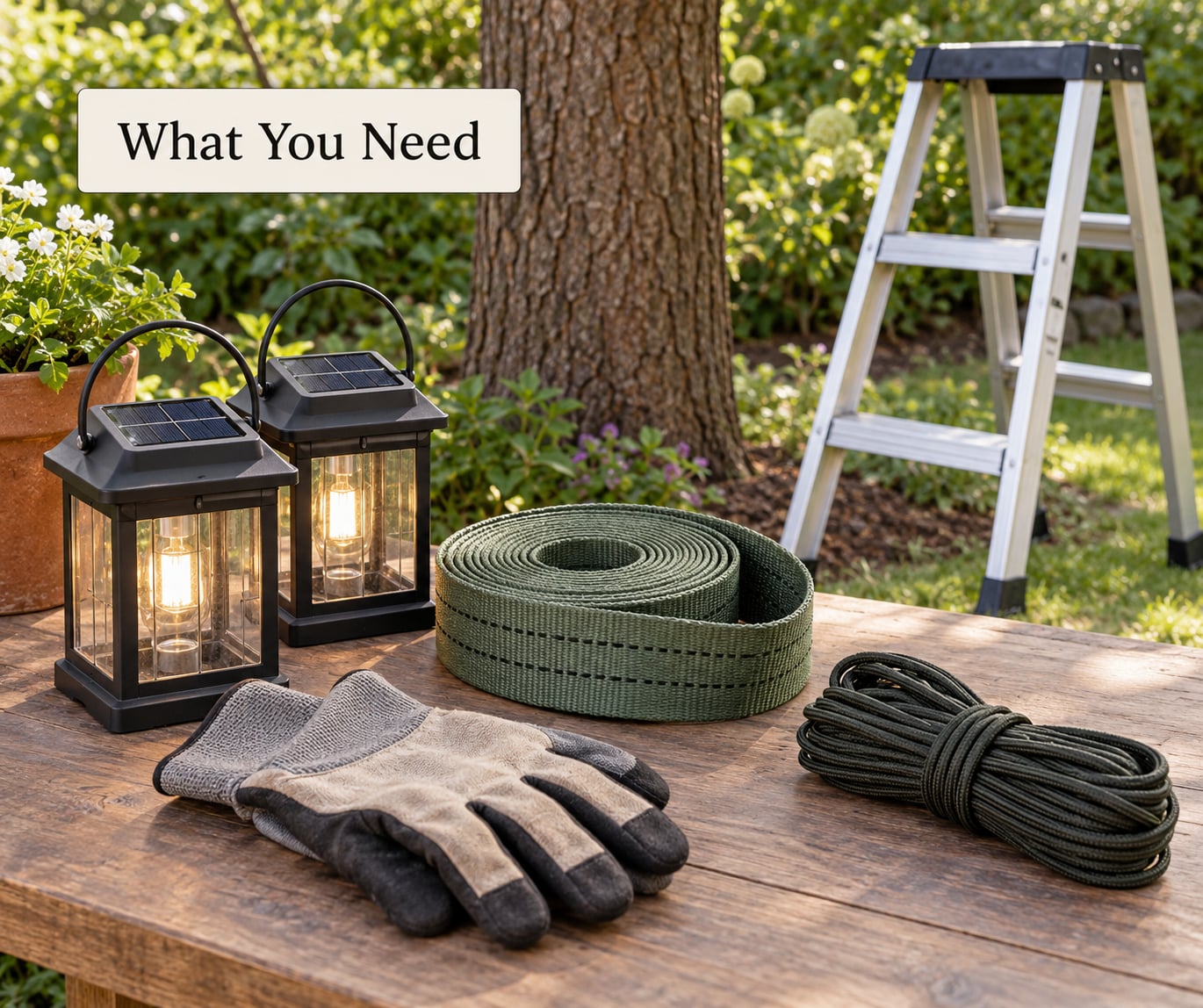
Nothing exotic. Most of this list already sits in a garden shed.
- Outdoor-rated solar lanterns with a panel on top, ideally IP65 or better, so rain and dew are not a problem.
- A wide soft tree strap or flat fabric loop, at least 1 inch wide. This is the single most important item on the list.
- Sturdy cord, carabiner or swivel hook to hang the lantern from the strap.
- A shepherd’s hook pole for branches above ladder height, or a stable step ladder if the branch is low.
- A weighted line and throw bag — a small weight on a length of cord — for the fastest lift to a high branch.
- Work gloves and, if you use a ladder, someone steady at the base.
Check for overhead power lines before you go up. If the tree is on shared land or is a large mature specimen, talk to the owner or an arborist first.
Step-by-Step: How to Hang Solar Lanterns from a Tree
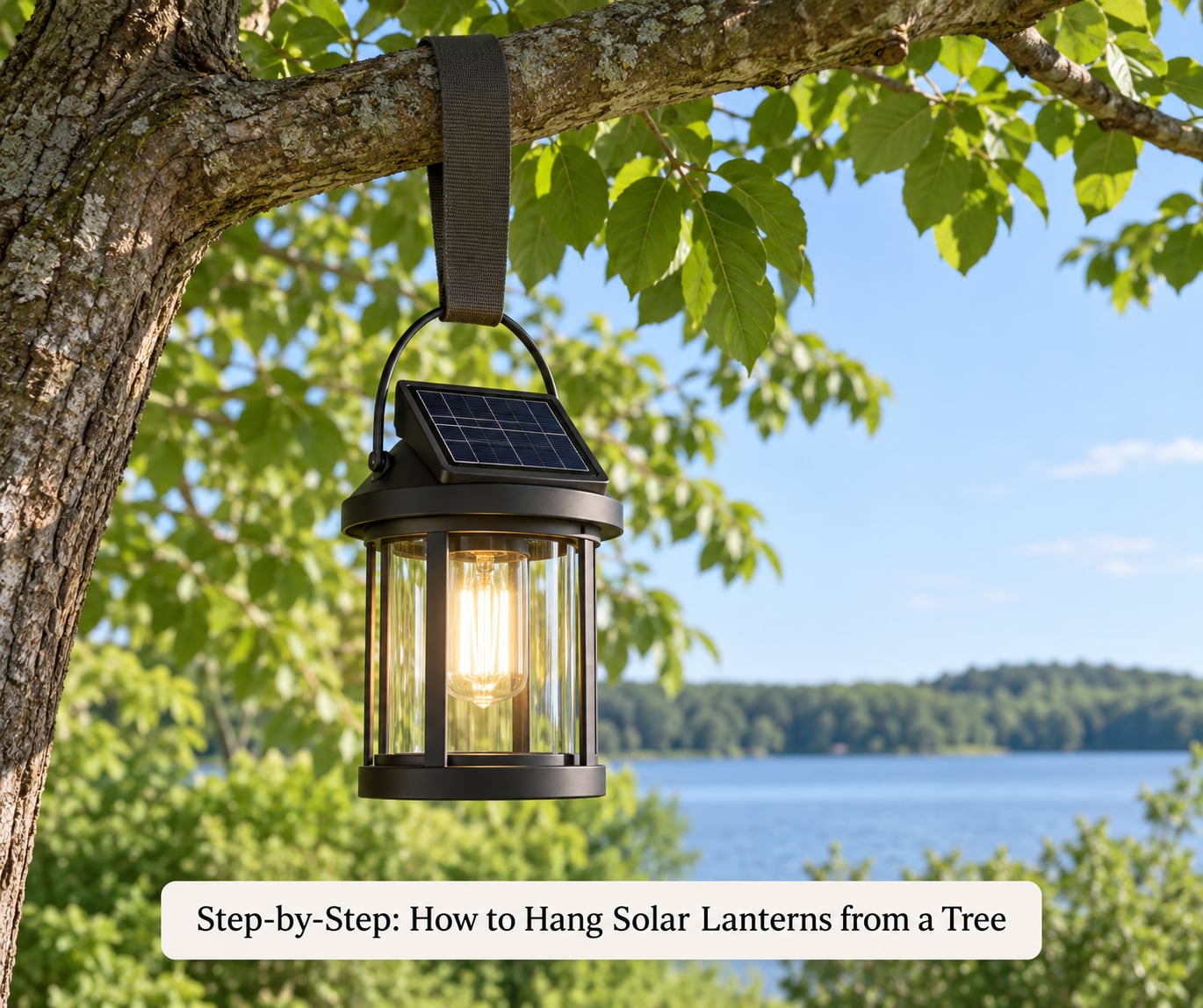
Work in daylight, in this order. The whole job takes about ten minutes per lantern once the hardware is up.
- Check the tree. Confirm the branch is alive, firm and free of deadwood or fungal shelves.
- Pick your spots. Aim for branches 6 to 8 feet up with enough clearance to walk beneath, and space lanterns 3 to 4 feet apart.
- Lift the hardware. Throw the weighted line over the branch and pull the strap up, or use a shepherd’s hook pole from the ground.
- Loop the strap. Wrap it fully around the branch with a flat, loose fit — snug, not tight.
- Hang the lantern. Clip the carabiner or swivel hook to the strap so the lantern can turn in the wind instead of swinging hard.
- Aim the panel. Angle the solar panel toward the sunniest open sky you can reach.
- Charge and test. Leave them in place a full day, then check at dusk.
- Inspect after a week. Look again once the strap has settled and the branch has moved in wind.
Choose a Healthy Branch to Hang Solar Lanterns From
Hold the branch and flex it gently before loading it. If it feels spongy, hollow or gives at the fork, move down the tree.
Skip deadwood, splits, weak unions and this season’s growth — shoots and twigs are still soft and will not carry a lantern through a gust. Avoid hanging anything over a seating area unless you have measured the drop distance and are happy with what lands underneath.
A lantern is light, but wind is what loads a branch. Keep the total on one limb modest, especially on a young tree, and never hang from a trunk that has been wrapped in wire at any point.
Install the Solar Lantern and Protect the Bark
The strap does all the work. Wrap a wide fabric loop around the branch, add the lantern through a carabiner or S-hook, and leave enough slack that the strap can slide a little as the branch grows and sways.
Never nail or screw into a living tree. Wounds let rot in, and the hole stays for the life of the tree. Skip thin wire and tight zip ties too — a constricting loop cuts off the bark’s blood supply, a problem gardeners call girdling, and the damage shows up years later as a dead section of limb.
Leave the loop loose enough to slide past your fingers without forcing it. A strap that stays where you put it on day one is a strap that will bite into growth by year three.
Position the Panel for Charging
A solar lantern charges from direct sun and little else. Under a dense canopy, expect dim light that fades after an hour or two, or a lantern that never switches on at all.
Six to eight hours of unobstructed sunlight is the realistic target. Check the spot at midday rather than trusting how it looks at the edge of the day. Keep leaves and twigs from drifting across the panel as the canopy fills in.
Do not mount the panel underneath the lantern, where the lantern’s own body shades it. If the best-looking branch is also the shadiest one, look for a split-panel light: a fixture with a small cable running to a separate panel you can mount in the sun while the lantern stays in the canopy.
Test the Setup and Maintain the Hanging
Wait for full darkness, not dusk haze, then watch. If the light comes on, holds steady and lasts, the install worked. If it comes on and fades within an hour, the panel was starved for light, not the hardware.
Once a month, walk the tree and check each strap, hook and lantern. A strap that has crept toward the bark needs loosening. Wipe panels with a damp cloth; grime and spider webbing cut charging noticeably.
Take the lanterns down before storms, before heavy leaf fall and before freezing weather if you can. Bring them in, dry them off, and hang them again in spring.
Common Mistakes
- Wire, nails or tight zip ties. These cut into bark and can kill the branch. Use a wide fabric strap instead.
- Hanging from deadwood or a thin whip. It looks fine in calm weather and falls in the first gust. Test before you load it.
- Burying the panel in shade. The most common reason hanging solar lanterns never light is a canopy overhead.
- Choosing lights that are too heavy. Decorative glass and thick metal fixtures add load and break into shards. A plastic body with an LED core drops far better if something does fall.
- Ignoring sway. A rigid hanger makes the lantern swing into the branch all evening and clatter. A swivel hook lets it turn.
- Hanging too low or too close to a path. Pick clearance for people’s heads, not for the look of the photo.
- Leaving it up year-round. Batteries fade over two to four seasons and hardware loosens. Pull them down, check and recharge indoors.
One more worth naming: skipping the charge test on the ground before going up. Set each lantern out in the sun for a day first. A dead battery discovered at eye height in the dark is a bad evening.
Frequently Asked Questions
Can you hang solar lanterns from a tree branch without damaging the tree?
Yes, as long as nothing punctures the bark and nothing tight circles it. Use a wide fabric strap or a purpose-made tree-safe loop, wrapped loosely so it can slide as the branch grows. Avoid nails, screws, thin wire and tight zip ties, which cut off the bark’s supply and can kill the branch over time.
Do solar lights work under a tree canopy?
Only if the panel reaches real sunlight. Under dense leaves a solar lantern may glow briefly or not switch on at all, because the battery never gets a full charge. Look for a split-panel light with a cable running to a separate panel, or place the lantern at the edge of the canopy where it gets several hours of direct sun.
How high can you hang solar lanterns from a tree?
Any height you can get hardware to safely. A shepherd’s hook pole reaches roughly 8 to 10 feet, and a weighted line thrown over the branch works at almost any height without climbing. A ladder handles lower branches but only on level ground, with someone holding the base, and never in wet or frozen conditions.
What can I use to hang lanterns from a tree?
A wide fabric tree strap around the branch, plus a carabiner, S-hook or swivel hook for the lantern itself. A weighted line and throw bag lifts the strap into place, and a shepherd’s hook pole gives you the same reach from the ground. Skip wire and tight zip ties, which damage bark over time.
How many solar lanterns can I hang from one tree?
Enough that the weight stays modest on any single limb and the spacing looks deliberate — roughly 3 to 4 feet between lanterns. Young trees and shallow-rooted species take less than mature ones. If several lanterns hang from one branch, the limit is wind load rather than the lantern’s own weight.
What happens to solar lanterns in wind and storms?
They swing, and repeated swinging is what loosens straps and drops fixtures. Use a swivel hook so the lantern turns rather than bangs against the branch, tighten straps if sway becomes excessive, and take everything down before a storm. Below-freezing weather also shortens a lantern’s runtime until it recharges.
Conclusion
Start with the branch. Pick living wood, test it with a hand, and check the clearance underneath before anything else.
Then use a wide padded strap rather than wire, nails or tight ties, angle the panel toward open sky, and give the lantern a full day of charging on the ground before it goes up. Check it after dark, look at it again after a week, and take it down before storms. That is the whole method.